
Asian trade jitters spark fresh Malacca Strait monetisation push
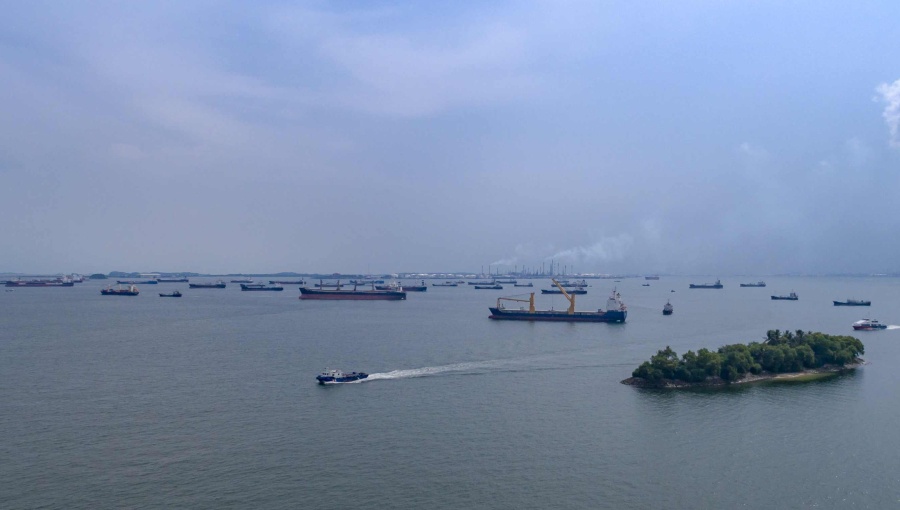
The collapse of maritime stability in the Middle East has cast a long, overdue shadow over the busiest maritime chokepoint in Asia: the Strait of Malacca. With Iran formalising its blockade and supposedly imposing a toll system in the Strait of Hormuz, Southeast Asia finds itself right at the centre of a geopolitical tug-of-war between international law and the tempting prospect of maritime monetisation.
Malacca Strait toll booth
The tension first peaked when Indonesian Finance Minister Purbaya Yudhi Sadewa publicly floated, and almost immediately afterwards retracted the idea of a transit levy on vessels passing through the 805-kilometre corridor, The Straits Times reports. The minister cited Iran’s new tariff system in Hormuz as a potential precedent, with Purbaya suggesting that Indonesia, Malaysia, and Singapore could split substantial revenues from the 102,500 ships that transit the waterway annually.
The proposal, which if ever imposed, would affect every Asian nation east of the Strait, sent a shockwave through global shipping markets, prompting an immediate firefighting response by Jakarta. Foreign Minister Sugiono clarified on April 23 that Indonesia remains strictly committed to the United Nations Convention on the Law of the Sea (UNCLOS), which guarantees the right of transit passage without obstruction or arbitrary taxation.
While the idea of a levy was quickly dismissed as a thought experiment, its brief emergence highlights a growing offensive mindset within President Prabowo Subianto’s cabinet at least regarding Indonesia’s strategic geography.
For China, the stakes could not be higher. Often referred to in Beijing as the Malacca dilemma, the strait serves as the primary artery for 80% of China’s energy imports. And with the Strait of Hormuz effectively shut down, the Malacca corridor has become even more critical; in the first half of 2025, it carried 23.2mn barrels of oil per day, according to a piece by Kuehne+Nagel, surpassing the pre-crisis volumes of Hormuz.
The fragility of the Malacca route has led to a flurry of activity across the region, with Thailand aggressively reviving its proposal for a multi-billion dollar land bridge of rail and highways across the Kra Isthmus to bypass the Malacca chokepoint entirely. American voices meanwhile, led by Chairman of the Joint Chiefs of Staff Dan Caine, have vowed to actively pursue Iran’s clandestine shadow-fleet operating in Southeast Asian waters in a bid to evade sanctions, in the process raising the risk of military action within the strait itself.
Such security concerns are compounded by a spike in local threats, with 108 incidents of piracy and armed robbery recorded in the Malacca and Singapore straits in 2025 alone.
The crisis is not limited to the water, however. The Indonesian Defence Ministry is currently wrestling with a sensitive US proposal for military aircraft overflight access. While the US argues this is necessary for regional security during the energy crisis, the proposal has drawn significant sovereignty pushback from Indonesian military (TNI) leaders, who view it as a potential infringement on the country’s so-called free and active foreign policy.
Keeping the status quo
Back in the strait, Singapore and Malaysia have remained the most vocal defenders of maintaining the status quo. Singapore’s Foreign Ministry stressed that any move to interdict or toll traffic would be a catastrophic violation of international norms that underpin the global economy. As of late April 2026, the three littoral states have reaffirmed their joint patrols, but the Hormuz model of maritime extortion remains a ghost that continues to haunt talks in Jakarta and Kuala Lumpur.
Moving forward, the act of maintaining the neutrality of the Malacca Strait is becoming a Herculean task for Southeast Asia. As oil prices hover stubbornly above $112 per barrel, the strait is no longer just a shipping lane; it is the frontline in a global energy war. While Indonesia, Malaysia, and Singapore, are legally bound by UNCLOS to ensure free passage, the structural integrity of this neutrality is fraying.
In a survival mode economy, the regional giants may eventually view the strait’s neutrality as a luxury they can no longer afford to provide for free. Simultaneously, the US is pushing for increased overflight access and maritime interdiction rights to look for sanctioned cargo. As the US and China move from competing for trade to active maritime friction, Southeast Asian nations are being squeezed.
The revival of discussions over the Thai Land Bridge and the push for smart ports indicate that the region is preparing for a world where the Malacca Strait is no longer a reliable and open common room. If the cost of neutrality includes getting caught in a US-China crossfire or absorbing massive supply chain shocks, Southeast Asia may pivot toward localised security arrangements, which, although it wouldn’t necessarily change the rules of UNCLOS, would create a transit environment that looks far less like the open sea and much more like a guarded corridor.
Follow us online