
Europe’s petrochemical collapse: plants close as investment heads for China
Europe’s petrochemical industry has moved from a profitability crisis to a broader industrial retreat, with plant closures, asset sales and cancelled investments accelerating over the past year.
The situation was already severe in July 2025, when Reuters reported that high production costs, ageing plants and a surge in global capacity led by China were forcing European producers to shut facilities or reconsider their presence on the continent.
And the deterioration has continued.
European chemical production capacity announced for closure reached 17.2mn tonnes a year in 2025, more than double the previous year and almost six times the level recorded in 2022, according to the European Chemical Industry Council, or Cefic. Cumulatively, 37mn tonnes of capacity has been announced for closure since 2022, equivalent to about 9% of European chemical production capacity. Around 20,000 direct jobs have been affected.
Investment outflow
Investment has moved in the opposite direction. Confirmed investment in new European chemical capacity fell by more than 80% in 2025, according to Cefic data. The decline reflects high energy and carbon costs, weak demand, heavy regulation and competition from newer plants in China, the US and the Middle East.
The pressure is particularly acute for basic chemicals such as ethylene and propylene. These are key building blocks for plastics, pharmaceuticals and industrial goods. Europe has increasingly relied on imports as domestic production becomes less competitive.
The European Commission sought to respond in July 2025 with a chemicals industry action plan. It proposed a Critical Chemical Alliance, stronger trade defence measures, lower energy costs and additional state aid for energy-intensive industries. The Commission also said it would update state-aid rules to cover additional chemical sectors. But the measures have yet to halt the retreat.
Eni’s Versalis has continued to dismantle loss-making commodity chemicals operations in Italy. Its Brindisi and Priolo crackers were shut in 2025 as part of a wider restructuring. The company is shifting towards bio-based chemicals, biorefineries, circularity and higher-value products.
Other major groups have also reduced European exposure. Dow approved the closure of its ethylene cracker in Böhlen, Germany, with the shutdown expected in the fourth quarter of 2027. It also plans to close other European chemical assets.
ExxonMobil announced in November 2025 that it would shut its Fife Ethylene Plant in Scotland in February 2026. The company cited high supply costs, weak market conditions and the UK economic and policy environment.
TotalEnergies plans to close its oldest Antwerp steam cracker by the end of 2027. The company has pointed to an expected European ethylene surplus and weaker demand. It will retain a newer cracker at the site.
SABIC has taken a different route. In January 2026 it agreed to sell its European petrochemicals business to Germany’s AEQUITA for $500mn. The business covers major sites in the UK, Germany, Belgium and the Netherlands. The transaction is part of a wider consolidation of Europe’s olefins and polyolefins industry.
The economics remain difficult. European producers rely heavily on naphtha, while US producers have access to cheaper ethane from shale gas. Middle Eastern producers also benefit from lower-cost feedstocks and newer plants.
Age is another disadvantage. Many European crackers were built decades ago, leaving operators with higher maintenance and energy costs than competitors running newer facilities in Asia and the Middle East.
The China factor
China’s expansion has compounded the problem. Large volumes of new capacity have weakened global margins just as European demand has remained subdued. Chinese producers are increasingly competitive in polymers and other downstream products, putting further pressure on European manufacturers.
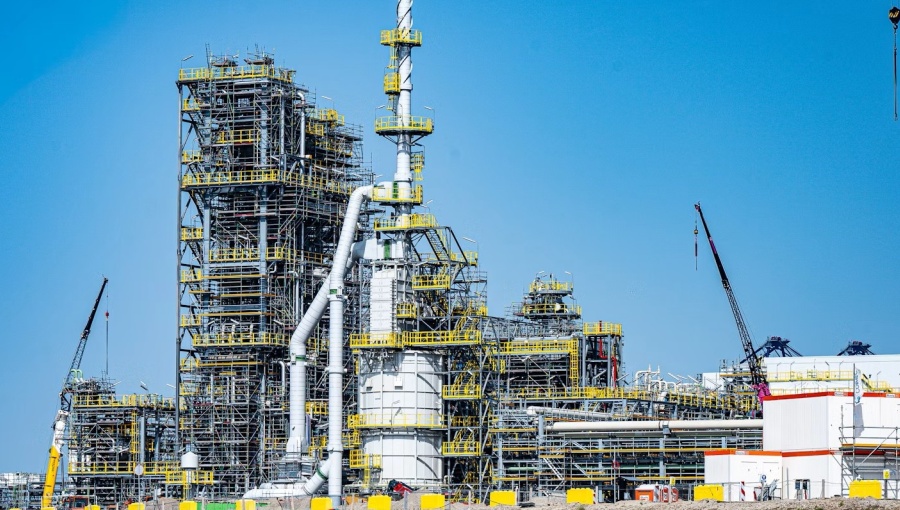
There are still major investments in Europe. INEOS’s Project ONE ethane cracker in Antwerp is the clearest example. The company has continued construction of the plant, which is designed to use US ethane and produce about 1.5mn tonnes of ethylene a year. In April 2026, the project reached a new milestone when its main electrical substation was commissioned, allowing the site to enter the commissioning phase.
The project is intended to be among Europe’s most competitive ethylene facilities. Its externally sourced electricity is contracted from North Sea wind farms. Final construction activity was still under way in August 2026 after logistics disruptions delayed the arrival of major modules from the Middle East.
But new investment is increasingly selective. In January 2026, Vioneo abandoned plans for a €1.5bn fossil-free plastics plant in Antwerp and chose China for its first commercial-scale facility, citing access to green methanol, supply-chain efficiency and a faster route to market.
The same pressures are affecting other advanced economies. South Korea has been preparing a restructuring of its petrochemical industry, while Japanese producers have also been cutting capacity as the region confronts prolonged oversupply.
Europe’s challenge is therefore no longer simply how to preserve existing crackers. It is whether the continent can retain enough basic chemical production to support downstream industries while shifting towards lower-carbon technologies.
For now, the evidence points towards a smaller and more concentrated industry. The most competitive sites, particularly those with integrated operations, newer equipment or access to cheaper feedstocks, are more likely to survive.
The result could be a European petrochemical industry that remains strategically important but produces less of the basic chemicals on which the continent’s manufacturing base depends. The July 2025 warning has therefore become harder to dismiss: Europe is not simply restructuring its petrochemical industry. It is deciding how much of it can afford to keep.
Follow us online