
India adopts multi front fertiliser strategy as West Asia crisis unfolds
India has been actively managing the threat of scarcity of essential commodities born out of the ongoing conflict in West Asia, between Iran on one side and the US and Israel on the other.
Just as in the 2022 supply chain shock which manifested with the disruption in hydrocarbon shipments at the outset of Russia’s full scale invasion of Ukraine and then impacted other essential commodities such as fertilisers and grain shipments, such has been the case in the ongoing conflict in the Persian Gulf.
The biggest short term vulnerability for Indian energy security is liquified petroleum gas (LPG) used in cooking - of which India imports over half of its consumption demand via the Strait of Hormuz and from the countries of the Persian Gulf littoral region.
However a related commodity liquified natural gas (LNG) has also been affected, which apart from its direct fuel role in industrial processes for India also plays a major part in being a precursor chemical input for the production of fertilisers. Ammonia which is another key precursor used in fertiliser production has also been hit in the ongoing supply chain disruption.
While India has ample fertiliser stocks for its upcoming planting season according to a press briefing by India’s Ministry of External Affairs(MEA) on March 19 2026, that ensures availability only till late summer and that too if usage projections done with conservative consumption levels remain relevant.
India relies both on precursor chemical imports for domestic production as well as ready to use fertiliser imports from foreign sources to supply its farmers. The fertilisers supplied to farmers are also heavily subsidised and are a major column in the exchequer’s balance sheet under the category of social goods.
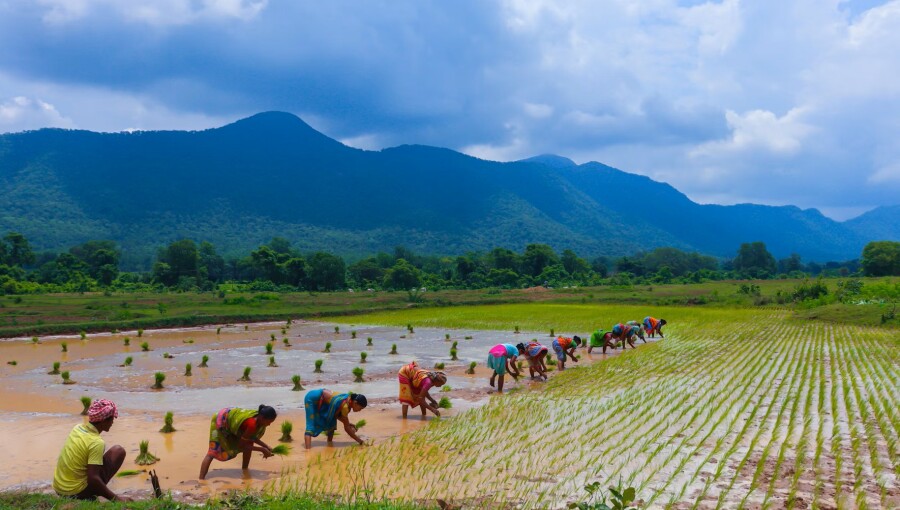
India’s grain crops countrywide but especially in its bread basket states of Punjab and Haryana depend on the steady supply of around 40mn tonnes of Urea which is a nitrogen based fertiliser, a report by the BBC says.
According to a press release by India’s Press Information Bureau, India had 61.11mn metric tonnes of Urea, 2.42mn metric tonnes of Diammonium Phosphate (DAP), 5.72mn metric tonnes of Nitrogen Phosphorus and Potassium (NPK), 2.48mn metric tonnes of Single Superphosphate (SSP) and 1.26mn metric tonnes of Muriate of Potash (MOP) in stock nationwide as of March 19 2026.
In the press briefing MEA spokesperson Randhir Jaiswal revealed that the Government of India had anticipated the supply chain disruptions and had already issued tenders globally to stock up on fertiliser stocks, and that they “expect the bulk of the quantities ordered from a variety of sources to arrive by the end of March”.
According to an official gazette notification on March 9 2026 by the Government of India, the country has vowed to supply fertiliser plants “with at least 70% of their average natural gas consumption based on the last six months.”
Furthermore, according to a report by MoneyControl, the Indian government has also asked domestic fertiliser manufacturing facilities to alter their maintenance schedules to accommodate higher levels of production and be available as the risk of imported supplies of ready to use products may become scarce.
In addition, according to a report by CRISIL Ratings, India could also be looking at an over 10-15% yearly dip in production of Urea and other complex chemical fertilisers if the disruption in precursor chemical supply chain extends to around 90 days.
Citing unnamed senior officials in the Indian government the MoneyControl report also paints China as India’s main alternate source, if supplies from its traditional partners are lower for any reason.
While China is certainly a surplus producer of both precursor chemicals and ready to use fertilisers, New Delhi would also be sourcing from traditional partners and vendors from Russia, Morocco, Canada and Togo which can potentially redirect fertiliser or precursor chemical cargos to India via maritime routes bypassing Strait of Hormuz.
Follow us online