
Iranian warship sunk by US submarine was not in Indian waters
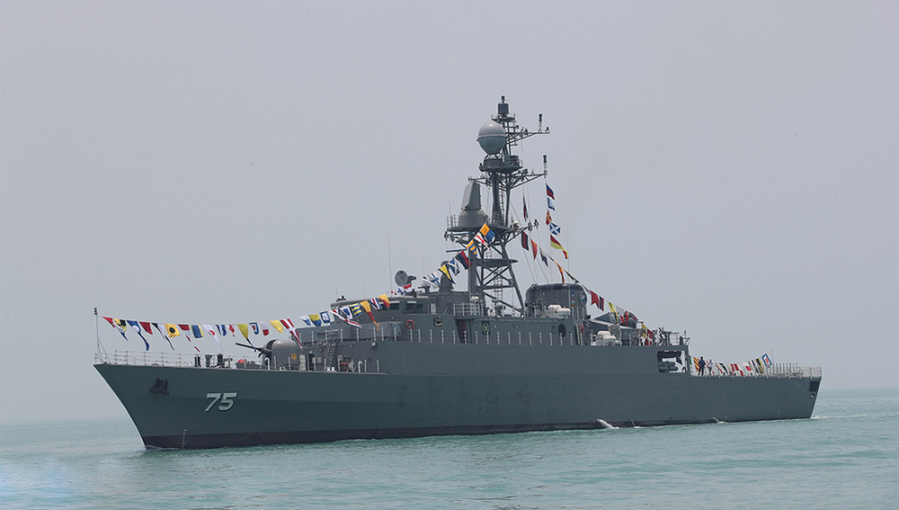
An Iranian warship IRIS Dena was sunk by a US submarine near Sri Lanka on March 4 2026. The attack was carried out by an unnamed hunter killer submarine of the US Navy prowling the Indian Ocean and operating very close to both Sri Lanka and India.
According to a later press briefing by the US Department of War the ship was sunk in international waters using a Mk48 torpedo and marks the first such attack by a US subsurface combatant against a capital ship since the second world war.
The IRIS Dena was a Moudge-class frigate in Iran's regular navy fleet and was in the region after participating in the Indian Navy organised International Fleet Review between February 15-25 2026.
The frigate was sailing back from the event when the US and Israel launched combat operations against Iran on February 28 2026.
According to a report by Reuters, the Sri Lanka Navy has confirmed that it rescued 79 members of the crew and gave them medical assistance. However over 100 crew members were unaccounted for.
The sinking of the IRIS Dena was outside India’s territorial waters as well as Exclusive Economic Zone(EEZ), - the reason the Indian Navy was not the first responder. Social Media commentary by Indian users lamented that the war against Iran has now expanded from the Persian Gulf into the Indian Ocean which is roughly the area where India is projected as a net security provider.
However, as under international law India only has security jurisdiction in its own territorial waters as well as some limited influence in transit and use of resources in the EEZ it is unreasonable to expect that the attack could be deterred or intervened in by the Indian Navy.
As such, the vast and technical maritime domain awareness challenges aside, the Indian Navy which falls under the direction of India’s civilian political leadership has not received any orders to take sides in the conflict.
While India is anticipating a disruption in its energy challenges due to the combat operations in the Persian Gulf leading to the closing of the Straits of Hormuz, it has not confirmed if its Navy will escort any oil tankers and other hydrocarbon shipments from the region towards its shores.
India is instead likely to raise its purchases of Russian crude oil and other fuels as required till the crisis in the Middle East ends. While the US administration has previously warned India that it will be slapped with punitive tariffs if it resumes purchases of Russian oil, short term purchases under the fog of war may still happen.
Furthermore, the loss of capital naval ships in the conflict zone may be costlier to India both politically and in terms of reputation than the economic cost of bearing high US tariffs in the short term.
Follow us online