
Niger puts nationalised Somair uranium on global market amid standoff with France’s Orano
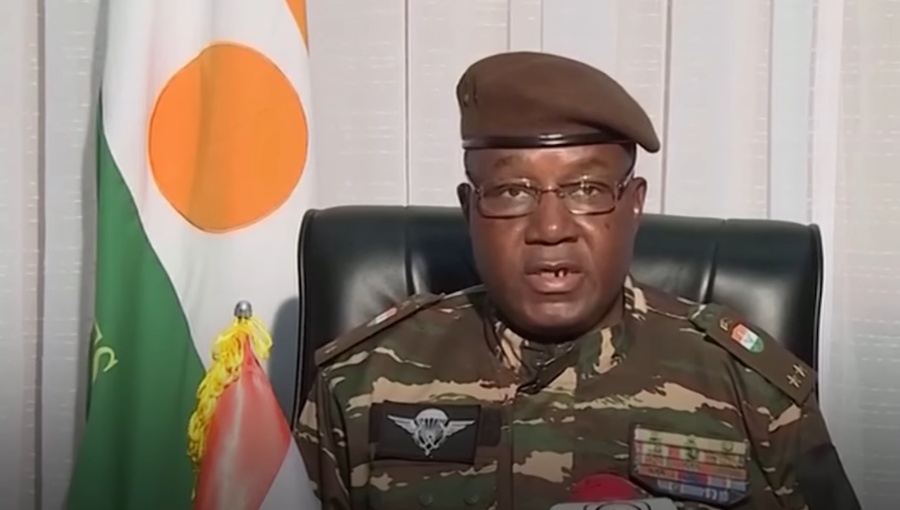
Niger’s military government has announced it will begin selling uranium produced by Somair on the international market, months after nationalising the mine previously operated by French nuclear-fuel group Orano. The statement was broadcast on state television Tele Sahel on November 30 and cited junta leader General Abdourahamane Tchiani.
Somair, established in 1971 and historically co-owned by Orano and the Nigerien state, has long been one of Niger’s most important uranium assets, typically accounting for roughly one-third of national production.
Niger is the world’s seventh-largest uranium producer, with annual output averaging 2,020–2,500 tonnes in recent years, according to the World Nuclear Association. Orano, which is 90% owned by the French government, has supplied nuclear fuel to European utilities for decades from its Nigerien operations.
Tele Sahel reported that Tchiani asserted Niger’s right to sell its mineral resources independently “to whoever wants to buy them,” according to the broadcast summary. The government did not disclose buyers, contract structures or expected volumes. Any diversion from earlier offtake arrangements could raise contractual-compliance and traceability questions for potential customers, particularly in regulated markets such as the EU, the US and Japan, where nuclear-material origins must be documented.
The dispute also encompasses Orano’s rights to Imouraren, one of the world’s largest undeveloped uranium deposits. The project has been delayed for years—officially due to market conditions—becoming a recurring source of tension between Niamey and Paris.
France has historically relied on Niger as one of its key uranium suppliers, and Niger was among the EU’s top-three uranium exporters before the 2023 coup, although French utilities have diversified their sourcing towards Kazakhstan, Canada and Uzbekistan.
Relations between the junta and France deteriorated sharply after the 2023 military takeover, followed by Niamey’s expulsion of French troops and suspension of defence and cooperation agreements. Orano has maintained that it retains legal rights to its assets and has warned that security, environmental-compliance and operational conditions have deteriorated around its sites since 2023.
Russia has publicly signalled interest in Niger’s uranium sector. Russian Energy Minister Sergei Tsivilev said in July that Moscow was “keen to explore mining opportunities” in the country, although Niger’s Ministry of Mines has not announced any binding agreements or licences. The junta has nonetheless strengthened security cooperation with Russia alongside similar shifts in Mali and Burkina Faso, where military regimes have also pivoted away from Western partners.
Renewed uncertainty around Niger’s uranium sector comes at a time when global uranium prices have risen sharply due to new nuclear-power commitments in Asia, Europe and North America. The real market impact depends on production continuity at Somair—conditions that have not been independently verified since the nationalisation in June.
Niger’s move further underscores the decline of regional influence by the regional bloc ECOWAS, whose sanctions and diplomatic pressure failed to reverse the 2023 coup. The announcement signals the junta’s intention to assert sovereign control over strategic mineral exports and to reposition the country’s partnerships outside its traditional alignment with France. Orano has not publicly commented on the latest developments.
Follow us online