
Russia’s nuclear exports a flourishing geopolitical asset, after four years of Ukraine war
Four years after the invasion of Ukraine triggered sweeping Western sanctions, Russia has managed to preserve one of its most important channels of global influence: civil nuclear exports.
Russia’s nuclear exports are booming. Since the Chernobyl disaster in the 1980s, Russia has closed down all the RMBK-type reactors and replaced them with its state-of-the-art VVER reactors that are considered to be some of the safest in the world.
Today, Moscow’s state nuclear corporation, Rosatom, “remains the world’s leading exporter of nuclear reactors” and continues to secure long-term energy partnerships across emerging markets, according to a report by the Washington-based Center for Strategic and International Studies (CSIS). With more than two dozen projects overseas and multiple countries entirely dependent on Russian nuclear fuel supplies, the West has reframed from imposing sanctions on Rosatom or uranium exports.
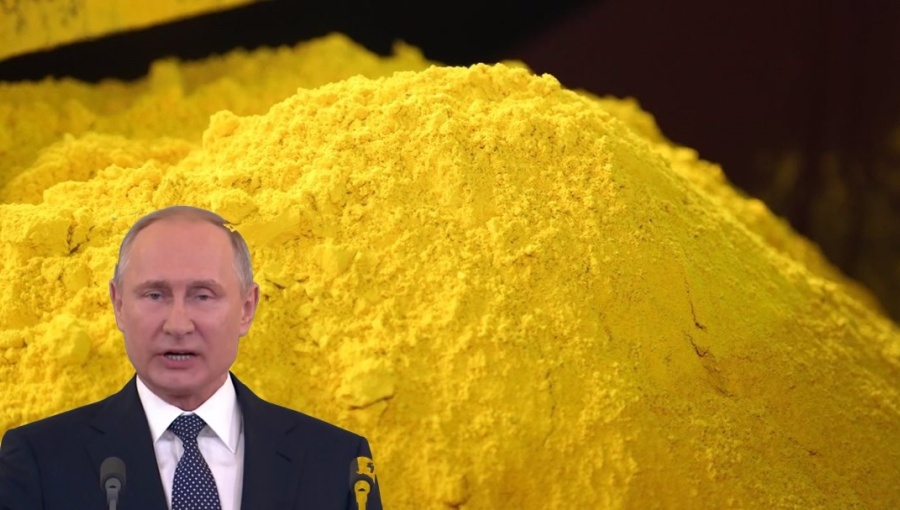
Uranium is the new gas. The Kremlin has used energy relations to build up a client base that is dependent on Russia for a large part of its energy generation. Rosatom’s business model is nuclear technology deals that usually come with long-term financing, maintenance and 60-year fuel supply obligations that bind clients to Moscow for the long-term.
The geopolitical implications are significant. CSIS argues that civil nuclear agreements “bind partner countries into long-term technological and fuel dependencies”, giving Moscow durable influence over critical infrastructure and energy policy.
Rosatom’s pitch is particularly attractive package for poor countries in the Global South, seeking to expand nuclear power but lacking domestic expertise or capital. By providing state-backed financing of up to 90% of the cost of a project on easy terms, alongside construction and operational support, Rosatom has secured projects in regions including the Middle East, Asia and Africa.
At the same time, the war in Ukraine has prompted renewed efforts in the US and Europe to weaken Russia’s dominance in the nuclear fuel market. Russia controls a substantial share of global uranium enrichment capacity and fuel fabrication, creating a strategic vulnerability for many Western reactor operators. The US has formally banned the import of Russian uranium, but as it has little domestic production of enriched uranium of its own, it has simultaneously issued all US importers of Russian uranium a waiver until 2028 when the US’ own production is supposed to come online.
Russia has also used its uranium exports as a geopolitical weapon. It threatened to ban uranium exports to the US in September 2024, after the US gave Ukraine limited permission to use Nato-made on targets inside Russian territory. However, Deputy Foreign Minister Sergei Ryabkov said the decision would “not be taken lightly,” and was never implemented.
Follow us online