
Ukraine steps up attacks on Russian oil infrastructure to record monthly high in April

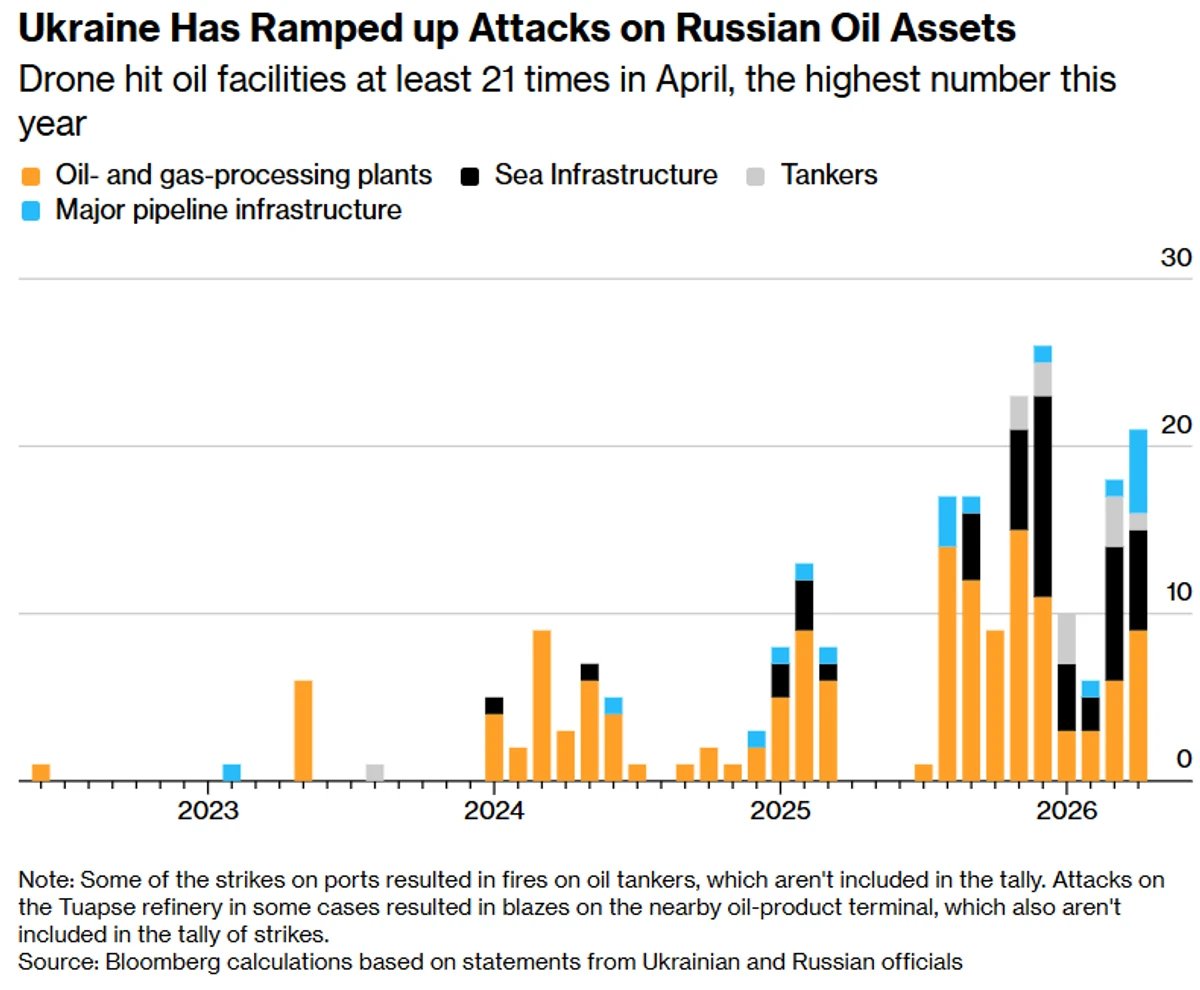
Ukraine has intensified its long-distance missile campaign against Russian oil infrastructure, carrying out a record 21 attacks on refineries, sea terminals and pipelines in April — the highest monthly total since December — as Kyiv seeks to erode Moscow's windfall revenues from soaring global oil prices driven by the Iran war.
At least nine of the strikes hit Russia's refining sector alone, the most in a single month this year, according to Bloomberg. The wave of attacks has pushed average daily refinery throughput to 4.69mn barrels, the lowest level since December 2009, according to energy analytics firm OilX.
After its Western partners remained reluctant to increase sanctions on Russian oil exports, Kyiv took matters into its own hands last year and scaled up its attacks on Russian refineries in an attempt to cut the amount of oil Russia produces and exports.
That campaign was further intensified since the Iran war broke out as Kyiv began to target the Russian oil terminals in the Baltic Sea of Primorsk and Ust-Luga, which have been hit almost constantly and may have reduced Russia’s oil exports by a reported 20%, according to Reuters.
The squeeze is also impacting Russia's domestic fuel market at a particularly sensitive moment, as seasonal demand rises ahead of summer. The disruption to processing capacity is also limiting Moscow's ability to ramp up crude production toward its OPEC+ quota ceiling just as global prices rise above $120 a barrel. The Russian Urals blend has been one of the biggest winners and has been trading at a $20 premium to Brent when historically it traded at a $2 discount.
As one of the only global oil producers that is not directly affected by the shuttering of the Strait of Hormuz, reducing Russian refinery output is only adding pressure to global diesel supplies at a moment when Middle East production disruptions have already tightened the market for refined products.
Kyiv has said the attacks are deliberate and designed to undermine Moscow's expected windfall the Kremlin will earn from elevated energy prices.
Follow us online