
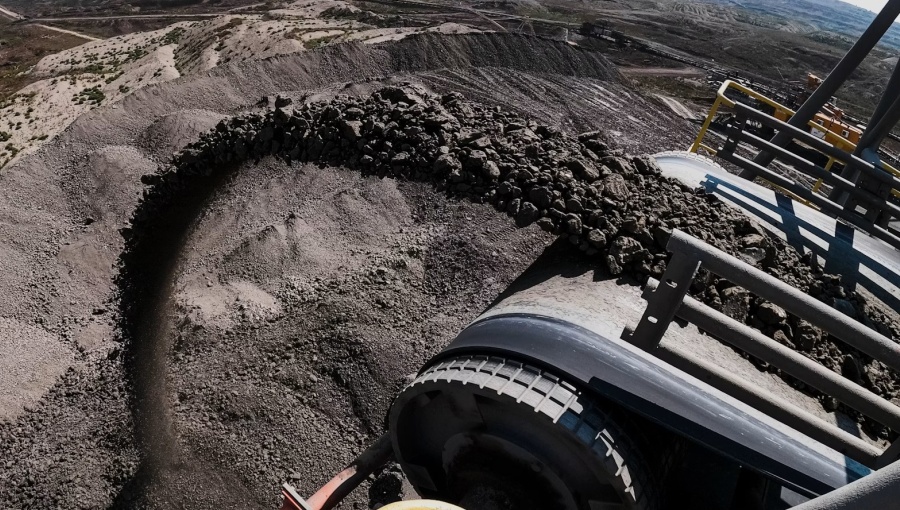
Asia’s coal comeback complicates energy transition across region
The war in Iran is reshaping Asia’s energy landscape and forcing governments to reconsider existing coal phase-out plans as fears grow over disruptions to LNG exports from Qatar and the continued closure of the Strait of Hormuz.
According to The Economy, countries across the region are reviving coal-fired generation to shore up electricity supplies, not least Taiwan where the government has resumed purchases of coal-fired electricity, while across the Taiwan Strait, China too is increasing investment in coal use. South Korea and Japan meanwhile are moving to ease restrictions on coal-fired power generation as governments prioritise energy security.
According to Bloomberg, Taiwan Power Co. has been purchasing coal-fired electricity from the Mailiao power plant since April. Taiwan, home to some of the world’s largest semiconductor producers, relies on LNG for around half of its electricity generation, and in 2024 about one-third of its LNG imports came from Qatar.
But with the Iran war disrupting supply chains after Qatar’s largest LNG export terminal shut down, Taiwan has struggled to secure LNG supplies through May and finalised contracts covering roughly half of June demand, but additional procurement costs are expected to reach into the billions of US dollars to complete.
As such, the renewed use of coal is intended both to address supply risks and to limit the impact of higher gas prices on electricity tariffs.
China is also responding to the ongoing limit in supplies by changing how coal is used rather than simply burning more of it for power generation. The report says that China Shenhua Energy, the country’s largest listed coal producer, plans to cut coal output by 0.6% this year while increasing investment in coal-to-olefin production facilities; olefins being key feedstocks for plastics, textiles and solvents. The company also plans to double annual production capacity to 1.4mn tonnes next year.
The shift reflects tightening supplies of oil-derived feedstocks such as naphtha and liquefied petroleum gas (LPG), both affected by disruption in the Strait of Hormuz. China International Capital Corporation said coal’s profitability advantage over oil in chemical production has reached its highest level since 2015.
South Asia and the subcontinent are facing similar pressures. Bangladesh has increased coal-fired generation and electricity imports since March while rationing gas supplies. At the same time, Pakistan has avoided blackouts on the scale seen during the Ukraine war in 2022 thanks to expanded solar capacity, but it is also increasing domestic coal generation and curbing demand for now.
India is responding by raising coal imports while reducing industrial gas consumption for the same reasons.
To the east, governments in Southeast Asia are also formalising fuel-switching policies. Philippine Energy Secretary Sharon Garin recently told Reuters that the Philippines plans to increase coal-fired generation – at least temporarily – to contain rising electricity costs. Without intervention, electricity tariffs could rise by around 16% as early as June.
Manila is now seeking stable coal supplies from Indonesia, reversing a trend that saw Philippine coal-fired generation decline last year for the first time in nearly two decades.
Vietnam’s state utility EVN is another body negotiating additional coal imports to conserve LNG supplies, while Thailand has increased operating rates at its largest coal-fired power plant and has also raised biofuel blending ratios from 7% to 10%.
South Korea and Japan in Northeast Asia are also finding it increasingly difficult to maintain aggressive coal phase-out policies.
According to Korea Customs Service data, South Korea imported 8.82mn tonnes and 9.08mn tonnes of coal in March and April respectively, up 26.3% and 27.2% year-on-year, the report adds. In doing so, combined imports for the two months reached their highest level in three years.
Coal imports rarely reach winter-like levels during spring, when energy demand is usually lower. The increase thus reflects tightening LNG supplies caused by the Hormuz crisis and force majeure declarations in Qatar. In knock-on effect, South Korea’s LNG imports fell 10.2% year on year in March and 14.6% in April.
In response, Seoul lifted the seasonal 80% operating cap imposed on coal-fired plants for air quality reasons. Even as early as March 24, President Lee Jae-myung instructed officials to review closure plans for three coal-fired units — Hadong Unit 1, Boryeong Unit 5 and Taean Unit 2 — which had been scheduled to shut from June.
Seoul has also decided to expand nuclear generation significantly to offset LNG volatility but for now, coal is viewed as the quickest short-term substitute because existing infrastructure is already in place.
Japan is taking a similar approach given that more than 90% of its crude oil imports come from the Middle East, with around 70% passing through the Strait of Hormuz.
As a result, and according to NHK and Nikkei, Tokyo suspended operating restrictions on thermal power plants for one year from April 1 as part of emergency energy measures. The government is simultaneously diversifying crude imports while relying on coal-fired generation as a contingency option.
Follow us online