
China added a Germany-sized electricity grid last year - OWID

We’ll often see headlines quoting how many gigawatts of new solar farms or coal plants China is building. But it’s hard to get a meaningful sense of scale for how electricity generation in China is changing.
The chart puts it in perspective.
In 2025 alone, China’s electricity generation increased by almost 500 terawatt-hours (TWh). This is compared here to the total amount of electricity that whole countries generate each year.
Germany generates almost exactly that amount. That means China effectively added a Germany-sized grid to its electricity system in just one year.
What’s also quite staggering is that almost all of this new generation came from solar and wind. China generated 340 TWh more electricity from solar than the year before.
That’s more than our two home countries, the UK and Spain, generate from all sources each year.
Low-carbon sources grew so much that coal power in China actually fell slightly.
China also just switched on the world's largest offshore solar farm 2.3mn solar panels. 2,934 steel platforms. 11,736 piles driven into the ocean floor. Built to survive force-11 gales and sea ice. It sits 5 miles off the coast and powers 2.67mn people.
Massive nuclear roll out
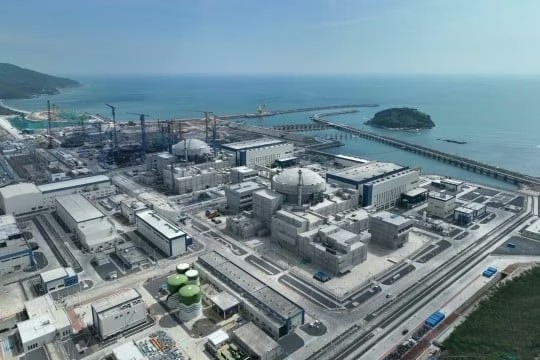
China has expanded its nuclear power programme at a pace unmatched by any other country, with the capacity to construct as many as 50 reactors simultaneously as Beijing accelerates efforts to strengthen energy security and cut emissions.
The country currently operates 60 nuclear reactors connected to the national grid, while a further 36 reactors are under construction, according to industry data. That accounts for more than half of all nuclear reactors being built worldwide.
Chinese authorities are also expected to commission seven additional reactors before the end of the year, further cementing the country’s position as the centre of global nuclear expansion.
The rapid deployment reflects a highly standardised approach to reactor construction. China has relied on repeat reactor designs, integrated domestic supply chains and strong state backing to reduce delays and lower construction costs.
Analysts say Beijing has effectively transformed nuclear development into an industrial-scale manufacturing process, allowing multiple projects to advance in parallel across different provinces.
The expansion forms part of China’s broader strategy to diversify away from coal dependence while meeting rising electricity demand from industry, data centres and electric vehicles. Nuclear energy is expected to play a growing role in providing stable baseload power alongside the country’s large-scale investments in renewable energy.
Follow us online