

China powers ahead in nuclear while US reactor ambitions stall
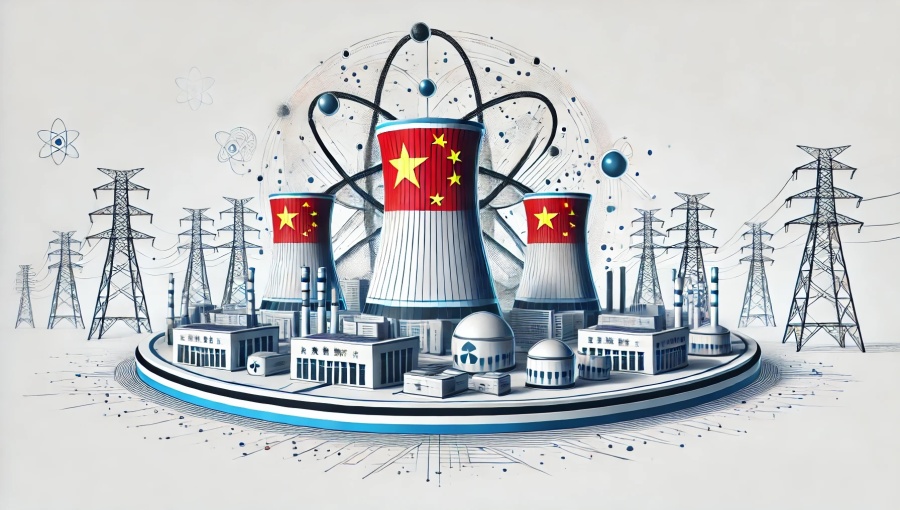
China has emerged as the world’s leading builder of nuclear power plants, completing new reactors in as little as five years, while the United States—once the global leader in nuclear technology—has seen its reactor development efforts stall amid rising costs, regulatory uncertainty, and political hesitation.
According to the World Nuclear Association, China currently has 26 reactors under construction, more than any other country, and continues to invest heavily in nuclear energy as a core pillar of its long-term energy strategy. In contrast, the United States is not building any new commercial reactors, following the cancellation or indefinite delay of multiple high-profile projects.
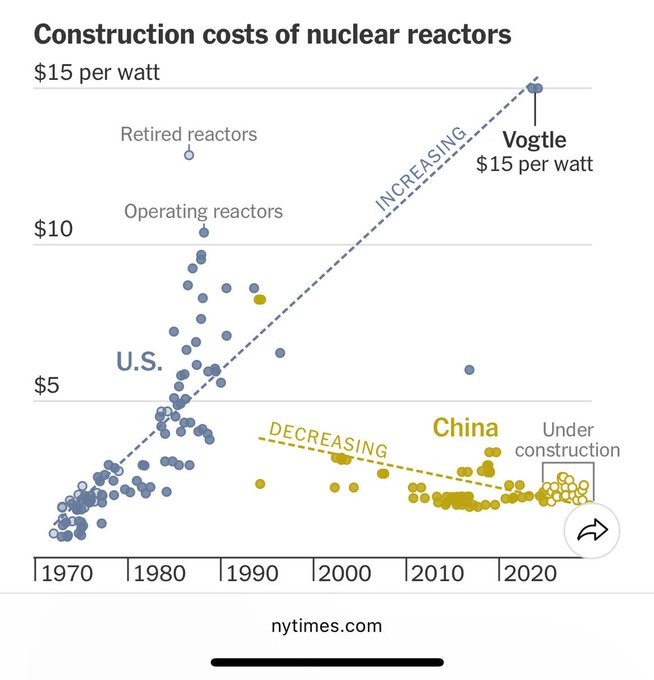
Nuclear power is the cheapest and most efficient way to generate reliable electricity yet over the past decades, the US has become worse at building reactors, while China has become better, say experts.
The divergence in timelines is stark: China typically completes a nuclear reactor in five to six years, while in the US projects routinely take ten years or more, often running far over budget. The most recent example, the Vogtle expansion in Georgia, was completed in 2023—seven years behind schedule and more than $17bn over budget.
The US Department of Energy had supported efforts to revive domestic nuclear construction during the Trump administration, including a small modular reactor (SMR) demonstration project near Idaho Falls. The reactors were intended to operate as a cooperative on federal property, using advanced passive safety features. But the project was cancelled in late stages, after participating states withdrew over cost concerns.
Despite the promise of new reactor designs—many of which offer improved safety and scalability—funding gaps and political uncertainty have limited US momentum.
By contrast China is emerging as the global green energy champion and has thrown itself into nuclear power station construction. Nuclear development continues to be state-driven and centrally coordinated, with the government viewing it as essential to achieving energy security, decarbonisation, and industrial competitiveness. China has also become a leading exporter of nuclear technology, challenging Russia's long lead in nuclear technology. China has plans to supply reactors to countries in the Middle East, Africa, and Southeast Asia, while Russia’s nuclear exports are already booming.
This growing asymmetry in industrial capability has contributed to Washington’s strategic anxiety over Beijing’s rise and threatens to displace it economically, industrially, and technologically.
China’s nuclear buildout is not without challenges—local opposition, environmental concerns, and long-term waste storage remain unresolved. But the country’s ability to deliver projects consistently and at scale underscores a growing gap in technical competence.
Follow us online