
Developing countries must not bear climate burden alone, Central Asian leaders say
Leaders from Central Asia and neighbouring countries issued a stark warning on Wednesday that the global shift to a low-carbon economy risks deepening inequality unless it is managed fairly, with stronger support for developing countries that have contributed least to climate change but face some of its most severe consequences.
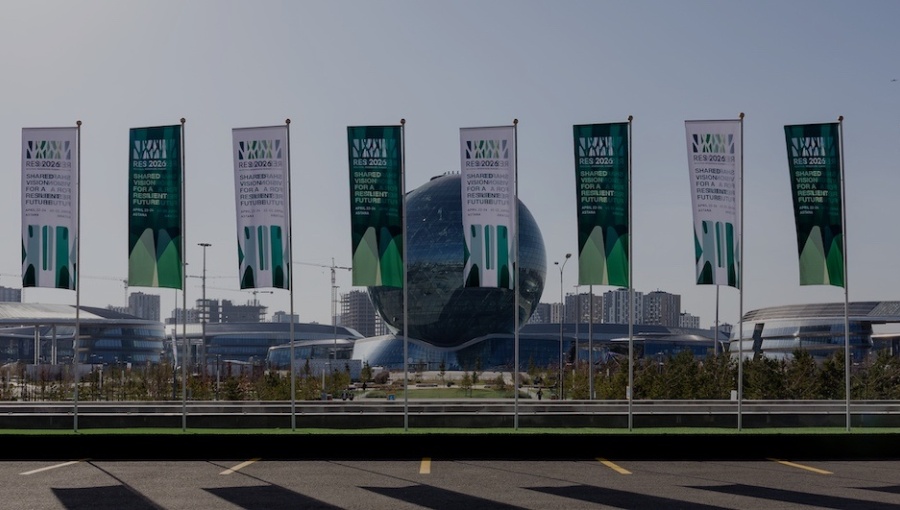
At the Regional Ecological Summit summit in Astana on April 22, Kazakhstan’s President Kassym-Jomart Tokayev stressed that climate policy must not come at the expense of development, calling for a more balanced and inclusive approach from the international community.
“Developed nations have reached their current level through years of industry,” Tokayev said. “From my perspective, selected approaches should not be accepted on ecological matters. The transition must be fair and balanced.”
He warned against policies that could constrain growth in emerging economies. “We must allow countries to move forward without compromising opportunities for development and progress,” he said. “There should be no naming, shaming or blaming.”
Tokayev framed environmental cooperation as inseparable from global stability. “These efforts should work for peace and just development,” he said. “Nature can exist without geopolitics — and geopolitics cannot exist without nature.”
The Kazakh leader emphasised the shared risks facing the region. “We share rivers, landscapes and climate risks, and most importantly we share responsibility,” he said, listing water scarcity, desertification, air pollution and biodiversity loss among the most pressing challenges. “The time for making solutions has come.”
Unequal burden
His comments were echoed by other leaders, who pointed to mounting environmental damage despite their countries’ relatively small contributions to global emissions.
Uzbekistan’s President Shavkat Mirziyoyev said climate change was accelerating across Central Asia, with visible and measurable impacts.
“Nearly one third of glaciers have been lost in the region,” Mirziyoyev said. “Precipitation patterns are increasingly erratic, water shortages are growing, and land degradation now affects 80 million hectares.”
He criticised what he described as a gap between global commitments and real action. “Declarations and calls for action are not backed by action,” he said. “Once again, the countries that have contributed the least to climate change are left to face the consequences on their own.”
Mirziyoyev called for concrete support mechanisms. “There must be international solidarity,” he said. “Developing countries must have access to climate finance and advanced technologies.”
Armenian President Vahagn Khachaturyan highlighted the vulnerability of mountainous countries, noting that Armenia contributes just 0.02% of global greenhouse gas emissions.
“As a mountain country, Armenia already faces serious impacts of climate change,” he said. “The average temperature has increased and is expected to continue rising by mid-century.”
He pointed to a rise in extreme weather events. “Climate change has led to more floods and ecological losses,” Khachaturyan said. “Like other mountain states, our country is vulnerable to climate change and environmental degradation.”
Khachaturyan called for more focus on those most at risk. “We want to prioritise the most vulnerable developing countries, including mountainous ones,” he said. “Together we can protect our planet and ensure long-term resilience for our societies.”
Economic toll
Kyrgyzstan’s President Sadyr Japarov described a growing economic toll from climate impacts, warning that the country’s development prospects are increasingly under threat.
“Climate-related challenges are affecting economic development and the wellbeing of our people,” Japarov said. “Kyrgyzstan accounts for only 0.3% of greenhouse gas emissions and at the same time bears a disproportionately heavy burden.”
He cited a sharp increase in natural disasters. “Mudflows and floods have tripled since 2020, causing almost $16 million in damage annually,” he said.
Japarov warned of long-term risks tied to glacier loss. “There has been a 16% decrease in glacier coverage, and by 2100 we may lose up to 80% of our glaciers,” he said. “This would be catastrophic not only for our country but for the entire region.”
He added that water systems are already under strain. “The water level in Lake Issyk-Kul has dropped, and the number of rivers flowing into it has decreased from over 100 to just 30,” he said.
Kyrgyzstan’s reliance on hydropower adds further pressure. “Our energy sector relies on hydropower, which is already facing growing winter shortages,” Japarov said, warning that inaction could reduce GDP by 2-3% by 2040.
Tajikistan’s President Emomali Rahmon described water scarcity as a global crisis requiring urgent cooperation.
“Water scarcity and environmental degradation have become a humongous challenge not just regionally but worldwide,” Rahmon said. “This undoubtedly requires joint and coordinated efforts.”
He noted that Tajikistan is the source of around 60% of Central Asia’s water resources but is facing rapid environmental change.
“Of about 14,000 glaciers, around 1,400 have completely disappeared,” he said. “We are concerned about ever-retreating glaciers and smaller and smaller snowfalls … The intensification of glacier retreat is creating a whole set of threats to the environment and leading to disturbances in water supply.”
He also highlighted a sharp rise in extreme weather events. “In 2025, there were over 60 dust storms lasting a total of about seven months. This has never happened before. In the early 1990s, there were only two or three such episodes per year.”
Mongolian President Ukhnaagiin Khürelsükh said his country’s fragile ecosystems are already under strain.
“Mongolia is located in high mountain territories with eternal snow, glaciers and permafrost,” he said. “Our unique but vulnerable system has already experienced the impact of 21st century changes, including water scarcity and environmental degradation.”
He warned of severe future shortages. “By 2050, water resources may fall by 50%,” Khürelsükh said. “We have a common challenge in the scarcity of drinking water and the need to protect mountainous ecosystems.”
Returning to the global context, Tokayev said environmental challenges are unfolding against a backdrop of rising geopolitical tension.
“We meet at a time of growing uncertainties and unpredictability,” he said. “These deeply affect global and regional stability and the quality of life of millions of people. They undermine development and divert resources away from environmental challenges.”
He called for stronger international governance, and warned against selective approaches to global rules. “The role of the international community does really matter,” Tokayev said. “The UN Charter must be preserved. We should avoid the selective application of the UN Charter to military conflicts. From my perspective, selected approaches should not be accepted on ecological matters either.”
Tokayev said the scale of current change is unprecedented. “We have entered an era of transformation of such nature and scale that it is unprecedented and therefore unpredictable,” he said.
He also stressed that environmental policy should be understood in human terms. “Ecology is not limited to climate alone. It is about human livelihood, clean air, safe water, healthy food and secure food systems. Ecology is a way of living responsibly on our shared planet.”
Follow us online