
EV sales overtake petrol vehicles in EU for first time
Sales of EVs overtook standard petrol cars in the EU for the first time in December 2025, marking a milestone in the bloc’s transition to cleaner transport and reducing its reliance on oil imports, according to data published by the European Automobile Manufacturers’ Association.
Registrations of battery electric vehicles (BEVs) reached 217,898 in December, up 51% year-on-year, while petrol car sales fell 19% to 216,492, Carbon Brief reported on March 30, citing ACEA figures. The shifit to EVs is accelerating and will now only accelerate after the Gulf war is expected drive up petrol prices dramatically this year. Already sales of EV in Europe have increased significantly in just the last few weeks.
Across the full year, EVs accounted for 17.4% of EU car sales in 2025, up from 13.6% in 2024. A total of 1,880,370 BEVs cars were registered, with Germany, the Netherlands, Belgium and France together making up 62% of demand. ACEA described this as “still a level that leaves room for growth to stay on track with the transition”.
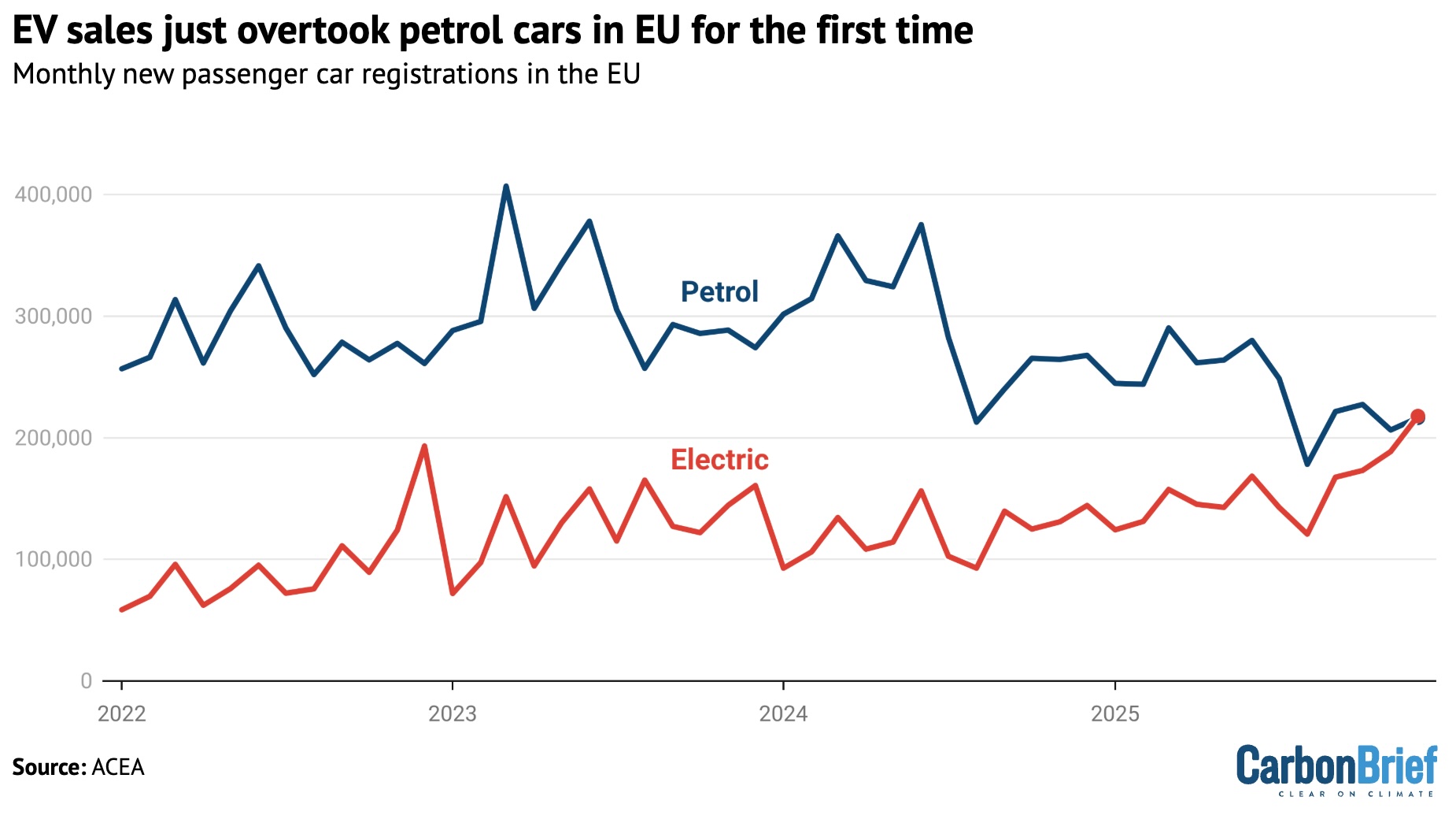
By contrast, registrations of petrol cars declined 18.7% over the year to 2,880,298 units, with France recording a 32% drop, followed by Germany, Italy and Spain. Petrol’s market share fell from 33.3% in December 2024 to 26.6% a year later.
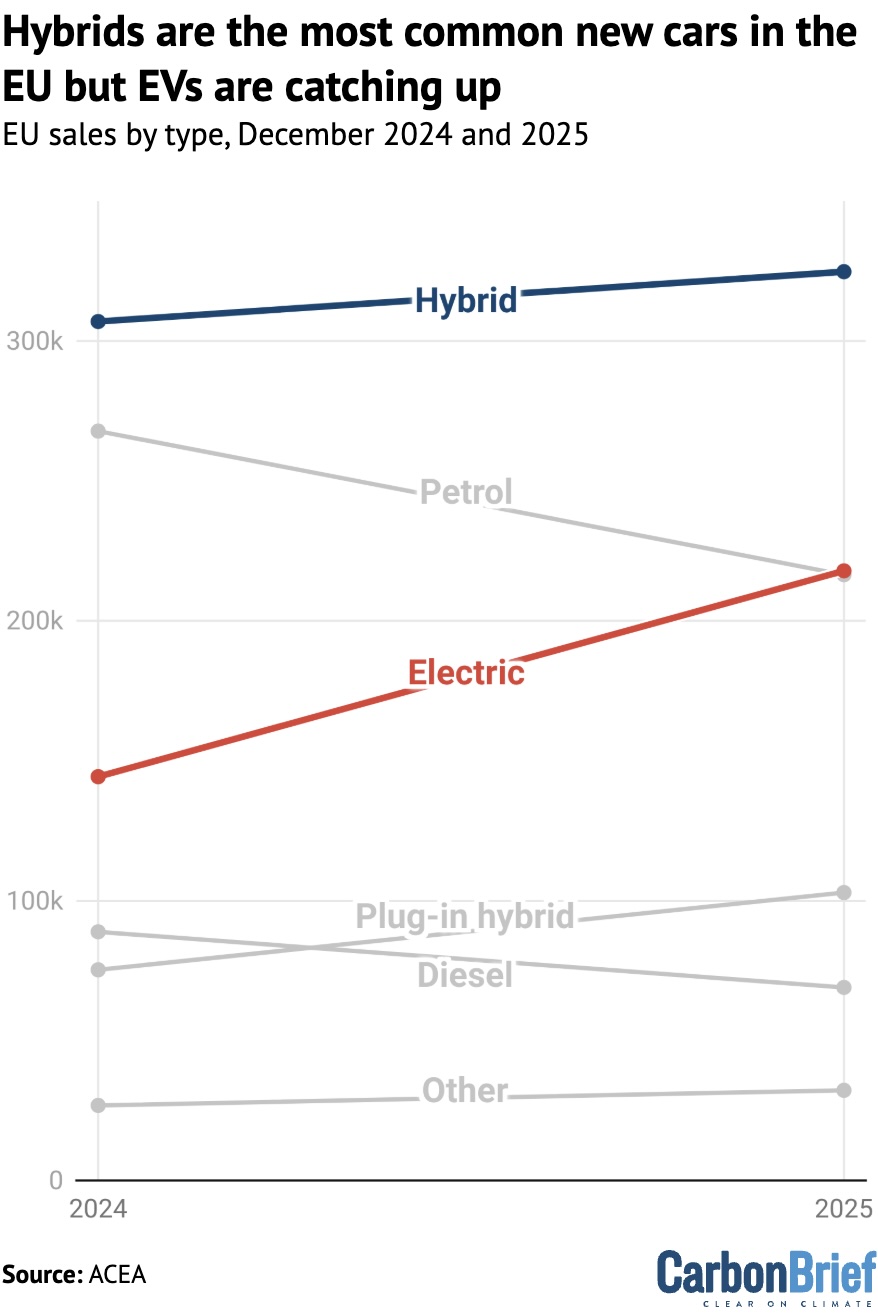
Hybrid vehicles remained the largest segment of the EU market, with sales rising 5.8% year-on-year in December to 324,799 units. However, vehicles capable of drawing power from the grid — including BEVs and plug-in hybrids — expanded more rapidly, with plug-in hybrid sales increasing 36.7% during the month.
The figures come as the EU adjusts its regulatory framework for the automotive sector. A package released in December proposes shifting from a full ban on combustion-engine car sales by 2035 to a target of reducing tailpipe emissions by 90% from 2021 levels. The remaining 10% could be offset through low-carbon fuels and materials, allowing some combustion and hybrid technologies to remain in use.
Automakers have repeatedly pushed back against stricter emissions targets, citing competitive pressure from Chinese manufacturers and tariffs in the US. The head of Stellantis (STLAM.MI) in Europe recently claimed there was no “natural” demand for EVs.
Volkswagen (VOW.DE) retained the largest EU market share at 26.7% in December. Tesla (TSLA) saw its share fall to 2.2% from 3.5% a year earlier, while China’s BYD (1211.HK) increased its share to 1.9%.
Follow us online