

Global oil inventories falling at record pace, critical storage threshold about to be breached - IEA
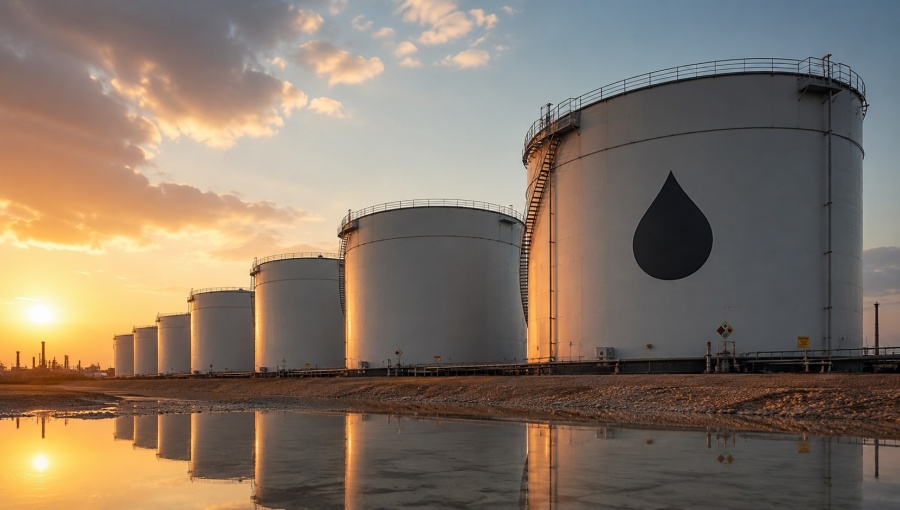
Global oil inventories are declining at a record rate as the market absorbs a major Middle East supply disruption, raising the risk of sharp price increases if the Strait of Hormuz remains closed, according to the International Energy Agency.
In its latest monthly market update, the IEA said stockpiles are being drawn down rapidly to offset lost supplies and warned that inventories could approach critical levels if the key shipping route does not reopen. “Rapidly shrinking buffers amid continued disruptions, may herald future price spikes ahead,” the agency said.
The warning comes as industry executives and analysts increasingly focus on the role of inventories in cushioning the market from supply shocks. Darren Woods, chief executive of ExxonMobil (XOM), told the company’s first-quarter earnings call that the oil market “has not felt the full impact of the supply loss thanks to commercial inventories held by the industry, strategic reserves controlled by governments and tankers in transit”.
Those stocks helped mitigate the disruption during March and April, Woods said, but he cautioned that inventories were nearing a critical threshold. Commercial inventories would eventually fall to levels where they could no longer serve as an effective source of supply, he said. “We anticipate as that happens and the strait remains closed, that we will continue to see increased prices in the marketplace,” Woods said.
Analysts at UBS expect global inventories to approach historic lows by the end of May. Market participants argue that inventories do not need to be exhausted to trigger severe price volatility because a substantial portion of global stocks is required to keep pipelines, storage facilities and transport networks operating efficiently.
According to estimates cited by analysts, global inventories have fallen from more than eight billion barrels in February to roughly 7.6bn barrels. If the Strait of Hormuz remains closed into September, inventories could decline to about 6.8bn barrels – breaching the minimum storage level needed to operate the oil transport system.
Billions of barrels in inventory may sound like a lot but the reality is that only about 800mn barrels are available without straining the system if the technical reserves are removed from the equation. Those reserves are needed to keep pipelines and tanks filled at minimum levels so the supply chain actually works and oil put in at one end of a pipe comes out of the other end. Below the minimum levels and the energy system breaks down.
Rosemary Kelanic, director of the Middle East Program at Defence Priorities, said higher prices would likely be needed to curb demand before inventories reached those levels. “That level of spike -- to $150 or even $200/barrel -- will cause ‘severe economic contraction’ in 3Q2026 according to Rapidan, a top-notch shop,” she said. “In other words, if Trump doesn't make concessions to reopen Hormuz imminently -- and perhaps even if he does! -- we're looking at a global recession.”
Follow us online