
Hungary’s battery boom is causing a water crisis
Hungary’s ambition to become Europe’s electric vehicle battery hub is colliding with a growing environmental reality: the country is running short of water, Center for European Policy Analysis (CEPA) said in a report.
After years of courting Chinese manufacturers with generous incentives and streamlined approvals, Budapest is being forced to reconsider the balance between industrial growth and resource security as severe drought grips large parts of the country. The shift has become one of the first major tests for the newly installed Prime Minister Peter Magyar following his recent election victory in April.
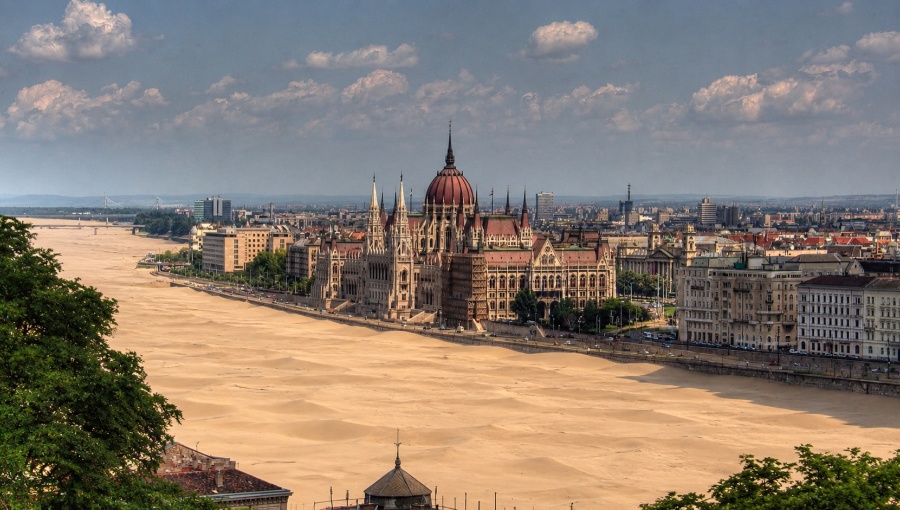
Hungary faces what officials describe as an “unprecedented water crisis.” Years of below-average rainfall, falling groundwater levels and growing industrial demand have combined to place increasing pressure on water supplies. The problem has been magnified by the rapid expansion of battery manufacturing, one of the most water-intensive industrial processes.
During Viktor Orban’s 16 years in power, Hungary actively positioned itself as a European centre for electric vehicle production, attracting some of China’s largest battery manufacturers. The government said Chinese investment commitments reached $16bn, helping transform the country into a critical link in Europe’s EV supply chain. However, climate pressures are starting to get in the way of that vision.
April brought exceptionally dry conditions across the country, with rainfall during a recent 90-day period running 20mm-70mm below average, CEPA reports. The agricultural consequences have been severe. Last year, drought destroyed 550,000 hectares of farmland, while more than 90% of Hungary’s territory is now considered vulnerable to severe drought damage. Farmers warn that crop yields are becoming increasingly difficult to sustain without major intervention.
At the centre of the debate are the large battery factories built or planned by Chinese manufacturers. Battery production requires substantial quantities of fresh water for refining, cooling and manufacturing processes. Critics argue that industrial consumption is increasingly competing with agricultural irrigation and household needs.
The most prominent project is the giant Debrecen battery complex being developed by Contemporary Amperex Technology Co. Limited (CATL), which has become a symbol of Hungary’s industrial transformation. The company began battery cell production at its factory near Debrecen on May 6 after securing the necessary permits and has said it complies with existing regulations and will adapt to any future legislative changes.
The new government is signalling that the regulatory environment is about to become significantly tougher.
Under Orban, environmental approvals for battery projects were frequently accelerated. Magyar’s governing Tisza Party has pledged to subject future projects to standard regulatory reviews and to conduct a comprehensive reassessment of existing developments, including CATL’s 546-acre Debrecen site.
The government has also indicated that drinking water supplies and agricultural irrigation will take priority over industrial consumption. Battery producers may be required to fund their own grey-water recycling systems and face tighter monitoring of pollution and environmental compliance.
Officials are considering the creation of an independent regulator focused on heavily polluting industries, particularly battery manufacturers. The government has also warned that repeated violations involving water contamination, air pollution or hazardous industrial chemicals could result in substantial penalties or operational suspensions.
The changing political climate is already being noticed by investors. Chinese electric vehicle manufacturer BYD (1211.HK) has reportedly instructed contractors working on its Hungarian factory to comply fully with local labour regulations, a move widely interpreted as reflecting expectations of stricter oversight under the new administration.
Despite the tougher rhetoric, Magyar has made clear that Hungary will not abandon its battery strategy entirely. The sector remains an important source of investment, exports and employment at a time when Europe’s automotive industry is undergoing a profound transition towards electrification.
Instead, the government appears to be seeking a middle path: preserving foreign investment while imposing greater environmental accountability.
The centrepiece of that approach is a new water management strategy focused on two priorities: greater public involvement in conservation programmes and a broader ecological restructuring aimed at reducing pressure on water resources. Officials are also examining large-scale water retention projects, reversing decades of policy that concentrated on draining excess water from the country through the Danube and Tisza river systems.
For Chinese investors, the implications are clear. The era of automatic approvals and light-touch oversight is ending. Future growth in Hungary’s battery sector will increasingly depend not only on labour costs and market access, but also on the availability of one of the country’s most constrained strategic resources: water.
As Hungary’s drought intensifies, the question facing policymakers is no longer simply how many battery factories the country can attract, but whether its natural resources can support them. In that sense, the country’s water shortage has become a test of a broader issue confronting governments across Europe: how to reconcile industrial policy with environmental limits.
Follow us online