

India faces twin threat of extreme heat and a slow moving monsoon
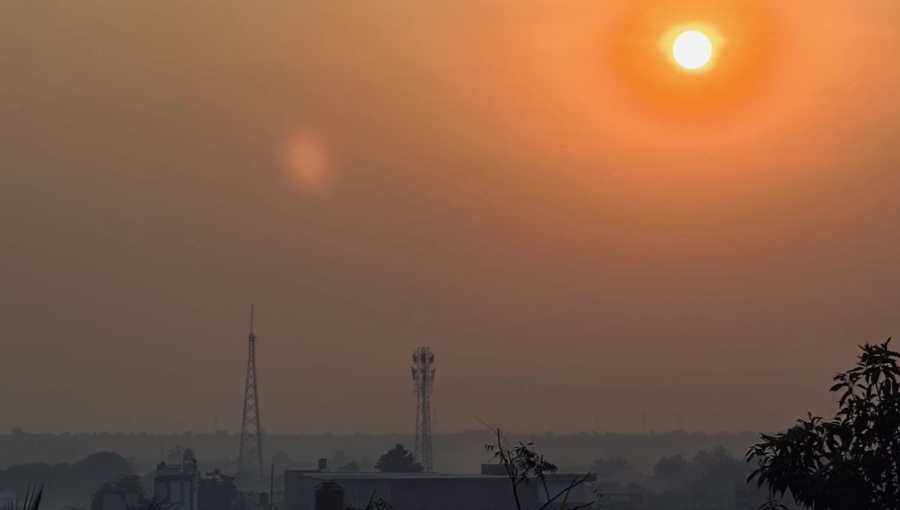
Most parts of India are facing unprecedented heatwave conditions. For several weeks, India’s capital, New Delhi, has been suffering under temperatures over 40 °C. Across the northern and eastern Indian states, temperatures as high as 45 °C have become, in the span of a few weeks, routine. Similarly, Mumbai has been facing severe humidity combined with heat. Half of June has already passed, but India’s financial hub is still waiting for the monsoon rains.
Kayly Ober, a visiting scholar with the Sustainability, Climate, and Geopolitics Program at the Carnegie Endowment for International Peace, recently wrote in an article that the 2026 heatwave in India is also being characterised by a significant rise in humidity. High humidity stops the body from cooling through sweat evaporation. Because sweating is the body's main defence mechanism against heat, high humidity can turn previously manageable heat conditions into something more serious. India’s average relative humidity rose from 67.1% between 2015 and 2019 to 71.2% between 2020 and 2024, with Delhi seeing the sharpest single-state increase of 8 percentage points, according to Ober.
“Researchers have established that a wet-bulb temperature—the combined measure of heat and humidity—of 35 degrees Celsius is the threshold beyond which even a healthy, resting adult with ample water and shade will experience a fatal rise in core temperature within hours,” Ober said.
“Air conditioning is able to remove both heat and moisture to mitigate impacts of high wet-bulb temperatures, but the cooling methods available to most Indian households—such as fans and open windows—are not. And for workers labouring outdoors in the heat, physical exertion drives temperatures to cross dangerous thresholds well before the official heat index would indicate,” Ober added.
With the monsoon rains now substantially delayed, the situation in India is not expected to change, for now at least. A June 15 report by India Today said satellite images showed the southwest monsoon had largely vanished, with vast areas of India experiencing a significant absence of rainfall activity just days after the seasonal rains advanced into southern and central regions.
According to the latest data from the India Meteorological Department (IMD), India has received just 19.2 mm of rainfall compared to a normal of 53.7 mm between June 4 and June 15, a nationwide rainfall deficit of 64%. The IMD has said that a gradual rise in maximum temperatures is likely over northwest India by 2-4 °C in the coming few days.
Meteorologists say that this year the progress of monsoon has slowed owing to western disturbances and significant atmospheric changes, NDTV said in a separate report. The monsoon hit the southern Indian state of Kerala on June 4, three days later than its normal onset date. Since then, its progress towards northern and central India has been sluggish.
In addition, the return of El Niño conditions in the Pacific Ocean and related climatic factors have influenced rainfall patterns, affecting the advancement of the monsoon, NDTV added.
Summer sowing season under stress
Indian farmers rely heavily on monsoon rains for the timely sowing of summer crops like rice. With rains now substantially delayed, the summer or kharif crop season looks to be under stress. The IMD in its June 1 advisory on the southwestern monsoon said that rainfall during the June-September season is most likely to be below normal, estimated at 90% of the Long Period Average (LPA). If this pans out, the impact on the Indian agriculture sector is going to be negative as yields may be affected.
High temperature and reduced water availability are also expected to decrease fertiliser-use efficiency, which could adversely affect crop productivity in areas receiving below-normal rainfall, Outlook quoted Abid Hussain, Senior Economist and Food Systems Specialist at Kathmandu-based International Centre for Integrated Mountain Development (ICIMOD), as saying.
Kharif sowing has begun on a slower note in India, with farmers only planting 7.25mn hectares by June 5, 2026, about 200,000 hectares less than the same period last year, according to Indian government data.
Rice, one of India’s most important kharif crops, has been sown over 285,000 hectares so far, a little higher than 265,000 hectares sown during the same period of last year. However, paddy sowing is still at a very limited phase. Rice has a normal kharif area of about 412,000 hectares, and the bulk of sowing will depend - critically - on the monsoon’s pace and spread, according to a report by Down to Earth.
Other important kharif crops like pulses, oilseeds, maize and cotton are also in their early stages of sowing, with planting yet to achieve momentum as the monsoon advances. The season, however, is already unfolding under the shadow of a potentially powerful El Niño, Down to Earth said.
Kharif sowing usually gains speed as the monsoon advances across central, western and northern India.
Of the total 7.25mn hectares sown so far, 5.4mn hectares is under sugarcane, which makes up for the bulk of the early reported sowing. Pulses have been sown over 52,000 hectares, up from 35,000 hectares at the same stage last year.
Cotton shows the sharpest decline among major crops. Sowing stood at 751,000 hectares as of June 5, compared with 972,000 hectares last year, a fall of 220,000 hectares. Whether this reflects delayed planting decisions or a deliberate reduction in area will become clearer as June progresses, according to Down to Earth.
While the early sowing data is not yet enough to define the season, the combination of El Niño, below-normal early rainfall and soil moisture deficits means that what happens in the next few weeks is critical.
Follow us online