
Middle East conflict causes surge in gas flaring and emissions
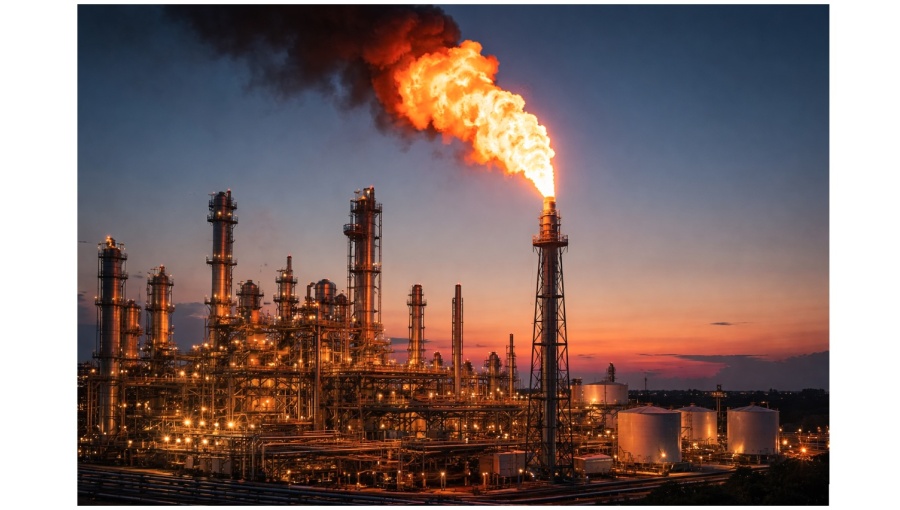
The war in Iran has caused a spike in gas flaring across the Middle East is adding to greenhouse gas emissions as energy infrastructure disruptions linked to regional conflict force producers to burn excess fuel.
Analysis by Bloomberg, citing data from investigative consultancy Data Desk, found that between February 28 and March 22 the United Arab Emirates’ Das Island liquefied natural gas facility flared volumes equivalent to about 74,100 metric tons of carbon dioxide. Qatar’s Ras Laffan plant, the world’s largest LNG export hub, emitted roughly 101,300 tons of CO2 equivalent over the same period.
The increase follows attacks on energy infrastructure and export bottlenecks, which have left operators with limited options for handling surplus gas. “Higher flaring volumes are likely linked to facility shutdowns, whether following direct strikes, as a preventive measure, or because of limited storage capacity elsewhere,” said Maria-Olivia Torcea, analyst at BloombergNEF. That “may have required a controlled release of gas from pipes, vessels and other equipment through venting and flaring,” she added.
When LNG cannot be exported or processed, companies typically burn it off or vent it, releasing carbon dioxide or methane, a more potent greenhouse gas. Satellite monitoring by firms including Capterio Ltd. indicates a broader regional uptick in flaring since the conflict escalated.
“There is also consistently high flaring at Iran’s Kharg Island, further indicating a slowing of exports of cargoes,” said Mark Davis, chief executive officer of Capterio.
Short-term spikes have been pronounced. On March 19, three days after a major attack, Ras Laffan flared enough gas to emit an estimated 6,200 metric tons of CO2 and methane, more than twice the average rate observed in 2025, according to Data Desk.
The full climate impact of the conflict is likely to be far greater. A study published in One Earth estimated that the Israel-Gaza war generated around 33mn tons of CO2 equivalent in its first 15 months, roughly matching Ireland’s annual emissions. Separate research by the Climate & Community Institute put emissions linked to the Iran conflict at about 5mn tons by March 14, while carbon accounting platform Greenly estimated US military activity alone produced 1.96mn tons of CO2 in the first six days.
Before the conflict, flaring levels in Qatar were relatively low. An analysis by Capterio found emissions amounted to less than 0.2% of throughput, compared with as much as 4% in some countries. QatarEnergy has pledged to eliminate routine flaring by 2030, although LNG facilities and downstream assets are excluded from that target.
Follow us online