
Nine in 10 Turks oblivious their country is set to host world’s flagship climate summit COP, survey finds

Tomorrow (Monday, November 9) marks the start of Turkey’s 12-day hosting of the latest COP world climate summit – but it seems nine out of 10 people in the country are not even aware of the impending event.
Turkish media outlet bianet on November 6 reported on a survey conducted by KONDA Research and Consultancy. It found that just 10% of respondents had heard that the UN Climate Change Conference (COP31) was to be held in Turkey, while just 5% said they knew what it was.
The finding suggests Turkey has invested little in communicating the importance of COP31 to its own people, while ministers have been busy bigging up the country’s dedication to the energy transition before international media and financiers ahead of the summit in the Mediterranean setting of Antalya.
Nevertheless, despite the lack of climate summit awareness, survey data also reportedly pointed to 77% of respondents urging Turkey to prioritise and accelerate investments in solar and wind power and 78% calling for no additional coal mines to be opened. Half of those quizzed said Turkey’s planned construction of new coal-fired power plants would conflict with its goal of demonstrating leadership at COP31. To some embarrassment, Turkey in 2024 overtook Germany to become Europe's biggest user of coal in power generation.
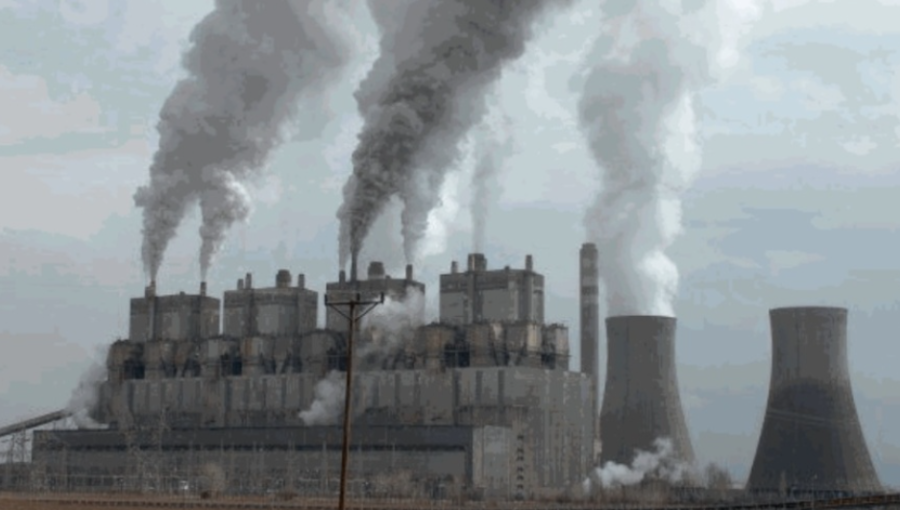
Coal remains the largest single source of power generation in Turkey (Credit: Javabite, cc, wiki).
The survey outcomes also showed that some 71% of respondents were reported as worried or very worried about climate change, with that figure up seven percentage points from a poll conducted in November last year.
In 2025, 43% of Turkey’s electricity derived from clean energy sources, of which wind and solar accounted for 22%, according to energy think tank Ember.
Energy Minister Alparslan Bayraktar on November 5 set out plans to triple Turkey’s installed solar and wind capacity from around 40 gigawatts to 120 GW by 2035. Coal, is, however still the leading single source of power generation in Turkey at 33.5%, and despite its ambitious drive for a green electrification, Ankara as yet has no plan to make a definitive shift away from fossil fuels. It is still building coal-fired power plants and has not set a date to phase out fossil fuels.
"Türkiye's continued reliance on coal, alongside plans for further expansion, highlights the contradiction at the heart of its current trajectory," Duygu Kutluay of Beyond Fossil Fuels told AFP.
There could be no genuine energy transition while "coal remains the country's largest source of electricity generation", she said.
"As Türkiye increases renewable capacity, it must ensure clean electricity replaces fossil-fuel generation rather than simply meeting additional demand," Kutluay was further quoted as saying.
Bayraktar has talked about initially replacing coal with gas, prior to a medium to long term substitution achieved with nuclear. Last week, the energy minister said that the first reactor of Turkey’s first, and much delayed, nuclear power plant, Akkuyu, built by Russia’s Rosatom, should be online by the start of 2027.
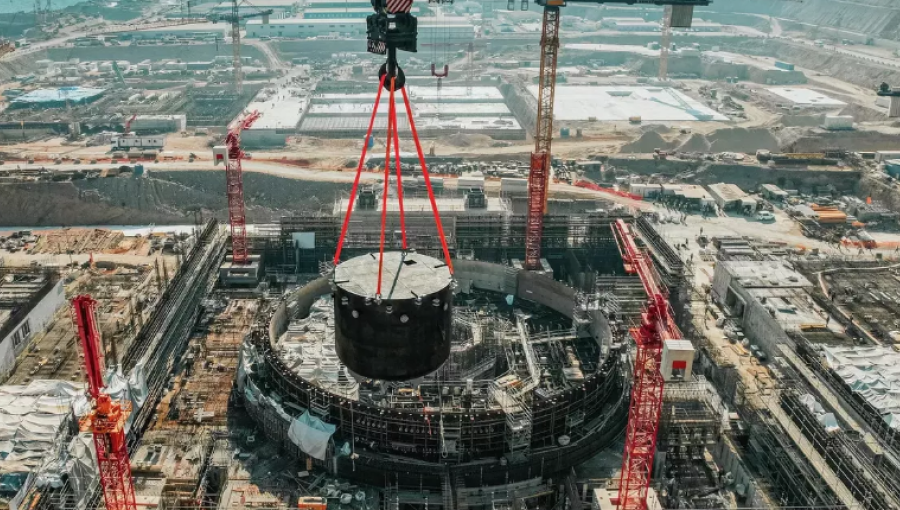
Turkey is placing a big bet on nuclear as it seeks to hit emissions targets. The opening of its first nuclear power plant, the much-delayed Akkuyu (above), might be just around the corner (Credit: Rosatom).
Emin Emrah Danis, chief executive of MOBEN consultancy, observed in remarks to AFP that Turkey must ensure its "baseload" generation can deliver constant power around the clock.
"For coal's share of power generation to fall to meaningful levels, Türkiye needs substantial investment in electricity storage and nuclear power," he said, referring to battery storage for renewable power.
Turkey’s nuclear expansion, with two more plants planned, would be unlikely to provide enough baseload capacity to replace coal-fired electricity generation before around 2040, Danis also said.
Separately, COP31 will include the formal launch of the Türkiye Industrial Decarbonization Investment Platform (TIDIP), targeting hard-to-abate sectors in Turkey, including steel, aluminium, cement and fertilizer.
Developed jointly by the Turkish Industry and Technology Ministry, the European Bank for Reconstruction and Development (EBRD), the International Bank for Reconstruction (IBRD) and the World Bank Group’s International Finance Corporation (IFC), TIDIP will attempt to mobilise over $6bn by 2030. The capital will be invested in securing an annual reduction of 20mn tonnes of CO2 equivalent across carbon-intensive sectors.
TIDIP is supported with $250mn in initial seed funding from the Clean Technology Fund and up to €5.7bn in aligned EU IPA III support.
The platform prioritises green hydrogen, carbon capture, energy efficiency and renewable power integration.
Turkish Industry and Technology Minister Mehmet Fatih Kacir said TIDIP will aim to deepen strategic investment ties between Turkey and European markets while also preparing domestic industrial exporters for compliance rules in the pipeline, such as the EU’s Carbon Border Adjustment Mechanism, or CBAM.
Follow us online