
Questions raised in Turkish parliament over lack of progress with BYD’s $1bn EV factory investment
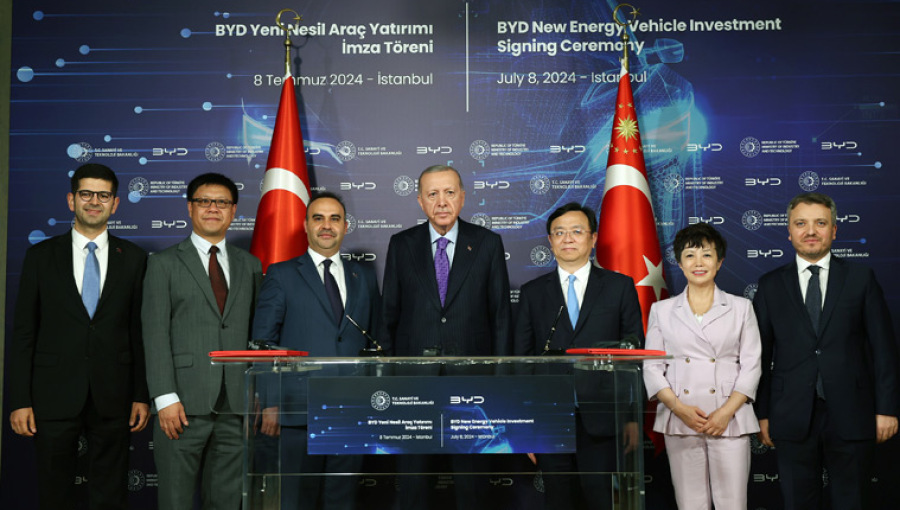
Turkey’s Minister of Industry and Technology Mehmet Fatih Kacir has said that the government is closely monitoring the progress of Chinese electric vehicle (EV) maker BYD’s planned $1bn factory investment in the western province of Manisa.
Responding to a parliamentary question, Kacır stated that the project remained under active supervision within the framework of Turkey’s investment incentive legislation, with oversight and compliance checks being carried out in full.
The inquiry was raised by opposition Republic People’s Party (CHP) lawmaker Sevda Erdan Kilic, who noted that BYD had pledged to establish a production facility in the Manisa Organised Industrial Zone and was granted incentives, including tax reductions such as special consumption tax relief, to do so. However, as she pointed out, despite 18 months having passed since the announcement, no tangible construction work has begun and no production timeline has been shared with the public.
In his response, Kacir emphasised that the investment by BYD, the world’s number one EV maker, is supported under Turkey’s project-based incentive system, which defines the scope, minimum requirements, project schedule and investor’s responsibilities and commitments.
He underlined that how the investment initiative aimed to introduce next-generation vehicles and technologies to Turkey, while benefitting from state support mechanisms.
Kacir stressed that if the investment was not completed as planned, sanctions outlined in the incentive regulations would apply. “These measures are valid for the BYD project as well. In addition, safeguard mechanisms ensure that our national interests are fully protected,” he said.
In permitting Chinese EV makers to set up production plants overseas, Beijing has been anxious to ensure that the companies do not transfer sensitive technological knowhow to foreign countries, but instead rely on assembly lines that put together shipped parts made in secure environments.
Follow us online