
Rubio unveils three-phase plan for Venezuela
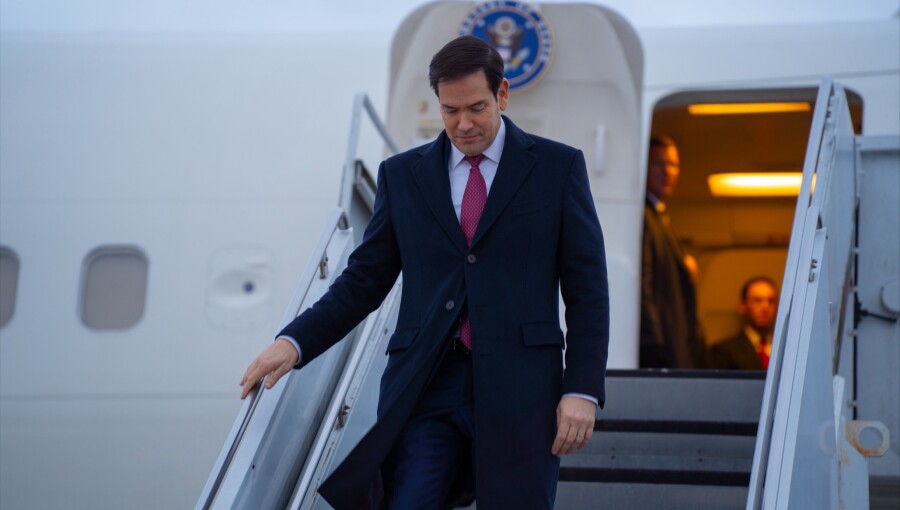
US Secretary of State Marco Rubio outlined Washington's post-Maduro blueprint for Venezuela on January 7, unveiling plans to seize up to 50mn barrels of the country's oil - which President Trump had previously signalled - whilst asserting what he said is "tremendous control and leverage" over Caracas's interim administration.
Rubio spoke to reporters, with Defence Secretary Pete Hegseth at his side, after delivering classified briefings to both chambers of Congress, detailing a strategy beginning with "stabilisation" to prevent chaos, followed by "recovery" to integrate Venezuela into global markets, and concluding with a "transition" phase aimed at political reconciliation and institutional reconstruction.
The plan makes plain Washington's determination to reshape Venezuela according to American interests whilst, for now, shelving the democratic opposition movement led by Nobel Laureate María Corina Machado, whose electoral mandate has been nullified in favour of working with Chavista figures willing to accommodate US demands.
"The bottom line is that there is a process now in place where we have tremendous control and leverage over what those interim authorities are doing and are able to do," Rubio said.
The initial phase centres on what Rubio characterised as a "quarantine" of Venezuela's oil sector, granting Washington decisive influence over the country's economic lifeline. US forces seized a Russian-flagged tanker on January 7 in the North Atlantic between - Scotland and Iceland - as part of ongoing operations to intercept Venezuelan crude. This built on the dramatic January 3 military raid that extracted Maduro from Caracas.
Echoing an earlier statement by Trump, Rubio said the White House is finalising arrangements to appropriate between 30mn and 50mn barrels of Venezuelan crude for sale "at market rates, not at the discounts Venezuela was getting." The proceeds, he insisted, would be "handled in such a way that we will control how it is disbursed in a way that benefits the Venezuelan people, not corruption, not the regime."
White House spokeswoman Karoline Leavitt told reporters that Washington maintains "maximum influence" over acting president Delcy Rodríguez's interim government and has already begun marketing seized Venezuelan crude globally. The oil includes both previously sanctioned reserves and hydrocarbons aboard intercepted vessels, which Caracas has agreed to release under pressure.
"The interim authorities have agreed to release that oil to the US, so it will arrive in our country very soon," Leavitt said, adding that Venezuela "will no longer send illegal drugs to the US" or facilitate criminal cartels.
Meanwhile, Venezuela's state oil company PDVSA has announced it is negotiating crude sales to the United States "within the framework of existing commercial relations."
US Energy Secretary Chris Wright, however, made clear that Washington intends to control Venezuelan oil sales "indefinitely," floating a sanctions waiver to facilitate exports.
Analysts noted that directing shipments toward American refineries would reduce risks of production cuts because of Venezuela's limited storage capacity, constituting additional leverage for the US. Though Venezuela claims roughly one-fifth of global oil reserves, experts warned that rapidly increasing output faces substantial obstacles including deteriorated infrastructure and political uncertainty.
The economic leverage extends beyond oil seizures. Secretary Rubio stated during private congressional briefings that Venezuela faces financial insolvency within weeks if it is unable to offload petroleum reserves currently sitting in tankers: this is a vulnerability Washington that intends to fully exploit whilst maintaining its embargo.
According to Reuters, the administration has also threatened to seize Rodríguez's financial assets, which it claims to have located in Qatar, though Qatari officials have denied she holds accounts there.
The second phase focuses on "ensuring that American, Western and other companies have access to the Venezuelan market in a way that's fair," Rubio said, signalling Washington's determination to position US petroleum firms as primary beneficiaries of Venezuela's vast reserves—the largest proven deposits globally at approximately 303bn barrels.
Simultaneously, Rubio announced plans for a "reconciliation process" offering pardons to opposition figures, freedom for nearly 900 political prisoners, and return of millions of exiles "to rebuild civil society." But this vision conspicuously omits any timeline for elections or restoration of democratic governance, instead opting for continued US oversight of interim Chavista administrators.
The approach reflects confidential CIA analysis, reported by The New York Times, suggesting that maintaining senior regime figures rather than promoting the Machado-led opposition would best secure stability during the period Washington requires for establishing American companies' operations without committing ground forces to Venezuela.
That calculation has left Machado, whose stand-in candidate Edmundo Gonzalez won more than two-thirds of votes in widely disputed 2024 elections according to independent monitors, relegated to exile whilst offering futile gestures including surrendering her Nobel Peace Prize to President Trump, who dismissed her as lacking sufficient "respect" within Venezuela.
Rubio's plan hinges on cooperation from the precarious three-way power structure now governing Venezuela: Rodríguez, whom the Trump administration views as a pragmatic technocrat and the most moderate figure; Defence Minister Vladimir Padrino López, who controls the armed forces; and Interior Minister Diosdado Cabello, the regime's brutal enforcer and the real wild card in the pack, who commands intelligence services accused of crimes against humanity.
Reuters reported earlier today that Washington has warned Cabello, the most ideologically committed and unpredictable of the three, that defiance could bring consequences matching or exceeding those visited upon Maduro. Yet targeting him risks provoking armed pro-regime militias called colectivos into violent action, precisely the chaos scenario the stabilisation phase aims to prevent.
Trump has also demanded that Venezuela sever ties with China, Russia, Iran and Cuba as conditions for oil sector access, according to ABC News. However, whether figures like Cabello, who spent two decades building Chavismo's repressive apparatus, will ultimately accept American dictation remains deeply uncertain.
Rubio acknowledged that whilst phases would overlap, the ultimate outcome rests with Venezuelans themselves. "In the end, it will be up to the Venezuelan people to transform their country," he said. A statement that rings hollow, given the White House's decision to sideline the opposition movement that actually won Venezuelan votes in favour of negotiating with authoritarian figures willing to accommodate American petroleum interests.
Follow us online