


Russian sabotage operations in Europe almost quadrupled in 2024, IISS says
.jpg)
The number of Russian sabotage operations recorded in Europe almost quadrupled between 2023 and 2024, according to new research from the International Institute for Strategic Studies (IISS) that highlights growing concerns over the resilience of European critical infrastructure.
The report by Charlie Edwards and Nate Seidenstein, first published in August 2025, cited significant ongoing concerns raised by NATO and EU policymakers over the state of European critical infrastructure (ECI).
The study flagged a significant lack of investment in critical infrastructure in recent decades. It also cited the continued use of legacy computer systems and out-of-date software across ECI networks.
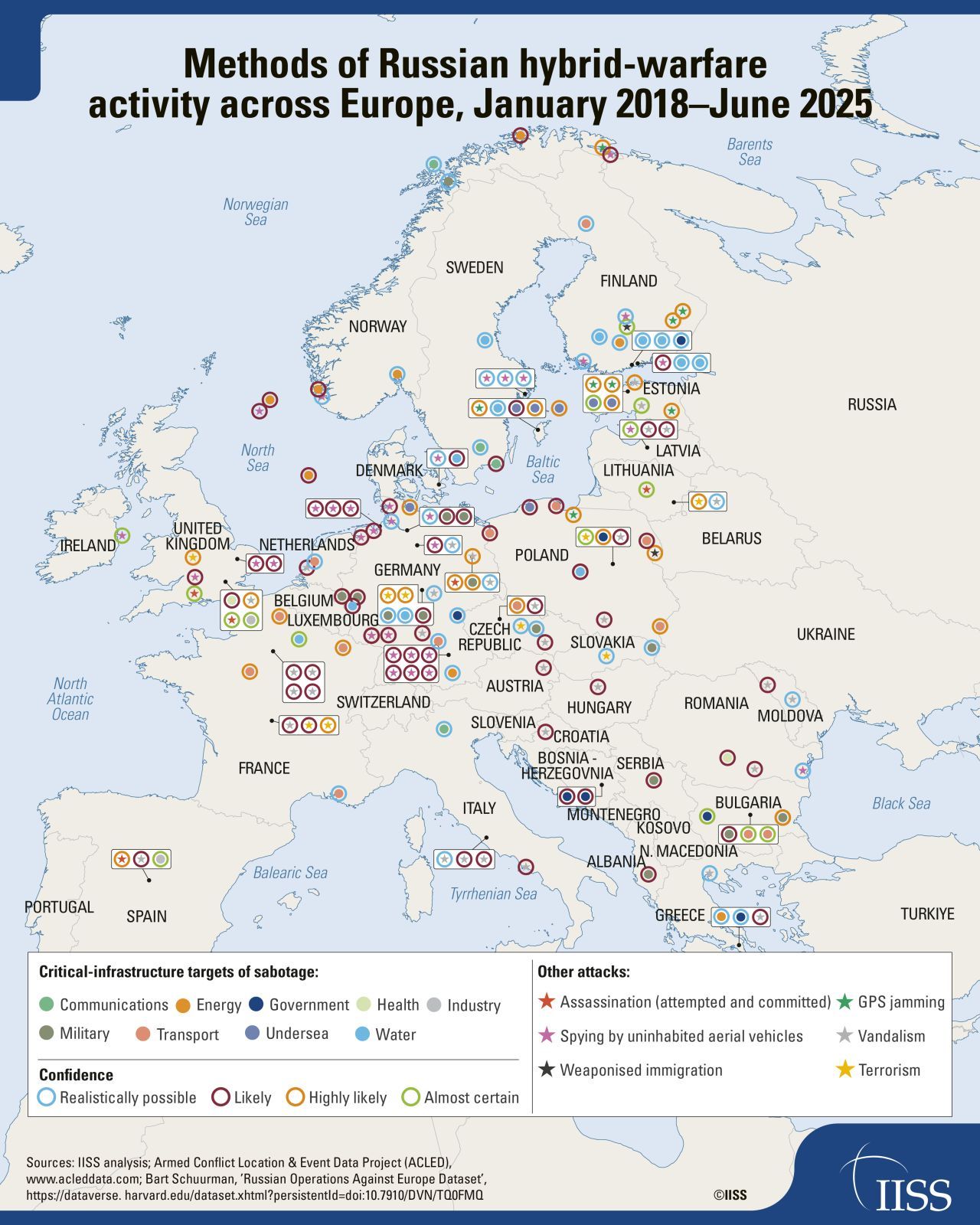
A significant portion of critical infrastructure across Europe remains privately owned or privately operated, complicating government oversight and coordination on security measures, the report said.
The vulnerability of submarine cables was identified as a particular concern given the European economy's dependence on them for data, power and financial flows.
Several high-profile incidents involving damage to undersea cables in the Baltic Sea and North Sea have been linked by European authorities to Russian activity over the past two years.
The findings were released ahead of the inaugural IISS Stockholm Civil Defence Forum, scheduled for April 21-22 in the Swedish capital.
The quadrupling of Russian sabotage activity comes against the backdrop of the continuing war in Ukraine, now in its fourth year, and European efforts to strengthen civil defence readiness.
Several European states including Sweden, Finland and the Baltic countries have stepped up preparedness planning, with the Nordic-Baltic region identified as particularly exposed given its proximity to Russian territory and dependence on shared energy and communications infrastructure.
Follow us online