
Satellite imagery confirms extensive damage at Qatar’s Ras Laffan LNG plant
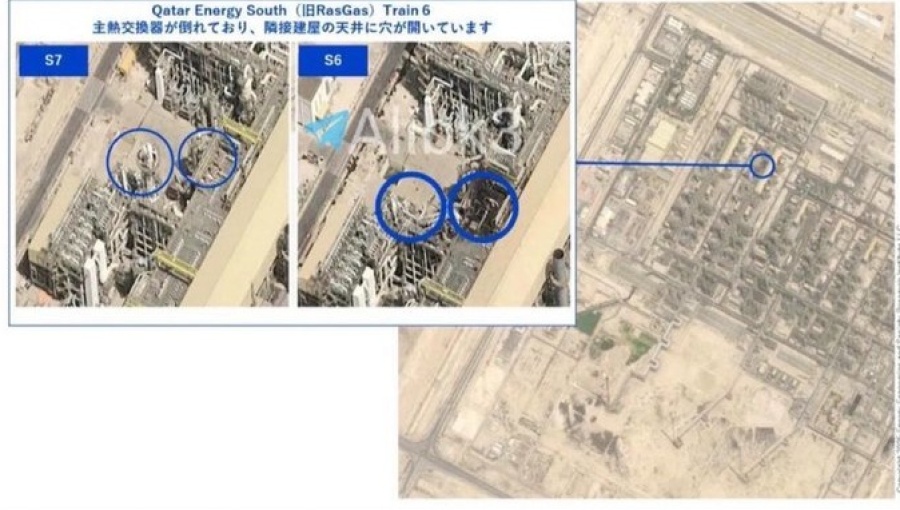
Satellite imagery indicates significant damage at Qatar’s Ras Laffan LNG plant that was hit by Iranian missiles on March 18, including the apparent collapse of primary heat exchangers at Train 6 and structural damage to adjacent facilities, according to open-source analysis.
The extent of. The damage has raised concerns the time table for effecting repairs might be increased from the preliminary estimate of one year to closer to fire years if critical equipment has been destroyed. That would have the short-term effect of pushing up gas prices and long-term effect of leaving the US as the predominant supplier of LNG to the international market.
The extent of the damage has prompted expectations of a fresh force majeure declaration, with QatarEnergy’s chief executive now saying that repairs could take between three and five years, contingent on an immediate halt to hostilities. The disruption could result in an estimated $20bn in lost revenue annually.
The attack took two of the facility's 14 trains offline but it has been unclear just how much damage was done. The key component in an LNG plant is the brazed aluminium heat exchanger known as a BAHX (brazed aluminium plate-fin heat exchanger) that cools gas to close to absolute zero. One of the most complicated pieces of machinery in the world, only five firms worldwide can make them and already have a backlog of orders. If Ras Laffan has to order new ones from makers, delivery could take up to five years.
Train 6 forms part of Qatar’s liquefied natural gas infrastructure at Ras Laffan, the world’s largest LNG export facility. The reported damage is estimated to have removed approximately 17% of the country’s LNG export capacity from the market.
Major importers, including Italy, Belgium, South Korea and China, are expected to be affected by any sustained outage. The scale of the disruption has raised concerns among market participants about tightening global gas supplies, particularly as demand remains elevated in both Europe and Asia.
One market participant described the situation as “as close as you get to an Armageddon scenario for global gas markets”. Another comment circulating online attributed to Russian President Vladimir Putin, saying “it’s a shame Europe no longer has Nord Stream”.
Follow us online