

Scientists in Tajikistan puzzled by expanding glacier
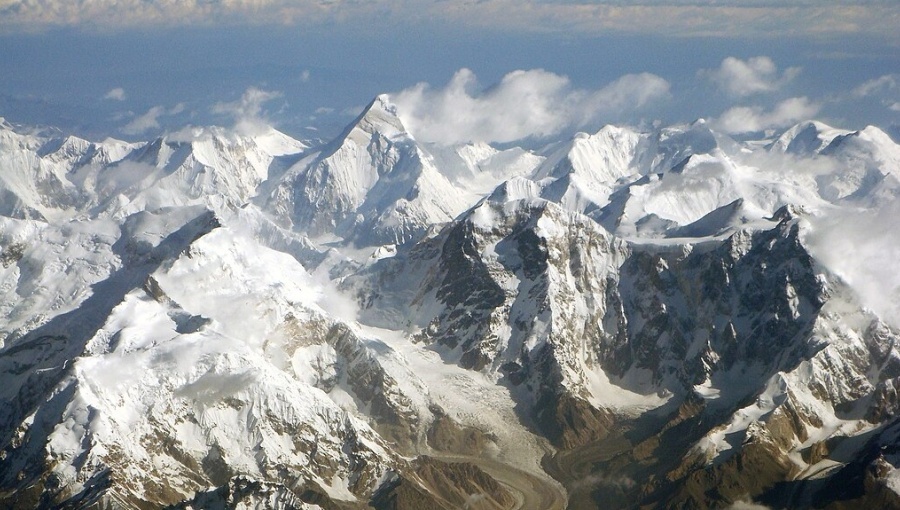
Scientists in Tajikistan are puzzled by a glacier that is expanding.
With the world losing perhaps a thousand or so glaciers per year because of anthropogenic climate change, the discovery in the Pamir Mountains is highly unusual.
A study published by the journal Nature refers to the oddity that is the Kon-Chukurbashi high-altitude ice cap in a part of the Earth sometimes referred to as the “Roof of the World”.
At around 5,810 metres, or 19,000 feet, up in the Pamirs, an international team of scientists set out to understand the glacier’s unexpected resilience.
The scientists have already been in the headlines for removing two glacier ice core samples, one of which they transported to an underground sanctuary in Antarctica called the Ice Memory Foundation. The repository will serve as a source of climate information for centuries to come.
It turns out that the other core has been sent to the Institute of Low Temperature Science at Hokkaido University in Sapporo, Japan, where Yoshinori Iizuka, a professor at the university, will analyse the sample in an effort to understand the anomaly of the expanding ice cap.
“If we could learn the mechanism behind the increased volume of ice there, then we may be able to apply that to all the other glaciers around the world,” Iizuka told AFP. “That may be too ambitious a statement. But I hope our study will ultimately help people.”
Tajikistan’s glaciers are retreating at an alarming rate, with over one thousand already gone completely and dozens more under threat, according to an Atlas of Environmental Change published by the United Nations Environment Programme (UNEP) last September.
The findings underscore the urgency of regional cooperation as rising temperatures put unprecedented pressure on Central Asia’s water resources.
Some of the world’s last resilient glaciers are located in Tajikistan’s Pamir Mountains, but they are being destabilised by snowfall shortages, a study from the Institute of Science and Technology Austria (ISTA) has found.
In October, a giant chunk broke away from a large glacier in the Pamirs, triggering warnings from scientists to mountain villages in the vicinity.
Follow us online