
Somalia poised to begin its first offshore oil drilling operations with Turkey’s help
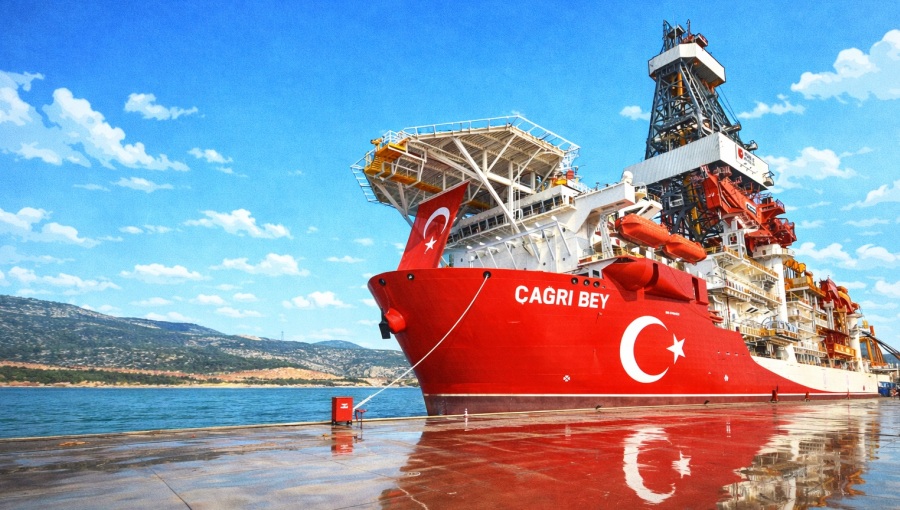
Somalia is set to begin its first offshore drilling campaign this month, with Turkey’s state-backed deepwater drillship “Çağrı Bey” due to arrive off the Horn of Africa country’s coast on April 10, marking Ankara’s first overseas deepwater drilling operation.
The drilling push follows the completion of 3D seismic work by the “Oruç Reis” research vessel, which Turkey’s energy ministry said surveyed three offshore blocks covering nearly 5,000km² in Somali waters. Turkish officials described the acreage as three offshore blocks, two located about 50km from the Somali coast and a third roughly 100km offshore.
Somalia’s petroleum minister, Dahir Shire, described the start of drilling as a “historic milestone in our offshore energy journey,” while Somali foreign affairs minister Ali Omar said the campaign could support resource-led growth and deepen Turkey’s role as a long-term development partner if commercially viable volumes are found. Anadolu Agency said the comments reflect Mogadishu’s effort to frame the project not only as an exploration event but as part of a broader economic recovery strategy.
The offshore campaign rests on a formal bilateral framework signed in March 2024, when Turkey and Somalia concluded an intergovernmental agreement and MoU covering onshore and offshore oil and gas cooperation. The deal spans exploration, evaluation, development and production, as well as midstream and downstream activities, including transport, refining and sales.
Turkey’s energy ministry said at the time that the aim was to help bring Somalia’s resources “to the Somali people” while strengthening Ankara’s energy presence in the Horn of Africa.
Resource estimates remain highly uncertain because Somalia is still a frontier basin with minimal drilling history, but several widely cited industry and Somali government-linked sources point to significant upside.
TGS says offshore Somalia is one of the world’s last frontier basins and notes that only two exploration wells have ever been drilled along its roughly 1,000km offshore margin. A Somali National Economic Council paper, citing Spectrum/TGS, said un-risked resources in the Somali Basin could exceed 30bn barrels of oil, while more recent industry estimates cite that figure for offshore Somalia as a whole.
That 30bn-barrel figure refers to un-risked or prospective resources inferred from seismic and geological modelling, not booked commercial reserves. In practical terms, the significance of the “Çağrı Bey” mission is that it begins the process of testing whether the seismic structures identified in the survey phase actually contain recoverable hydrocarbons in commercial quantities.
The first well has been identified as Curad-1, according to specialised industry reporting. Energy Capital & Power reported that the target depth could reach 12,000 metres, with drilling at Curad-1 planned in water depths associated with Somalia’s deepwater margin.
The strategic significance extends beyond hydrocarbons. Turkey has been one of Somalia’s closest external partners for more than a decade, investing in infrastructure, education and health, and maintaining a military presence that includes a major training base established in 2017. The energy partnership followed a separate defence and maritime cooperation accord, and Turkish naval protection has accompanied parts of the seismic campaign.
For Somalia, the economic prize is potentially large but remains speculative. Commercial production would require not only a discovery but also appraisal drilling, development planning, export or domestic market infrastructure, fiscal and regulatory clarity, and continued security support.
Turkey has accelerated upstream engagement since early 2026, signing exploration agreements with ExxonMobil (NYSE:XOM), Chevron (NYSE:CVX) and BP (LSE:BP), with another international partnership expected to be announced.
With the recent addition of the “Çağrı Bey” and the “Yıldırım”, Turkey’s fleet now includes six drillships, alongside seismic vessels “Oruç Reis” and “Barbaros Hayrettin Paşa”, placing it among the world’s larger offshore exploration fleets.
Beyond Somalia, Turkey plans further expansion. Seismic studies are scheduled in Pakistan’s maritime zones this year, while in Libya it has secured exploration rights in two fields—one offshore and one onshore—in partnership with Repsol (BME:REP), holding a 40% stake.
Turkey aims to raise output from its national oil operations to around 500,000bpd by 2028, with a longer-term target of 1mnbpd, as part of efforts to strengthen energy security and expand its global upstream footprint.
Follow us online