
Super El Niño threat could add to Iran war inflation shock
A growing risk of a “Super El Niño” weather event later this year is fuelling concerns among economists and commodity traders that it will only add to the inflation shock already on the way as a result of spiking energy prices due to the Iran war.
An extreme El Niño year has three channels of disruption: food price inflation, energy output falls due to droughts and logistics disruptions thanks to more extreme weather events.
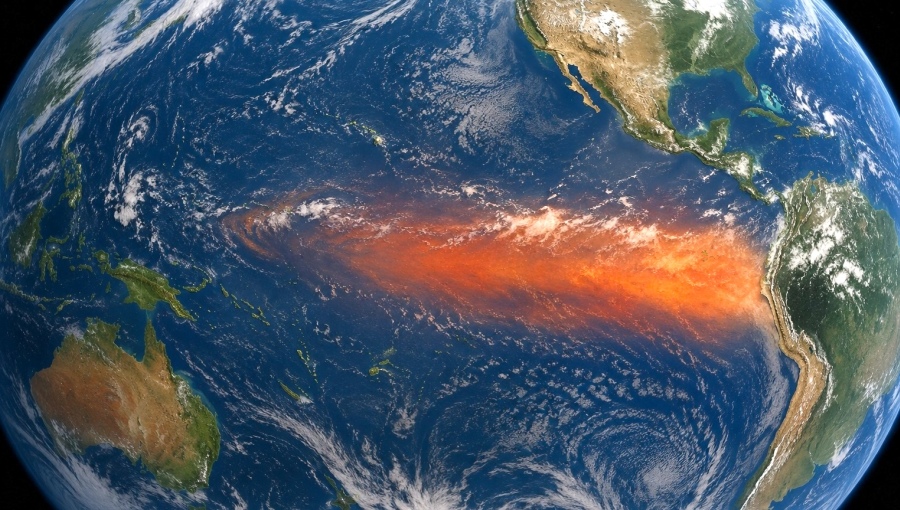
The US National Oceanic and Atmospheric Administration estimates there is a 61% probability that El Niño conditions — a warming of waters in the eastern Pacific Ocean — will emerge between May and July and persist through the end of the year. It also estimates a one-in-four chance of a “very strong” El Niño, comparable to the 2015-16 episode that disrupted agricultural production and weather patterns across several continents.
William Jackson, chief emerging markets economist at Capital Economics, said the risks were being amplified by geopolitical tensions already pushing up commodity prices.
“An El Niño in the second half of the year — as seems increasingly likely — would add to the upside pressures on food and energy prices stemming from the Iran war,” Jackson wrote in a note on May 6. “The macroeconomic effects would be largest in emerging markets, particularly those most sensitive to higher food prices, including India and parts of Africa, as well as those where power generation might be curtailed such as Colombia.”
Economists say the inflationary effects are likely to spread through three principal channels, beginning with agricultural commodities.
“The first, and most important channel, is higher commodity prices — particularly agricultural prices — and inflation,” Jackson said.
Previous El Niño episodes have frequently coincided with volatility in soft commodities including cocoa, coffee, sugar and palm oil. During the 2023-24 El Niño cycle, coffee and cocoa prices surged sharply as adverse weather damaged harvests in major producing countries including Vietnam, Ghana and Ivory Coast. However, a super El Niño will not necessarily send inflation up.
While staple crops such as wheat and corn are grown across multiple geographies, limiting global shortages, analysts warn that more concentrated commodity markets remain vulnerable. Heavy rainfall in Chile and Peru could also disrupt copper mining operations, potentially tightening supplies of a metal critical to electrification and renewable energy infrastructure.
Capital Economics noted that the inflationary effects would be disproportionately severe in lower-income economies where food accounts for a much larger share of household spending.
“Food can account for as much as 30% (or more) of the CPI basket and over a quarter of GDP” in parts of South Asia and Sub-Saharan Africa, Jackson wrote.
The second transmission channel is energy. Drought conditions associated with El Niño can sharply reduce hydropower generation, particularly in economies heavily reliant on dams and reservoirs.
“The second channel is that drought conditions could affect power generation,” Jackson said. “Within EMs, Ethiopia and Colombia look most vulnerable.” Norway is also exposed following a relatively dry winter, while Brazil and Paraguay could benefit from wetter conditions that improve hydroelectric output.
Analysts warn that reduced hydropower generation could force utilities to increase reliance on fossil fuels, adding to already elevated global gas demand. Europe’s gas market remains sensitive to supply disruptions following the region’s break with Russian pipeline imports after the invasion of Ukraine.
The third risk lies in transport and logistics networks already strained by geopolitical instability and climate-related disruptions. As IntelliNews has reported, the world is going into its fourth disaster season where extreme weather has already caused an estimated $28 trillion dollars of damage according to one report and these events are tending to get more extreme each season.
“The third channel through which El Niño could have an impact on the global economy is via disruptions to logistics,” Jackson wrote.
During the previous El Niño event, low water levels forced the Panama Canal Authority to reduce vessel transits by almost half, triggering congestion and higher shipping costs. A renewed drought could again restrict traffic through one of the world’s most important maritime trade routes, forcing vessels to reroute around Cape Horn and extending delivery times.
Extreme weather could also disrupt inland transport systems, including railways, roads and river shipping routes such as the Rhine, a critical artery for European industrial supply chains.
“Ultimately, the macro impact of El Niño will depend on the severity,” Jackson wrote. “But it adds to the upside risks to energy and food prices, particularly if the Strait of Hormuz remains blocked going into the second half of this year.”
Follow us online