

The geothermal revolution beneath the streets of Szeged
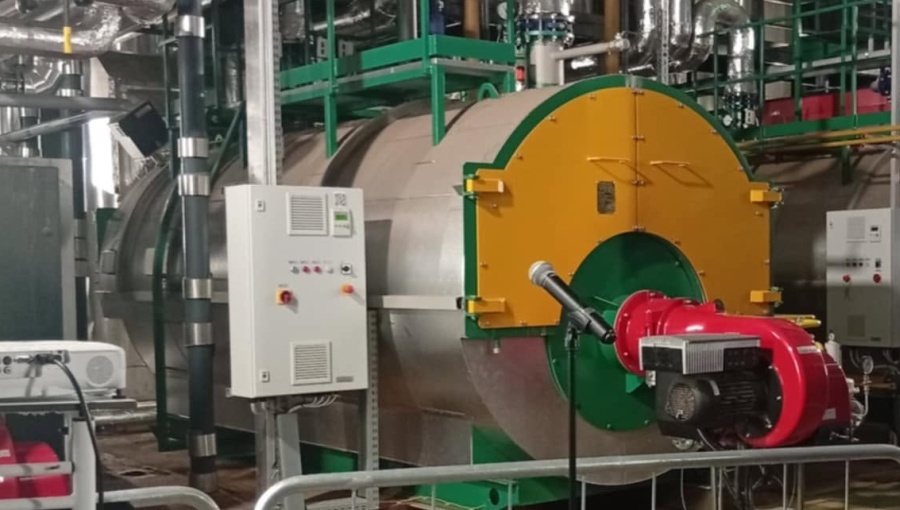
On winter days in Szeged, warmth rises quietly through radiators in thousands of Soviet-era apartment blocks. Increasingly, that warmth is no longer generated by imported natural gas, it comes from deep beneath the city itself. In a continent still grappling with energy insecurity, volatile gas prices and the challenge of decarbonisation, Szeged, a university city in southern Hungary near the Serbian and Romanian borders, has become a laboratory for one of Europe’s most ambitious urban geothermal transitions.
Over the past eight years, the city has transformed what was once a gas-dependent district heating system into the largest geothermal district heating overhaul in Europe. Today, geothermal energy supplies heat to roughly 95% of the city’s 27,000 apartments connected to district heating, as well as hundreds of public buildings. Nine geothermal systems now feed into a vast network of heating plants, substations and underground pipelines.
Sándor Nagy, the city’s vice mayor, tells IntelliNews the benefits are about energy security as much as sustainability. “The fact that obtaining the heat source from beneath our feet instead of importing it from far away lands is a sure way of increasing security of supply, decreasing emissions and generally cutting costs,” he says.
That argument resonates strongly in Central Europe, where dependence on imported fossil fuels remains politically sensitive. Szeged’s district heating system once relied entirely on imported natural gas, making the municipally owned utility one of the city’s largest carbon emitters. The geothermal transition has already cut annual gas consumption by millions of cubic metres and sharply reduced carbon emissions, improving local air quality while insulating the city from some fossil-fuel volatility.
The idea itself is not new. Southern Hungary has long been known for its favourable hydrogeology. The Earth’s crust is thinner here, meaning heat rises closer to the surface. Thermal water has historically been used in spas, bathing and agriculture. But scaling geothermal energy to heat a dense urban district heating system required a far more sophisticated approach.
Under the Szeged project city, wells were drilled reaching depths of approximately 1,700 to 2,000 metres, extracting thermal water at temperatures around 90°C. The hot fluid is piped to heating plants, where heat exchangers transfer thermal energy into the district heating network. After its heat is extracted, it is reinjected underground to be reheated naturally, a closed-loop model designed for long-term sustainability.
“So far all geothermal energy systems in Szeged use reinjection,” Nagy says. “The extracted water gets pumped back to the reservoir after energy utilisation. There the water gets reheated by the Earth and we can extract it again and again.”
He says constant monitoring of water pressure, contamination and reservoir conditions ensures the system remains sustainable.
Yet even successful green transitions raise difficult questions, including whether a model like Szeged’s can survive without subsidies.
“The geothermal overhaul of the district heating system in Szeged was financed from EU funding and private investment,” Nagy says. “Neither the district heating company nor the municipality had the financial means to carry out such a robust project.”
In Szeged’s case, European funding, including support from the European Regional Development Fund, was essential. Private capital also played a critical role, attracted by the predictability of district heating revenues in a monopoly public utility, and therefore, as Nagy says, “a rather safe bet for a steady return”.
Now it has entered operation, however, the system largely pays for itself. “Once built the infrastructure requires no municipal subsidies at all, it’s financially viable from end-user payments,” he says.
However, residential heating tariffs are heavily controlled by the state, limiting how pricing signals can reward cleaner energy. “Energy prices are government regulated in Hungary and are kept so low for private users … that not even geothermal can match that level,” Nagy says.
Szeged’s experience also raises the question of whether the model is replicable. Nagy argues that the city is not unique in having positive conditions for geothermal. “Szeged does have good geothermal potential and the fact that there already had been a district heating system in place certainly helped,” he says.
However, he added, “Europe boasts close to 300 large-scale geothermal district heating plants similar to ours so the word ‘anomaly’ is probably an exaggeration.”
Replication, he argues, depends less on copying a template than on matching geology, regulation and urban demand. “A detailed look at a location’s geological features, energy market, national regulations, existing infrastructure is certainly needed to confirm if a project is viable. There is no off-the-shelf solution,” he says.
“I believe that the potential to switch a fossil fuel based heating system to some form of renewable is very much real for most municipalities across Europe.”
Engineering, however, is only half the challenge. Geothermal projects can be messy, noisy and deeply disruptive during construction. In Szeged, drilling rigs operated around the clock while kilometres of underground pipes were installed beneath residential neighbourhoods.
“The project was well received at the urban level,” Nagy says, “but indeed, we had a number of local, neighbourhood level complaints.” Residents complained about noise, traffic and construction disruption. “It required constant negotiations with the drilling company to mitigate the effects.”
That proved manageable because the disruption was temporary and the environmental gains were tangible. “The public understood the positive environmental effect of the project,” he says, and points out that even without immediate reductions in heating bills, public support remained strong. “Here, where the only promise we could make was of better air quality, the development resonated with the people and probably even won votes.”
Szeged has attracted major foreign manufacturers, including Chinese electric vehicle giant BYD, whose planned production facilities could significantly increase local energy demand.
“We as a ‘green city’ obviously encourage sustainable developments, and we are aware that some big industrial projects are planning to use geothermal energy too,” Nagy says. “If the new players reinject, and, more generally, take care of our water base as we do … then we do not expect any conflict with them.”
For investors, however, geology and engineering are only part of the equation. Sovereign risk remains a concern across Central and Eastern Europe, where regulatory shifts can alter infrastructure economics overnight.
Asked what assurances municipalities can offer foreign investors, Nagy is pragmatic. “This has to vary from country to country, depending on the functions and the budget of municipalities.”
Local governments cannot always guarantee long-term stability themselves, he adds, saying: “It may just mean that investors should try and get guarantees from the central government.”
Yet Nagy believes the opportunity is substantial. “The district heating system in Szeged serves 28,000 apartments in a monopoly position,” he says. “There are lots of smaller towns and many larger cities in Central Europe where investments in the energy sector are very much sought after.”
With limited public capital available, foreign investment could prove decisive. “Foreign investors … may see an opportunity that justifies the risks.”
Szeged’s geothermal transition does not offer a universal blueprint. Its success rests on unusually favourable geology, inherited district heating infrastructure and substantial external financing. Yet its significance lies precisely in showing that decarbonisation is not always about futuristic technologies or distant targets. Sometimes it means redesigning the hidden systems beneath existing cities. As Europe searches for ways to strengthen energy sovereignty while cutting emissions, Szeged suggests one answer may already be underfoot.
Follow us online