
The Straits of Hormuz have closed, but a trickle of tankers still getting through
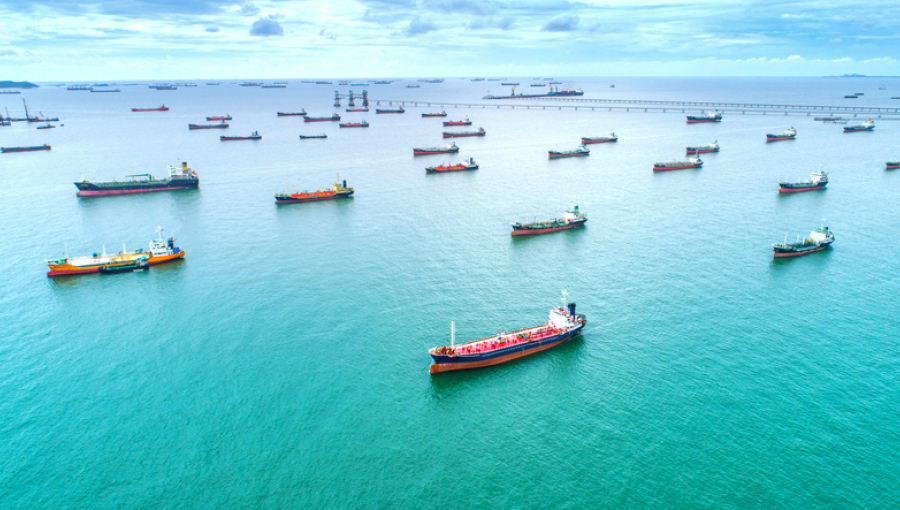
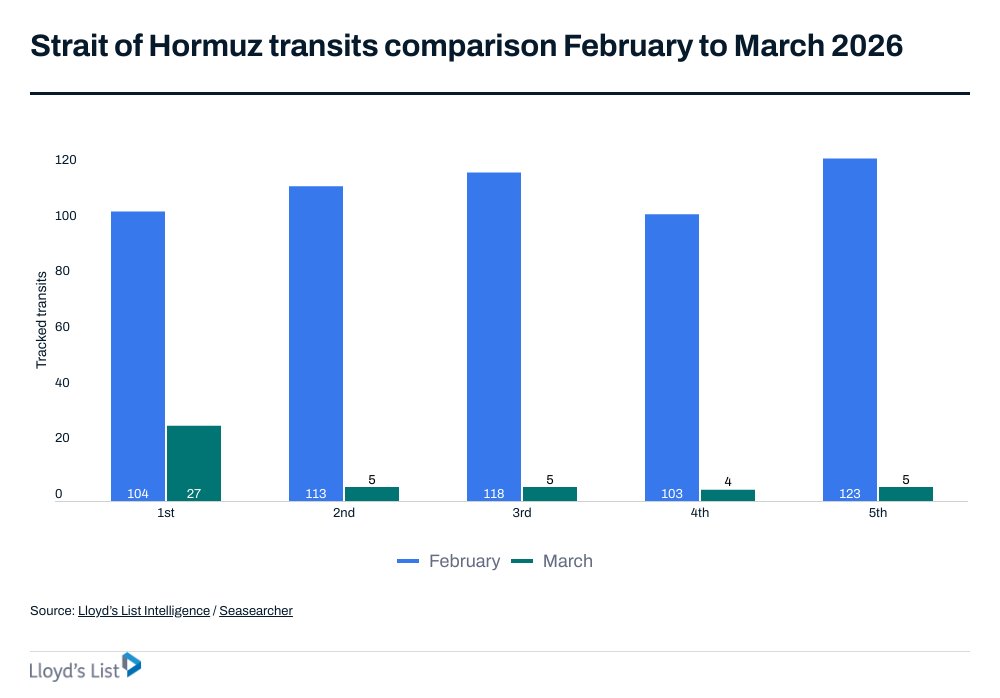
Iran’s military declared the Straits of Hormuz were shut on March 2 and traffic fell to nearly zero within a day. But it is not at zero. At least five ships have traversed the passage since the blockade began and commercial deals being offered to Tehran may see more ships allowed to pass.
China and Greek shipowner George Prokopiou continue to try and send their oil tankers through the straits from the Iran Khanga island, its main oil loading port.
“The Greek affiliated vessels are loaded with oil within the Middle East Gulf, and now sailing towards the Strait of Hormuz,” Bridget Diakun Senior Risk and Compliance Analyst, Lloyd’s List Intelligence told GCaptain. “This is really critical, because if they’re able to go through without incident, this might encourage some other owners and operators to change their calculation and perhaps take the risk of moving. But again, this kind of depends on how things pan out and how long they are left waiting as more time drags on.”
Prokopiou company Dynacom has already successfully sent at least five tankers through since Operation Epic Fury began, says John Konrad, a former US Merchant Marine Ship Captain, in a comment posted on social media.
A trickle of oil is still getting through the Straits of Hormuz to the international markets. Several sanctioned tankers linked to Iran were damaged in attacks this week, but traffic continues. Lloyd’s List Intelligence reports in addition to the Iranian shadow fleet moving post war, Greek affiliated ships are outnumbering the number of vessels traversing the Strait, GCaptain reports.
China is also reported negotiating with Tehran through back channels on a commercial deal that would allow Chinese owned tankers to transit the straits unmolested. Other vessels are linked to the UAE. At the start of the crisis, Lloyds List said between 40 and 50 ships went offline disabling their AIS tracking devices, mostly in the Middle East Gulf, and some at regional ports.
“There’s been a lot of talk China gets a free pass to go through the Strait of Hormuz,” said Diakun. “It’s not obvious in the data.”
Traffic collapse
Oil cargo transits through Hormuz collapsed from around 100 ships a day to near zero after missile strikes. War risk insurance jumped from 0.1% to 1.0% of vessel value, 3% for US or Israel-affiliated vessels.
“Premiums that high create a de facto blockade for most commercial operators, even if the waterway is technically open,” says Konrad.
As a result tanker rates are at record highs. Very Large Crude Carriers (VLCCs) are earning $400,000-500,000/day on short-term floating storage contracts. Ships are stuck in the Arabian Gulf and others are stacking up in the Gulf of Oman waiting for cargoes that may never come.
As the stoppages expand Brent crude prices have jumped from $65 in January to over $90 at the time of writing and are still climbing. The US responded with a 30-day waiver letting Indian refiners buy Russian crude from sanctioned tankers, if loaded before March 5 in order to keep the world's markets, and the biggest consumers of oil, supplied.
In particular India has been allowed to buy Russian oil stored on ships that have built up since the sanctions on Russia were tightened and India cut back on Russian imports under US pressure.
“The difference between “technically open” and “functionally closed” is measured in billions of dollars per week, and right now, a handful of Greek shipowners with steel nerves are the only thing standing between trickle and zero,” says Konrad.
Greek shippers have ignored the EU’s oil price cap sanctions imposed in 2022 and continued to work with Russia, earning fat premiums in the process. Together Greek ships make up at least a fifth of Russia’s shadow fleet. The attempt to pass the twentieth sanctions package on the anniversary of the start of the Ukraine war failed, partly as it was blocked by Greek and Maltese shipping companies lobbying their governments. The package would have nixed the new variable oil price cap regime entirely and simply banned EU-registered ships from working with Russia entirely.
Backchannel talks with China
China, the world’s largest importer of oil and gas, is in talks with Iran to allow crude oil and Qatari liquefied natural gas vessels safe passage through the Strait of Hormuz as the US-Israeli war on Tehran intensifies, three diplomatic sources told Reuters on March 5.
China has friendly relations with Iran and relies heavily on Middle Eastern supplies, getting about 45% of its oil from the Strait. Ship tracking data showed a vessel called the Iron Maiden passed through the Strait overnight after changing its signalling to 'China-owner,’ Reuters reported.
Iran's government said last week that no vessels belonging to the US, Israel, European countries or their allies would be allowed to pass through the Strait of Hormuz, but the statement made no mention of China. The Chinese government has called for vessels passing through the strait of Hormuz to be protected by all sides.
Unconfirmed reports suggest that Beijing is holding backchannel talks via Oman or Qatar with Tehran in an effort to cut a commercial deal that would allow the passage of Chinese flagged ships and create informal guarantees for shipping. Iran rarely publicly acknowledges exemptions during maritime confrontations, but is keen to avoid alienating China, one of its few major economic partners under sanctions.
Neutral Oman has emerged as a key mediator in the Middle East as tensions rose in the run up to the war and one of the only GCC countries that doesn’t host the US military. Qatar is the world’s largest LNG exporter and China is its biggest customer, with a 27-year long-term supply contract, so any deal to allow Chinese ships to transit the straits would restart its export revenues.
IRGC call Trump’s bluff
Iran’s Revolutionary Guards called Trump’s bluff last week and said they are waiting for US forces to try and escort ships through the Straits.
“We are waiting for their presence,” says Guards spokesman Ali Mohammad Naini, after the US energy secretary announced the US Navy was getting ready to escort oil tankers through the Straits “as soon as it’s reasonable to do it.”
The IRGC made it clear that any attempt to transit the narrow waterway would be met with an attack.
“We recommend that before making any decision, the Americans remember the fire of the American supertanker Bridgeton in 1987 and the oil tankers that were recently targeted,” Naini said, according to Fars news agency, referring to the Bridgeton tanker that was mined by IRGC as it was being escorted through the Persian Gulf by the US Navy during the last conflict.
Follow us online