
Turkish Petroleum comes full circle in Kirkuk
Nearly 100 years after Turkish Petroleum’s original concession in Mesopotamia lapsed into other hands, Ankara has bought its way back into the Kirkuk complex.
WHAT: TPAO takes 15% of BP ECKL, joining bp and ConocoPhillips in Kirkuk redevelopment.
WHY: Ankara wants upstream reach, a million-bpd producer and a reset with Baghdad.
WHAT NEXT: Closing by end-2026, contingent on approvals, with a new pipeline pact pending.
The symbolism was hard to miss. Almost a century after the Turkish Petroleum Co. signed away its interests in what would become one of the world’s most storied oil provinces, its state-owned namesake has bought a 15% stake in the vehicle now redeveloping Kirkuk.
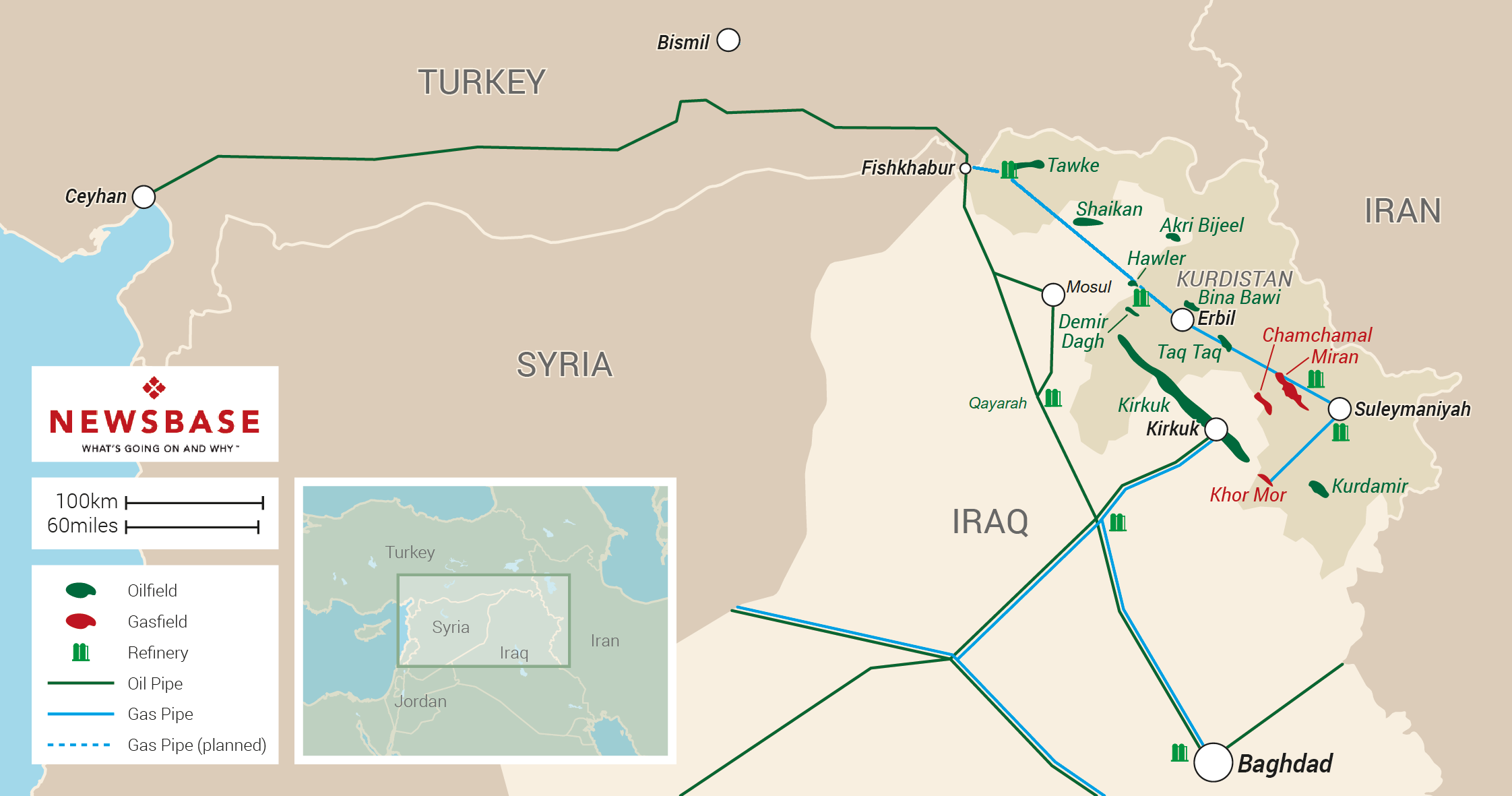
Turkish Petroleum Corp. (TPAO) has taken the position in BP Energy Co. of Kirkuk Ltd (BP ECKL), the entity holding the Development and Production Contract (DPC) covering the Baba and Avanah domes of the Kirkuk field and the adjacent Bai Hassan, Jambur and Khabbaz fields, currently operated by state-owned Northern Oil Co. (NOC).
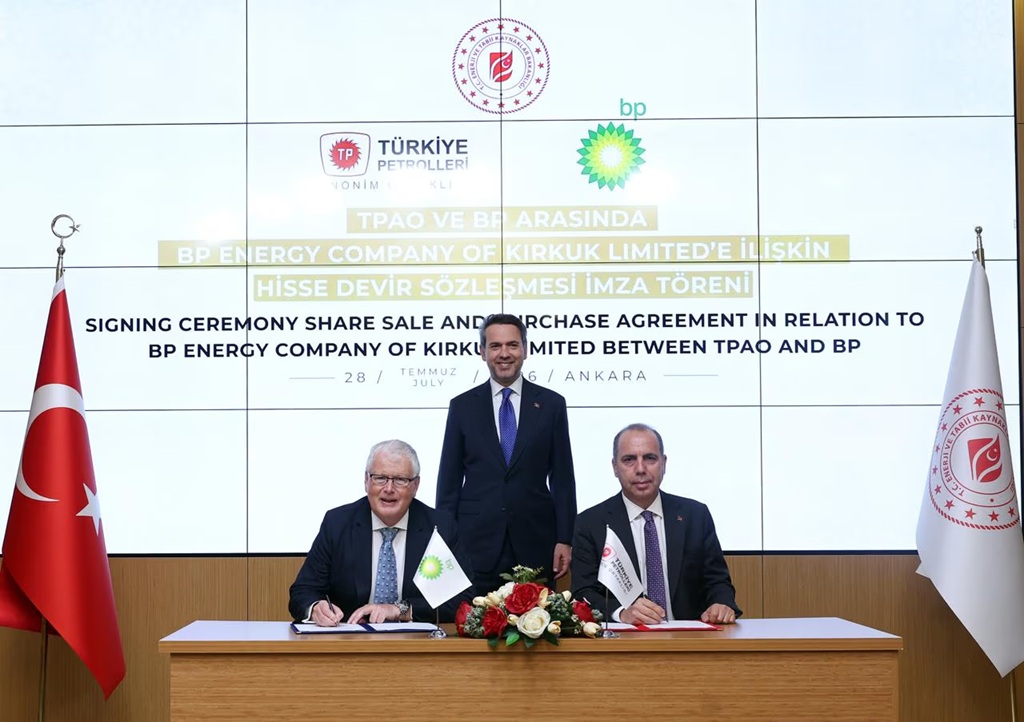
The deal was announced at the Presidential Complex in Ankara during an official visit by Iraqi Prime Minister Ali al-Zaidi. “The agreement signed today marks a historic step in terms of partnership in the energy sector,” President Recep Tayyip Erdoğan said in a joint press appearance with the visiting premier, according to a TPAO press release.
It came two weeks after ConocoPhillips agreed to take 42% in the same vehicle, a deal expected to be inked in Washington during a separate leg of al-Zaidi’s diplomacy.
A century later
The Turkish Petroleum Co. of 1912 was the vehicle through which the Anglo-Persian, Deutsche Bank and Royal Dutch/Shell interests carved up Mesopotamian oil, before the Red Line Agreement of 1928 redistributed the shares and eventually ushered in the Iraq Petroleum Co.
Kirkuk’s Baba dome came onstream in 1927. The modern TPAO’s return to the same acreage, alongside bp – a direct corporate descendant of Anglo-Persian – closes an unusually long loop.
Energy Minister Alparslan Bayraktar was explicit about the trajectory. “This is actually a project we’ve been working on for a long time, and it is one of our most important steps toward making Turkish Petroleum a company that produces 1 million barrels of oil and natural gas per day,” he told reporters after the signing ceremony at his ministry, where TPAO general manager Cem Erdem and Andrew McAuslan, bp’s vice president of upstream business development, put pen to paper.
Bayraktar situated the transaction within a broader push. “We have signed agreements with international companies to expand Turkish Petroleum and make it more effective in various regions around the world starting in early 2026,” he said. “We have signed one of the concrete outcomes of our agreements with BP. With this agreement, Turkey has become a partner with BP in the fields in Kirkuk.”
Commercial make-up
The DPC covers an initial gross recoverable resource of more than 3bn barrels of oil equivalent (boe), to be captured through rehabilitation, redevelopment and optimisation of the existing production base, with further exploration upside inside the contract area.
bp retains the majority stake in BP ECKL and remains anchor of the contractor group. ConocoPhillips holds 42% and TPAO 15%. Remuneration, as with prior Iraqi TSC and DPC structures, is linked to a proportionate share of incremental production and costs.
“A consortium will be formed comprising ConocoPhillips, BP, and Turkish Petroleum, and this consortium will work together to develop and produce the reserves – which we estimate to be approximately 3 billion barrels – and to increase production there,” Bayraktar said.
For ConocoPhillips, the transaction is a re-entry into upstream Iraq on terms its leadership has framed as consistent with its cost-of-supply discipline. “This unique redevelopment opportunity is well aligned with our disciplined investment framework, providing access to a material, high-quality and long-life resource base, comfortably meeting our cost of supply threshold,” chairman and CEO Ryan Lance said in the company’s release.
He described the joint venture as offering “an opportunity to create value through a capital-efficient redevelopment program that leverages a large existing production base, while also offering meaningful exploration upside.” ConocoPhillips said it would account for the joint venture as an equity affiliate and did not expect significant capital contributions from Houston.
bp cast the arrangement as a validation of the resource base and of its own tightened capital-allocation stance. “Kirkuk is a world-class resource base that can support Iraq’s long-term energy ambitions while creating value for both the country and bp,” chief executive Meg O’Neill said in bp’s statement. “This partnership with ConocoPhillips brings together two great teams and positions us well for the next phase of redevelopment. We’re being deliberate about where we invest, backing high-quality resources that can deliver long-term value for our shareholders.”
Closing is expected by the end of 2026, subject to regulatory approvals and customary conditions, with an effective date of July 1, 2026.
Pipeline politics
The Kirkuk equity move is inseparable from the diplomatic weather around it. Erdoğan told the press conference that the Iraq-Türkiye Crude Oil Pipeline Agreement, the 1973 accord that governs flows from northern Iraq to the Mediterranean at Ceyhan, had “expired as of yesterday” – placing lapse on July 27, 2026.
“Our goal now is to sign a comprehensive energy co-operation agreement that will benefit both sides as soon as possible,” he said. “Turkish Petroleum has been granted a partnership in the Kirkuk production field, which is operated by British Petroleum.”
The Ceyhan line has been effectively idle since March 2023, when an arbitration ruling in favour of Baghdad against Ankara halted independent Kurdish exports. Rebuilding a legal and commercial framework for northern flows is now urgent for both governments, and TPAO’s stake in the upstream is a form of collateral in that negotiation.
Bayraktar met his Iraqi counterparts Basim Muhammad Hudayir, the oil minister, and electricity minister Ali Saadi Vehib on the sidelines. “During our meeting, we reaffirmed our shared commitment to fully utilizing the existing infrastructure of Türkiye-Iraq energy co-operation,” he wrote in a social media post cited in the TPAO release.
“We focused on concrete projects that will strengthen our co-operation, particularly in the areas of oil, natural gas, and electricity transmission lines. We aim to further deepen energy co-operation between our countries through joint projects that we will develop on the basis of mutual benefit.”
Impact on TPAO
TPAO’s international portfolio has until now been dominated by Azerbaijan, minor African exposure and its own domestic Black Sea gas project. Kirkuk, even at 15% of a redevelopment yet to prove its production trajectory, is the largest single conventional oil position the company has ever held outside Turkish waters.
Bayraktar’s million-bpd aspiration, previously articulated in general terms, now has a concrete building block. Whether the number is achievable within a decade will depend as much on Iraqi federal-Kurdish politics, security in the Kirkuk arc and the pace at which NOC’s operatorship is folded into consortium workflows, as on subsurface performance.
For bp, bringing in ConocoPhillips and TPAO derisks a redevelopment whose scale would otherwise sit uncomfortably against its trimmed capital envelope. For ConocoPhillips, it is a cheap option on a very large resource with limited near-term outlay. For Baghdad, it locks two US-listed majors and a NATO-member national oil company into the future of Kirkuk – a useful diversification of dependencies at a moment when the pipeline north remains cold and the political map around it anything but settled.
Follow us online