
US energy chief visits Venezuela to cement post-Maduro oil partnership
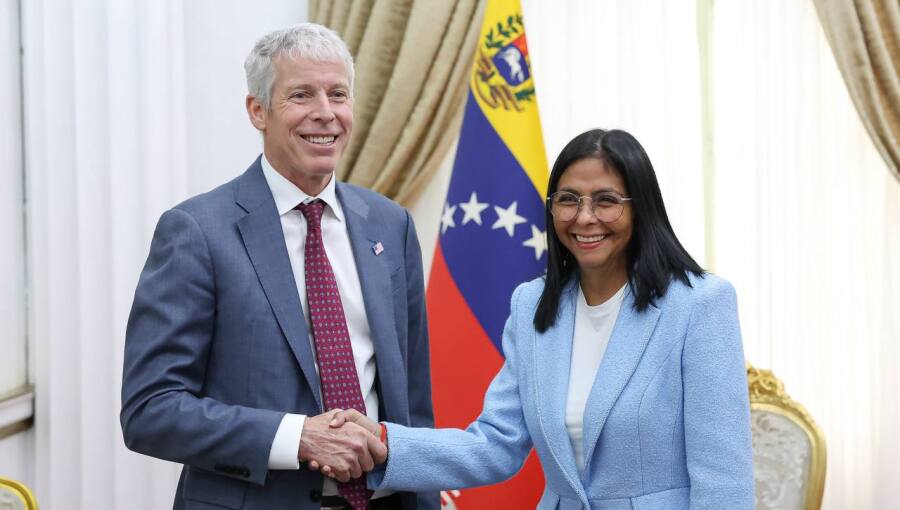
The US and Venezuela announced a long-term energy partnership on February 11 after interim President Delcy Rodríguez met US Energy Secretary Chris Wright in Caracas, in the first visit by a senior White House official since last month's dramatic ouster of Nicolás Maduro.
At the Miraflores presidential palace, Rodríguez said the two sides had agreed to establish a “productive association” built around a long-term energy agenda covering oil, gas, mining and electricity, adding that technical teams were already working to move projects forward quickly. She expressed hope the relationship would advance “without difficulties and without setbacks”, and noted the countries share more than a century of energy ties marked by political “highs and lows."
Wright described “enormous progress” in discussions over the future of Venezuela’s oil industry and said the broader objective was to create conditions for sanctions relief and a transition towards democratic governance. “We do not recognise the current government of Venezuela,” he said, while adding that the two sides were “early on in a transition period” and discussing future electoral prospects, The Wall Street Journal reported.
The visit follows a US operation on January 3 in which Maduro and his wife, Cilia Flores, were captured and transferred to New York to face drug-trafficking charges. Rodríguez, formerly vice president under Maduro, assumed interim leadership after the operation. President Donald Trump has praised her as "terrific" and claimed she is following US orders to facilitate a three-phase transition plan for Venezuela outlined by Secretary of State Marco Rubio.
Wright's trip marked a rare high-level engagement between Washington and Caracas amid historically strained relations. Ties deteriorated after socialist leader Hugo Chavez took power in 1998, nationalising the country's vital oil industry and forging closer links with US foes such as Russia, China and Iran.
In parallel with the diplomatic outreach, the US Treasury has issued general licences permitting American companies to export and sell Venezuelan crude, provide diluents required for heavy oil production and supply oilfield equipment and services. Venezuela’s National Assembly has also amended hydrocarbons legislation to open the sector to greater private and foreign participation, as both governments seek to attract fresh capital into the industry.
Venezuela, home to the world's largest proven oil reserves, produced more than 3mn barrels per day (bpd) in the 1990s, and is currently pumping about 900,000 bpd, according to industry figures. Estimates suggest output could rise by around 50% to roughly 1.4mn bpd in the coming years if reforms take hold. But years of mismanagement, sanctions and corruption have crippled the sector's infrastructure, meaning rebuilding to earlier levels could require investments of up to $250bn over 15 years.
Trump has said more than $100bn in foreign investment could be mobilised to revitalise oil regions such as Lake Maracaibo and the Orinoco Belt. He has also stated that nearly 50mn barrels of oil have been transferred to the United States for sale at market prices under new arrangements.
During the joint appearance, Wright concluded in Spanish, “Long live Venezuela and long live the United States,” as both sides signalled their intention to deepen cooperation despite ongoing political differences.
Follow us online