
Venezuela opens for business, but investors weigh promise against reality
The months since Nicolás Maduro's capture have brought Venezuela closer to the global economy than at any point in a generation. New laws, a US sanctions rollback and a resumption of international engagement have redrawn the investment landscape with striking speed. Yet for many of the large Western corporations and institutional investors Washington is courting, the reforms remain a foundation still under construction, according to Caracas-based boutique advisory Orinoco Research.
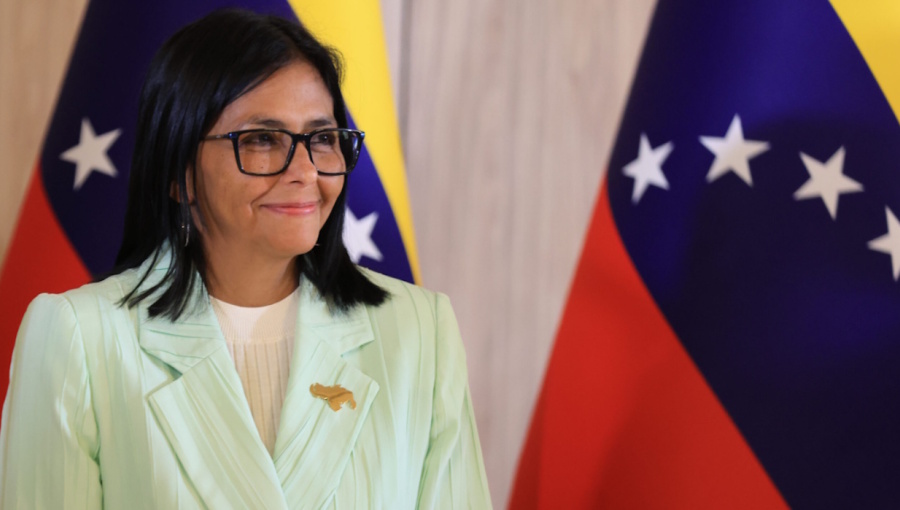
Since taking office, acting president Delcy Rodríguez has presided over a cascade of legislative activity. Forsaking decades of rabid anti-imperialist rhetoric, the National Assembly has approved reforms to the hydrocarbons law that give international companies greater freedom to manage production and market crude independently. A new mining law has received initial approval, designed to establish private mining concessions and streamline bureaucratic processes. Meanwhile in Washington, the Treasury Department's Office of Foreign Assets Control has issued a general licence that effectively permits almost any foreign entity to enter and invest in Venezuela's oil and gas sector without first obtaining individual clearances. And separate OFAC licences have since extended similar terms to the minerals trade, including gold.
The broader legal overhaul also includes an amnesty law that is being used, in part, to reform Venezuela's deeply compromised judiciary and bureaucracy. According to Orinoco Research, this aims to jump-start a transformation considered essential to building investor confidence, as well as to advancing democratic governance and human rights.
Alongside these long overdue reforms, the Banco Central de Venezuela (BCV) recently published updated balance of payments figures after seven years without comprehensive official data, itself a telling signal of the opening under way. The release, welcomed by economists as a rare increase in transparency from an institution long criticised for limited disclosure, offered the first systematic view of Venezuela's external accounts in nearly a decade. For investors, the figures reveal both the scale of the opportunity and the depth of the hole the country must climb out of.
Rodríguez, who has earned the praise of US President Donald Trump, has also overhauled the military leadership entirely since January, replacing the minister of defence, the joint chiefs of staff and all regional commanders, and has reshuffled roughly half of her cabinet. The concentration of decision-making authority over the new laws in Rodríguez's direct economic team has driven the pace of reform, though it has also reinforced concerns about the discretionary application of the new framework.
Investor appetite: a two-speed market
Orinoco Research views the current investor universe as sharply segmented. Companies already present in Venezuela – notably Chevron, which maintained its joint ventures with state oil firm PDVSA throughout the Maduro era, Repsol and Shell, which kept a local office in Caracas – have wasted no time, positioning themselves to take over oil fields and pursue new agreements. Shell has entered discussions over natural gas projects with Trinidad and Tobago. Repsol has said it plans to triple its gross crude output in Venezuela to 150,000 barrels per day within three years.
A second group, composed primarily of high-net-worth individuals from emerging markets, has also moved in, drawn by a high risk tolerance and the prospect of outsized returns from a deeply distressed market. These investors have been most active in real estate, agriculture and early-stage commercial opportunities.
Large US corporations and institutional investors, by contrast, wait in the wings. Orinoco Research expects companies such as ExxonMobil and ConocoPhillips to require at least a year, possibly more, before committing capital. ConocoPhillips chief executive Ryan Lance has publicly dismissed recent legislative changes as "woefully inadequate." Chevron's chief executive Mike Wirth acknowledged reforms are moving in the right direction but said further steps are needed before investment at the desired scale materialises.
The key catalyst for this group, the consultancy argues, will be concrete precedents rather than further legal change. If a major company secures an attractive, transparent deal with demonstrably favourable terms – low royalties, clear contract provisions, reliable enforcement – it is likely to trigger a “FOMO effect” among peers. In the meantime, the ambiguity that persists in the new hydrocarbons law, particularly the wide royalty band of between zero and 45%, continues to give large investors pause.
Oil sector: the numbers and the scenarios
The BCV data lays bare the magnitude of Venezuela's oil sector collapse, which began in the early 2000s under the tenure of former president Hugo Chavez. Export revenues fell to $4.8bn in 2020, a historic low, before recovering to $18.2bn in 2025, broadly in line with 2024 levels but a fraction of the $93bn recorded in 2012, when a single year's oil income matched the combined total of the entire 2019–2025 period. Between 2014 and 2016, revenues halved and then fell a further quarter; a 55% decline in 2019 was followed by a 67% collapse in 2020, leaving Venezuela's hard-currency earnings capacity roughly 95% below its peak. Current production stands at around 1mn barrels per day, against 2.5mn in the mid-2010s.
Oil has nonetheless remained the backbone of Venezuela's external sector, accounting for an average of 67% of total exports since 2019. Analysts caution, however, that this share reflects the contraction of other sectors rather than diversification, and that current export levels are still insufficient to meet Venezuela's import needs.
Orinoco Research sets out three scenarios for the oil sector in 2026. In the conservative case, production remains flat, oil prices stay low and OFAC applies licences restrictively, with fiscal pressure holding royalty rates near the top of the permitted band. Oil sector GDP would grow by around 11.5% from a base of approximately $12bn, a modest expansion offering little macroeconomic relief.
The base case assumes production rising to between 1.2mn and 1.3mn barrels per day, with some flexibility in the fiscal framework for new greenfield investments, including reduced royalty rates. This scenario is regarded as the most probable near-term trajectory, particularly if current engagement between Washington and Caracas continues.
In the optimistic scenario, a prolonged conflict involving Iran sustains elevated oil prices, Trump administration pressure intensifies and Venezuela's fiscal terms become more competitive. Production could reach 1.4mn barrels per day or beyond, with oil sector GDP expanding by up to 25%. Orinoco Research suggests that, as a rough rule of thumb, the broader economy grows at roughly half the rate of the oil sector, implying that double-digit overall GDP growth is achievable under favourable conditions. A significant additional upside factor, even without production increases, is the narrowing of the discount applied to Venezuelan crude relative to benchmark prices.
The balance of payments presents a structural challenge that higher oil revenues alone will not resolve. Goods and services are currently almost in balance, with a net surplus of just $94mn on tens of billions in flows, meaning nearly every dollar earned from oil exports is recycled into imports. Breaking this cycle will require resolving the multiple-exchange-rate distortions that have historically incentivised importers at the expense of domestic producers. Orinoco Research notes that the interim leader has spoken of establishing a sovereign wealth fund to set aside oil revenues, but regards her commitment to doing so as unproven.
Inflation remains a persistent structural problem. The widely circulated figure of around 600% bears little resemblance to economic reality, given Venezuela's semi-dollarised economy. Even in dollar terms, effective inflation is running at 30 to 40%, among the highest in the world, and will require higher oil export revenues and fiscal discipline to bring down. Full dollarisation is not on the current agenda, though partial measures are not off the table.
Mining and beyond
Washington's push to open Venezuela's mining sector, an explicit priority raised by energy secretary Chris Wright and interior secretary Doug Burgum during visits to Caracas, has gathered momentum. The Orinoco Mining Arc, a 112,000-square-kilometre zone holding important reserves of gold, diamonds, bauxite, coltan and rare earth elements, has been associated historically with armed groups and organised criminal networks, complicating due diligence and operating conditions for incoming investors. Legal changes are taking shape, with private mining concessions introduced for the first time, though the security dimension will weigh on decision timelines for major players.
Orinoco Research also points to early-stage opportunities in electricity, real estate, agriculture, tourism and financial services. Venezuela's financial system operates with a money supply of only about 3% of GDP, meaning the credit market is almost entirely absent, no meaningful mortgage market exists, and corporate lending is negligible. This makes for an enticing opportunity for financial sector investors willing to operate in a high-risk environment. The advisory also notes that state-owned assets across multiple sectors, from hotels and steelworks to farmland, are likely to come to market through outright sales rather than the public-private partnership arrangements that characterised the Maduro era. The Centre for International Investment, led by Calixto Ortega, is expected to drive this process.
A reassignment of oil contracts previously awarded under the “anti-blockade” law has already begun. Several fields previously operated by Chinese companies, some of which were separately sanctioned by the US for alleged dealings with Iran, have been transferred to Western-aligned operators following a US-requested review. This process has proceeded quietly, without significant public disclosure, but Orinoco Research says it has been substantive in scope.
Political outlook: transition or consolidation?
Despite the economic opening, Orinoco Research believes the democratic transition remains the most consequential and least certain variable in the investment calculus.
Rodríguez has used her consolidation of military and cabinet control to advance an agenda of economic reform, but whether this reflects a genuine commitment to democratic transition or merely a strategy for long-term retention of power remains a matter of debate. The amnesty law, intended to accelerate judicial and institutional reform, is being implemented slowly and selectively, generating frustration among civil society. Protests have increasingly been driven by labour groups, students and civil society organisations reflecting frustration over stagnant living standards and limited freedoms. And despite signs that hardline chavistas are losing ground, interior minister Diosdado Cabello remains, for now, in place.
Opposition leader María Corina Machado, the 2025 Nobel Peace Prize laureate, has not yet returned to Venezuela despite a second meeting with Trump and ongoing communication with Secretary of State Marco Rubio. Her vision for Venezuela's economic future is considerably more ambitious than what is currently on offer: she has put the country's long-run oil production ceiling at 5mn barrels per day, contingent on $150bn in capital and a wholesale transformation of the legal and institutional framework – none of which, she argues, can be secured before a free presidential election is held. She has also backed continued US control over Venezuelan oil revenues, arguing that the Treasury's handling of those funds since January serves as a necessary check against graft and a source of leverage over Rodriguez.
Within Venezuela, opposition leaders recently released under the amnesty have resumed on-the-ground political activity, and Machado’s own Vente Venezuela party’s headquarters in Caracas were allowed to reopen, an unthinkable development under ousted president Maduro.
Orinoco Research outlines three key political risks that investors should monitor. First, whether the Trump administration sustains effective pressure for democratic change, or is consumed by domestic political turbulence, including the possibility of impeachment proceedings following the US midterm elections, that diverts attention from Venezuela. Second, whether the opposition can manage a political transition without provoking the instability or repression that would derail economic recovery. Third, whether chavista factions accept electoral defeat, should elections take place in late 2026 or 2027, or whether Venezuela reverts to a contested result as occurred in 2024.
In the event of protracted US political distraction, Orinoco Research considers it plausible that Rodríguez quietly consolidates power without proceeding to elections, producing what the advisory labels as an intermediate scenario: more business-friendly than the Maduro regime, but falling well short of a full democratic transition. As multiple analysts have observed, the central challenge for Venezuela is ensuring that the current transition leads to a fully democratic system, not merely an economically open one.
For investors, Orinoco Research's overall message is that the Venezuela opportunity is real but front-loaded with risk. The prize – a country with 17% of the world's proven oil reserves, untapped mineral wealth and a deeply suppressed domestic economy – is considerable. So are the obstacles: legal ambiguity, institutional inertia, an unresolved political transition and structural economic distortions that decades of mismanagement have entrenched.
The companies best placed to benefit in the near term are those already in the country. Everyone else is watching closely, and the next twelve months will be the test of whether Venezuela's promise translates into investable reality.
Follow us online