

Wind and solar overtake coal in Turkey’s power generation for first time - EMBER
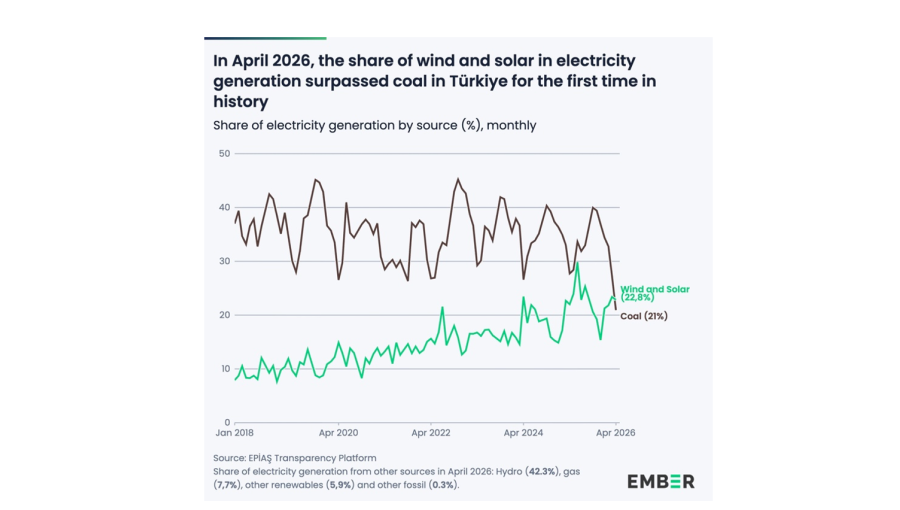
Wind and solar energy generated more electricity than coal in Turkey for the first time in April 2026, marking a milestone in the country’s energy transition as strong rainfall also boosted hydroelectric output, according to energy think-tank Ember.
Ember said wind and solar accounted for 22.8% of electricity generation in April, surpassing coal’s 21% share. Total renewable energy generation climbed to 71%, the highest level recorded in the past 26 years, helped by above-seasonal rainfall that lifted hydroelectric production.
Solar power also crossed another symbolic threshold during the month, overtaking imported coal generation for the first time. Solar accounted for 13.1% of electricity production, while imported coal fell to 8.6%, its lowest monthly level in nine years.
Hydroelectric generation rose 60% compared with the same period last year, Ember said. Water inflows to Turkey’s main river basin dams during the first four months of 2026 reached their highest level in eight years.
“April 2026 marked a significant turning point in Turkey’s energy transition,” said Çağlar Çeliköz, energy analyst at Ember. “This development was driven both by the momentum achieved in wind and solar energy over the past five years through increases in installed capacity and by the rise in hydroelectric generation due to rainfall above seasonal norms,” he said.
Turkey has accelerated renewable energy investment in recent years as it seeks to reduce dependence on imported fossil fuels, which have historically weighed on the country’s current account balance. The government aims to expand renewable capacity significantly under its long-term energy strategy, with solar installations in particular growing rapidly as equipment costs decline.
Çeliköz cautioned, however, that hydroelectric production remains vulnerable to changing climate conditions and rainfall patterns.
“However, the variable nature of hydroelectric production, which depends on climate conditions and precipitation regimes, creates uncertainty regarding future generation levels from this source,” he said.
“Therefore, in order for this historic achievement to become permanent in the face of changing climate conditions, Turkey needs to increase the momentum it has achieved in wind and solar energy and ensure resource diversity in renewable electricity generation.”
Follow us online