
Ankara proposes grand rewiring of Middle East energy export map amid Hormuz blockade

Turkey is proposing a slew of new overland pipelines running out of the Gulf so that the world, currently hit by the Hormuz crisis, will never again be cut off from sufficient oil and gas supplies.
As things stand, the only pipeline that allows crude oil from Gulf fields to avoid the Strait of Hormuz shipping bottleneck is Saudi Arabia’s westward pipeline that terminates at the port of Yanbu on the Red Sea. It is currently running at its maximum capacity of 7mn barrels a day (b/d).
The routes proposed by Turkey include:
1. Qatar – Turkey gas pipeline
2. Trans-Caspian gas pipeline
3. Syria – Turkey oil pipeline
4. Iraq (Basra) – Turkey oil pipeline
5. Saudi Arabia – Turkey interconnection (electricity)
It all amounts to a bold plan, but Turkey’s energy minister admits that so far the ideas have met with little enthusiasm from potential partners.
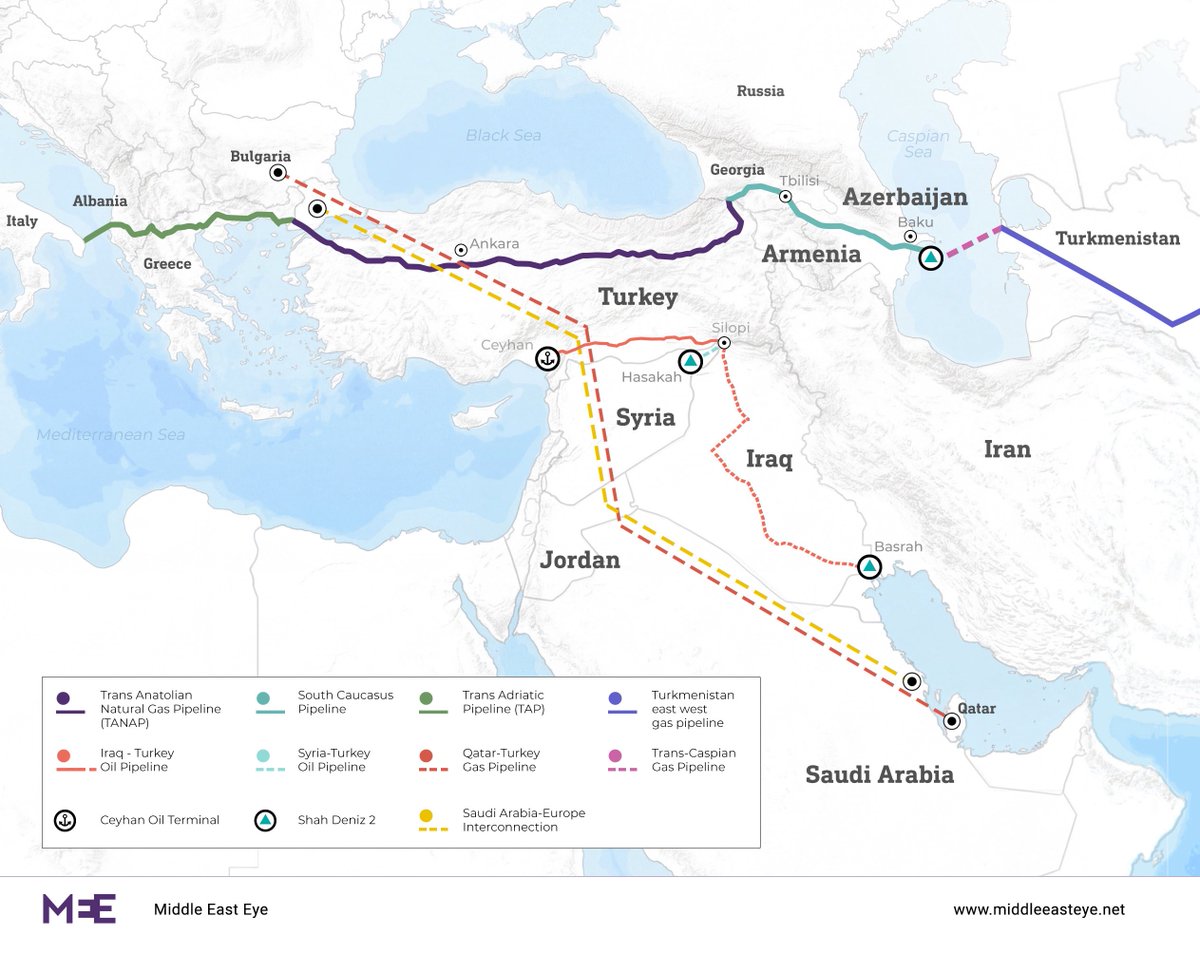
New pipeline routes as mapped out by regional publication Middle East Eye.
The Strait of Hormuz, through which roughly a fifth of the world's oil and liquefied natural gas (LNG) is shipped, has been effectively closed as part of Iran's retaliation to the US-Israeli war on Tehran that began at the end of February. The closure has triggered what the head of the International Energy Agency (IEA) has described as "the greatest disruption to global energy security challenge in history," with the Brent crude oil price surging past $120 a barrel and Asian and European gas benchmarks nearly doubling to above €60 per megawatt hour.
The shock to global energy markets has been compounded by devastating Iranian strikes such as one on Qatar's Ras Laffan LNG plant. Attacks damaged two of QatarEnergy's 14 processing trains and one of its gas-to-liquid (GTL) facilities, knocking out 17% of the country's LNG export capacity and prompting the state energy company to declare force majeure on long-term contracts with customers in Italy, Belgium, South Korea and China. QatarEnergy chief executive Saad al-Kaabi estimated that the strikes have caused some $20bn in lost annual revenue, with repairs expected to take three to five years.
"For production to restart, first we need hostilities to cease," he said. ExxonMobil (NYSE: XOM) holds stakes in both damaged LNG trains, while Shell (LON: SHEL) — the world's largest LNG trader — has itself declared force majeure on Qatari cargoes it sells to customers worldwide.
It is against this backdrop that Turkish Energy Minister Alparslan Bayraktar has revived a series of long-dormant pipeline proposals, presenting geographically well placed Turkey – oil and gas poor itself and thus reliant on hydrocarbon imports – as the natural energy hub solution to the region's rerouting problem, Middle East Eye reported.
Iran's half-open door
Before examining what Turkey is offering the world, it is worth understanding what Iran prepared for itself. The Goreh-Jask pipeline – made up of 1,100 kilometres (684 miles) of buried 42-inch pipe running from Bushehr province on the Persian Gulf coast to the Kooh Mobarak terminal at Bandar-e Jask on the Gulf of Oman, which directly opens out to the Indian Ocean – was conceived for precisely this moment, when reliance on passage through the Strait of Hormuz is shown to be foolhardy.
Construction began in June 2020 under maximum-pressure US sanctions. The pipeline was built entirely by the National Iranian Oil Company with no foreign contractors willing to touch the project. The infrastructure was inaugurated in July 2021 at a cost of around $2bn, with a design capacity of 1mn b/d.
The strategic logic was transparent: an export route that bypasses Hormuz entirely, allowing Iran to credibly threaten to close the strait for adversaries while keeping its own crude flowing.
That day arrived on February 28. But the door, as energy analysts have noted, is only half open to Iran.
Only 10 of the planned 20 storage tanks at Kooh Mobarak are complete, giving the terminal effective storage of 5.42mn barrels. There is a single mooring buoy. A very large crude carrier (VLCC) takes up to 10 days to load.
The US Energy Information Administration estimates effective throughput at Kooh Mobarak at around 300,000 barrels per day – 30% of the one million barrel figure that circulates in social media comments.
Kharg Island, inside the Persian Gulf, still handles roughly 90% of Iran's oil exports; with those flows largely stranded by the blockade, the Jask pipeline offers a limited but strategically vital release valve.
Shipping data firm Kpler confirmed a tanker loaded roughly 2mn barrels at Kooh Mobarak on March 7 – the first shipment from the facility since 2024 – and reported that the Islamic Revolutionary Guard Corps (IRGC), which controls security at the terminal, has been accelerating loadings since.
The geography offers Iran some defensive advantage: the terminal’s location by Jask sits 153 km (95 miles) east of the strait, meaning any naval enforcement operation must be stretched across the Gulf of Oman, some 340 km (211 miles) wide, rather than the 34-km (21-mile) Hormuz channel.
The terminal also has a documented secondary purpose: a 2022 UN report detailed the IRGC's use of Kooh Mobarak as a weapons-smuggling hub to arm the allied Houthis in Yemen, with its infrastructure made dual-use by design.
The pipeline works. But the gap between 300,000 actual b/d and one million b/d by design capacity, and between 10 built storage tanks and 20 planned, and between one mooring buoy and the requirements of the tanker fleet that needs to load, defines the limits of Iran's preparedness — and the central operational challenge of the crisis.
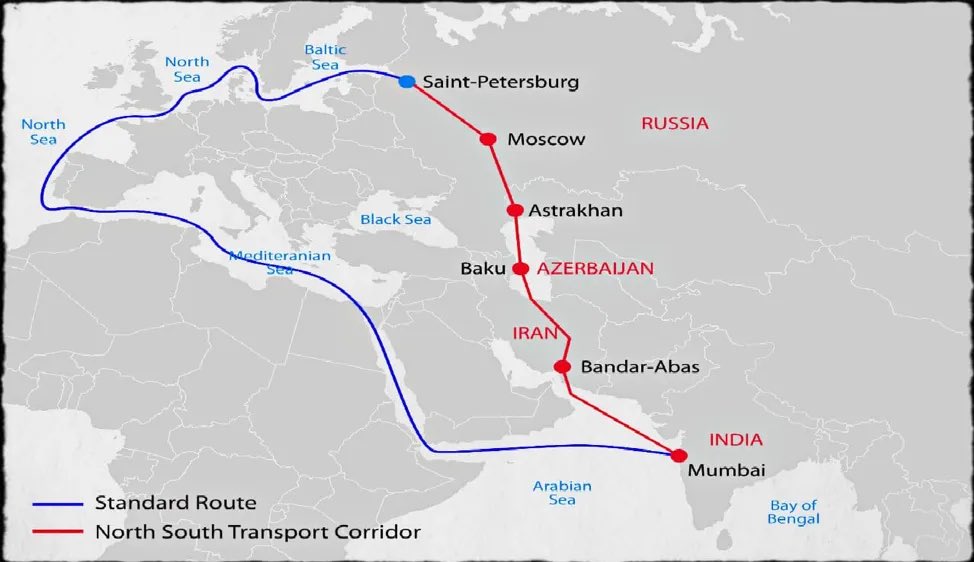
International freight routes have also been disrupted by the war waged on Iran.
The pipeline menu
It is precisely because Iran's own oil export bypass is insufficient — and because Saudi Arabia's East-West Pipeline and the UAE's Habshan-Fujairah route together move less than a third of the roughly 20mn barrels that normally transit Hormuz each day — that Turkey has stepped forward with its proposals. All the existing bypass infrastructure combined falls far short of what the world needs when the strait is out of action.
The scale of Iraq's oil shipping predicament makes the proposal attractive in Baghdad. The Iraqi government requires monthly oil revenues of $6.3bn to cover its expenditure including public sector salaries; government losses in March alone were estimated at more than $5.5bn, according to Salam Jabbar Shahab, an Iraqi energy expert, quoted by MEE. "The current situation requires Iraqi policymakers to secure daily oil exports of around 3.5mn barrels to maintain flexibility in paying the inflated monthly payroll," Shahab told the publication, adding: "Currently, the country exports only 200,000 barrels per day through Kirkuk-Ceyhan, an amount insufficient to cover salaries, social welfare, and other operational expenses."
He estimated that the pipeline extension would cost between $6bn and $10bn and would require international financing, while noting that political will in Baghdad has "increased substantially" since the crisis began.
Iraq also exports oil overland through Saudi Arabia's East-West Pipeline and has been exploring other overland options. Nevertheless, Shahab was further reported as cautioning that the project would traverse multiple regions, leaving it vulnerable to armed groups and Iraq's chronic political fragmentation.
Bayraktar has also revived proposals to connect Syrian oil fields — currently producing roughly 100,000 to 120,000 b/d, far below the pre-civil war level of nearly 400,000 b/d – to the existing Iraq-Turkey pipeline network.
Wael Alzayat, executive director of the US-Syria Business Council, told MEE that both Syrian and Turkish officials could back the idea but that serious obstacles remained, including low output, unresolved questions over control of oil fields still partly held by the Syrian Democratic Forces (SDF), and security risks from Kurdistan Workers’ Party (PKK)-affiliated elements and Islamic State cells. A few billion dollars would be needed to develop Syria's oil fields, he said, adding that Damascus lacks the resources to finance such development and outside support would likely be necessary. Alzayat nevertheless described the Syrian link as "more feasible and realistic" than the other projects under discussion.
The Qatar pipeline: 15 years of false starts
The most eyecatching – and most contested – proposal is a revival of plans for a natural gas pipeline running from Qatar's offshore North Field in the Gulf through Saudi Arabia, Jordan and Syria to Turkey and on into Europe. The concept has circulated since at least 2009, when Qatari and Turkish leaders publicly suggested they had agreed to build such a connection.
The project repeatedly foundered, most recently because of opposition from Syria’s former Assad regime, reportedly under Russian pressure. Assad's fall in December 2024 prompted Ankara to try again.
Bayraktar's pitch rests on the force majeure crisis at QatarEnergy. "So, you have no LNG exports. You already cannot move through Hormuz. Now imagine that a certain amount of gas is being sent to Turkey and Europe through a pipeline," he said. "We are opening an alternative export route for you."
Qatar's foreign ministry poured cold water on the idea as recently as January 2025, arguing that the LNG model remains preferable for Doha because it offers flexibility across global markets. Experts are sceptical the current crisis alone will change that calculus.
"The project is technically feasible, but economically and politically fragile," Justin Dargin, a senior fellow at the Doha-based Middle East Council on Global Affairs told MEE. Historically estimated at $10bn-$12bn, the 1,500-km (932-mile) pipeline would realistically cost $15bn or more in today's environment once security, inflation and political risk were factored in, he said.
Dargin noted that the pipeline would require sustained political alignment among Saudi Arabia, Jordan, Syria and Turkey — "an exceptionally high bar in the current environment" — and would expose Qatar to exactly the transit dependency it has spent decades minimising. "A pipeline, by contrast, would tie volumes to a single corridor and reduce that flexibility," he was also reported as saying.
The route would also be vulnerable to state and non-state actors, including Iran-aligned groups targeting energy infrastructure.
The Trans-Caspian link
Bayraktar has also long pressed the case for a Trans-Caspian gas pipeline — a perennial ambition that would route gas from Turkmenistan, thought to sit on the world’s fourth largest gas reserves, across the Caspian Sea to Azerbaijan and on through Georgia and Turkey to Europe. Turkey already has swap arrangements to import Turkmen volumes via Iran – though sanctions on Iran and the war have put an end to such flows for now.
"But the proper solution, one of the most ideal solutions, would be for that gas to cross the Caspian and come to Turkey via Azerbaijan and Georgia," Bayraktar said.
Umud Shokri, a senior visiting fellow at George Mason University specialising in energy, told MEE that the political environment is now more favourable for the Trans-Caspian project than at any point in the past, but that formidable commercial and legal hurdles remained. The subsea segment alone — running some 300 km (186 miles) from Turkmenbashi to Baku, where it would connect to the South Caucasus Pipeline for further connection to the Trans-Anatolian Pipeline (TANAP) – would cost around $2bn at conservative estimates. Scaling volumes to a commercially meaningful 20-30bn cubic metres per year would require substantial additional upstream development and compression capacity.
"The economic case is far less straightforward," Shokri was also reported as staing, adding: "Without long-term purchase agreements and clear price competitiveness, securing financing remains difficult."
European markets are also increasingly supplied with LNG from the US and elsewhere, limiting demand pull for new pipeline volumes.
A further complication is legal: Azerbaijan and Turkmenistan have not yet ratified the 2018 Convention on the Legal Status of the Caspian Sea, which sets the framework for subsea pipelines and reduces the scope for Russian and Iranian attempts to block the project.
Visionary pitch, uncertain audience
Bayraktar's package also includes a proposed electricity interconnector linking Saudi Arabia and Turkey via Jordan and Syria — a project that MEE reported on in February, observing that Saudi Arabia had already been examining it, envisioning an HVDC cable to Greece that would bypass Israel in favour of Syria and connect Gulf power to European grids.
Turkey's Bayraktar acknowledged to MEE the chasm between ambition and execution. "But unfortunately, what we have been saying has not found a response up to now," he said. "Hopefully, this crisis will lead everyone into a process where they pause, think more seriously, and we can implement these projects."
There’s no question, the crisis has created the strategic case for rewiring the Middle East's energy map. Iran spent $2bn building a Hormuz bypass that operates at 30%-capacity through a single mooring buoy. The existing regional bypass routes combined replace less than a fifth of normal Hormuz flows. And Turkey's proposed additions — spanning multiple sovereign borders, requiring tens of billions of dollars in capital, and demanding levels of regional political alignment not seen in decades — remain, for now, aspirations rather than engineering. Whether the crisis can create the political and financial conditions to change that is a different question entirely.
Follow us online