

Central Asia shaken by fears of huge acid rain cloud heading to region from Iran
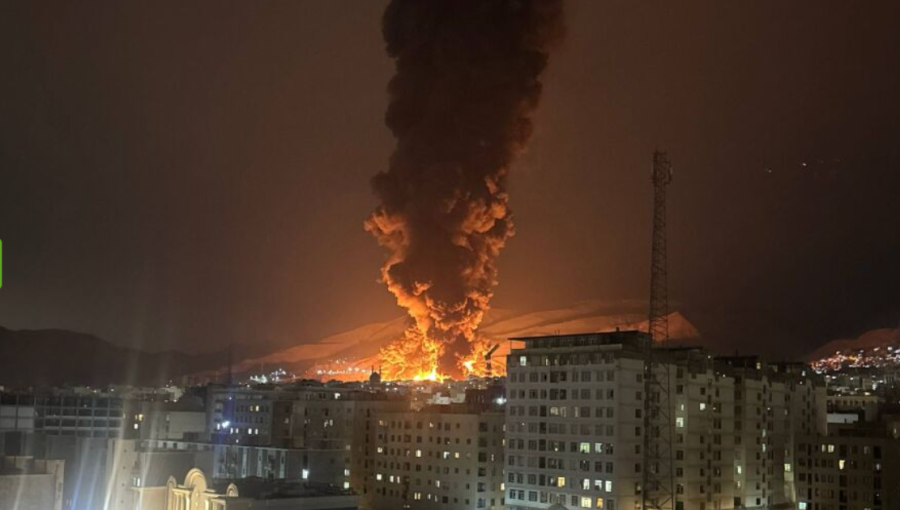
Fears that Central Asia could be deluged by cancer-causing acid rain as a result of devastating Israeli strikes on Iranian oil depots that released giant plumes of acrid smoke have spread across the region.
Anxieties over claims that a huge toxic cloud might be moving towards Central Asia were intensified by a Kyrgyz MP, Makhabat Mavlyanova, who raised the issue in parliament, saying: "As a result of Israel's attack on Iranian oil refineries, many harmful chemicals were released into the air. And now there's talk that these substances could fall here in Kyrgyzstan as acid rain. Is anyone monitoring this process? In what areas could such acid rain fall?"
Kyrgyzstan’s Deputy Minister of Natural Resources, Environment and Technical Supervision Asel Raimkulova replied that the country’s hydrometeorological service was monitoring the situation at its stations.
In neighbouring Kazakhstan, however, Orda.kz reported how the Centre for Combatting Disinformation got involved and pointed out that no threat had been confirmed by experts at meteorological service Kazhydromet with either data or observations.
A statement from the disinformation centre said: "Acid precipitation is formed from sulfur and nitrogen oxides emitted into the atmosphere primarily by industry, energy, and transport, and typically occurs near pollution sources.
“As air masses travel long distances, the concentration of these substances is significantly reduced by natural atmospheric processes.”
Kazhydromet said on March 9: “According to current monitoring, there are no signs of the spread of pollutants to Kazakhstan and Central Asia [from consequences of the Iran conflict]"
In largest Kazakh city Almaty, however, inhabitants reportedly began to associate a warning of increased air pollution on March 9 with the military strikes on Iranian oil refineries and fuel storage facilities.
Also on March 9, Uzbekistan’s meteorological service Uzhydromet joined the effort to reassure people that “acid clouds” from Iran pose no threat.
“This information has no scientific basis,” newshub.uz reported Uzhydromet as saying.
It added that “the formation of dangerous concentrations of acid precipitation thousands of kilometres from the source is virtually impossible".
Follow us online