
Climate group files complaint against OCBC over coal exposure in Indonesia
A Green Central Banking report reveals that a climate advocacy organisation has lodged a formal complaint with the Singapore Exchange against OCBC Bank, accusing the lender of potentially misleading investors about its exposure to coal-powered industrial facilities in Indonesia. Market Forces, the climate advocacy organisation, argues that there are inconsistencies between the commitment that OCBC stated in public space in terms of sustainability and the financing of companies that still rely on coal-fired power plants. These companies, Market Forces said, still run industrial operations such as nickel and aluminium smelters.
Indonesian nickel operations
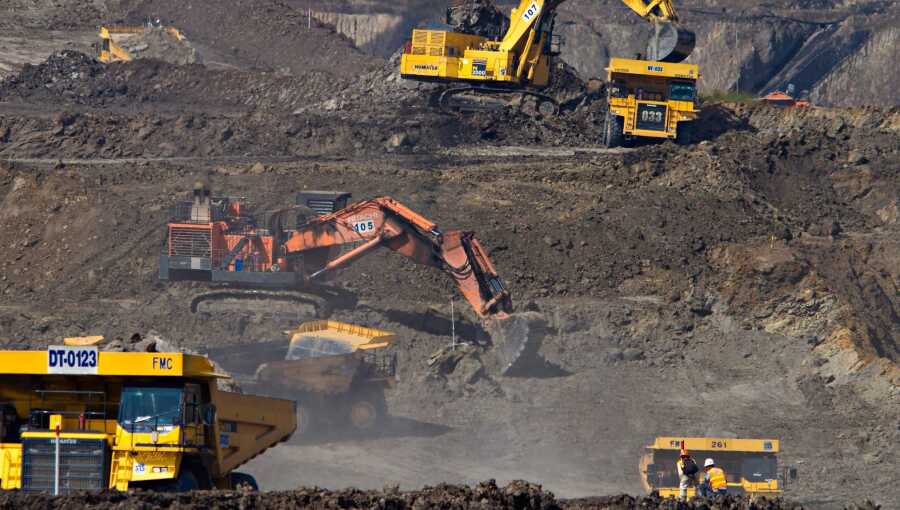
The finding revealed that OCBC is still the largest financier of the Indonesian mining conglomerate Harita Group. Harita Group operates significant nickel processing facilities on Obi Island, a place where most power generation currently comes from coal-fired plants. These plants are built specifically to supply electricity to smelting operations.
Market Forces also claims that the industrial complex operates about 910 MW of captive coal-fired power capacity, with an additional 760 MW currently under construction. The site turns out to only use around 40 MW of solar power, highlighting what the organisation describe as a heavy reliance on coal energy.
The facility could eventually reach 2.54 GW of coal capacity, alongside roughly 1.3 GW of solar generation, suggesting coal will continue to dominate the complex’s energy mix despite the financing background attempting to reduce it.
Allegations of incomplete climate disclosure
Under the complaint, OCBC is said to have failed to disclose its exposure to high-carbon assets fully. This put them in a position of potentially breaching disclosure rules set by the Singapore Exchange.
Campaigners then argue that investors rely heavily on banks’ climate commitments and coal phase-out policies when assessing climate-related financial risks. But still, investors need the full picture as they rely on climate and coal phase-out commitments disclosed by banks to assess growing climate-related risk.
The problem lies in transparency. Banks should provide clarity on how financing for companies dependent on coal power aligns with their sustainability policies and global climate goals.
OCBC speaks out
OCBC has responded and rejected suggestions that its disclosures are inadequate. The bank’s chief sustainability officer, Mike Ng, said the institution’s reporting has complied with the regulatory framework established by the Singapore Exchange.
OCBC also emphasised that it follows the Equator Principles, a guide for financial institutions in assessing environmental and social risks associated with major infrastructure and industrial projects. “We are expecting nickel smelters to operate entirely on renewable energy, but it is currently unrealistic in remote regions of Indonesia,” Ng argued.
Hydropower and wind resources are often geographically limited, while solar energy remains intermittent, he said. As a result, energy transitions in heavy industry frequently involve trade-offs between environmental goals and operational reliability.
OCBC further pointed to the strategic importance of Indonesia’s nickel reserves for global electrification, particularly for the production of electric vehicle batteries.
However, analysts note that the majority of Indonesia’s nickel output is used mainly for stainless steel production. Only about 5% of the country’s nickel supply currently goes toward electric vehicle battery manufacturing. These numbers weaken the justification for continued coal-powered expansion at industrial smelters.
The complaint highlights that other major Singapore lenders, including DBS Bank and United Overseas Bank, have previously been identified as significant financiers of the Harita Group.
However, Market Forces chose not to include them in the current complaint. Mariana said this is because their coal exclusion policies contain broader exemptions and less precise language, making it harder to argue that they are misleading investors.
Rising global scrutiny
The case reflects a wider trend of increasing regulatory and activist scrutiny around climate-related financial disclosures. Regulators around the world are beginning to penalise financial institutions that fail to properly manage or disclose climate risks. For example, the European Central Bank recently fined a bank for failing to adequately address financially material climate risks.
The OCBC complaint is also not the first filed by Market Forces with Singapore regulators. In 2023, the group lodged a whistleblower report against JERA over alleged disclosure shortcomings related to liquefied natural gas investments tied to a bond issued in Singapore.
Corporate governance experts say the case highlights the increasing influence of civil society organisations on financial markets. Companies with ambitious climate policies could face heightened scrutiny if their financing activities appear inconsistent with those commitments. Firms may respond by adopting more conservative sustainability pledges if activist pressure becomes too intense.
At the same time, the dispute signals that investors and advocacy groups are paying closer attention to how banks support high-carbon industries, particularly in sectors tied to the global energy transition.
As pressure grows on financial institutions to align lending practices with climate targets, the outcome of the complaint could become an important test case for climate disclosure standards among companies listed on the Singapore Exchange.
Follow us online