
India negotiates with Iran for safe passage of fuel carriers
India is feeling the bite of the global energy crunch after the ongoing war in the Strait of Hormuz and the wider West Asia region has made it risky for cargo ships to transit through the region without getting hit by Iranian weapons.
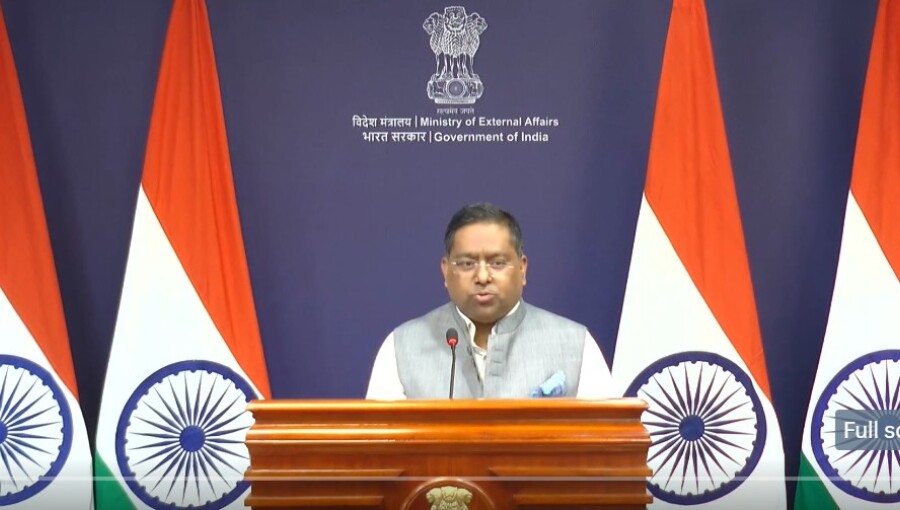
According to a March 12 2026 press briefing by India's Ministry of External Affairs(MEA), their minister incharge Dr. S. Jaishankar has held three separate conversations with Iran’s Foreign Minister Seyed Abbas Araghchi.
During these conversations, Jaishankar has purportedly discussed India’s national interests and energy security needs being affected by the attacks on shipping originating or transiting through the West Asia region.
While official government sources don’t talk about an agreement being reached with Iran, it is likely that India has secured some sort of arrangement, with Tehran agreeing to not target vessels bound for India that pre-notify their presence to Iranian authorities.
Iran has reportedly made similar arrangements with Bangladesh, which has also requested higher supplies of diesel from India which is a major exporter of refined petroleum products. India's MEA has acknowledged the request but has said that it remains under review.
However, the enforceability of these arrangements is uncertain, as misidentifications during combat operations are a phenomena no country or forces are unacquainted with and since the beginning of military operations against Iran, the US Air Force has lost three F-15 fighter jets to friendly fire.
Iran which has suffered decapitation strikes against its leadership including its former Supreme Leader Ayattolah Ali Khamenei is even less likely to be able to effectively coordinate the various branches and commanders of its forces operating weapons platforms across the country and in the Strait of Hormuz which can sink vessels.
As a result, this gap in leadership and communication could easily lead to accidental targeting of vessels heading to countries Iran has made transit agreements with.
According to a press release by India’s Ministry of Petroleum & Natural Gas, 70% of India’s crude imports are routed outside Strait of Hormuz, however over 60% of its liquified petroleum gas (LPG) which is the main cooking fuel for Indian households and the restaurant industry have been impacted.
New Delhi has increased domestic LPG production by 25% and has taken steps to increase inventory and availability to consumers by invoking the Essential Commodities Act.
India consumes around 189mn metric standard cubic metres per day(MMSCMD) and produces around 97.5MMSCMD, leaving 91MMSCMD which is slightly less than half of its requirement dependent on foreign supplies.
While Indian social media is already abuzz with people comparing the cost of cooking with electric induction stoves over the ubiquitous LPG stoves it remains to be seen if the transition is temporary or will remain a trend even after the conflict ends and energy supplies become normalised.
New Delhi has also clarified that “28 Indian-flagged vessels are operating in the Persian Gulf region. Of these, 24 vessels are located west of the Strait of Hormuz carrying 677 Indian seafarers, while 4 vessels are east of the Strait with 101 Indian seafarers onboard”.
Furthermore, while there has been no official acknowledgement of the fact, it is understood that China has a deep maritime transit relationship and energy dependency on Iran. Beijing is also believed to have supported Tehran through decades of US, Western and UN sanctions with both cash and military supplies including advanced hightech components for its military industrial complex.
As such, it is highly likely that Iran is paying back those favours or more accurately continuing the favourable deals it cuts with Beijing even under the ongoing kinetic-threat rich environment in the Persian Gulf region.
Follow us online