
India passes milestone power generation capacity as non-fossil share tops 51%
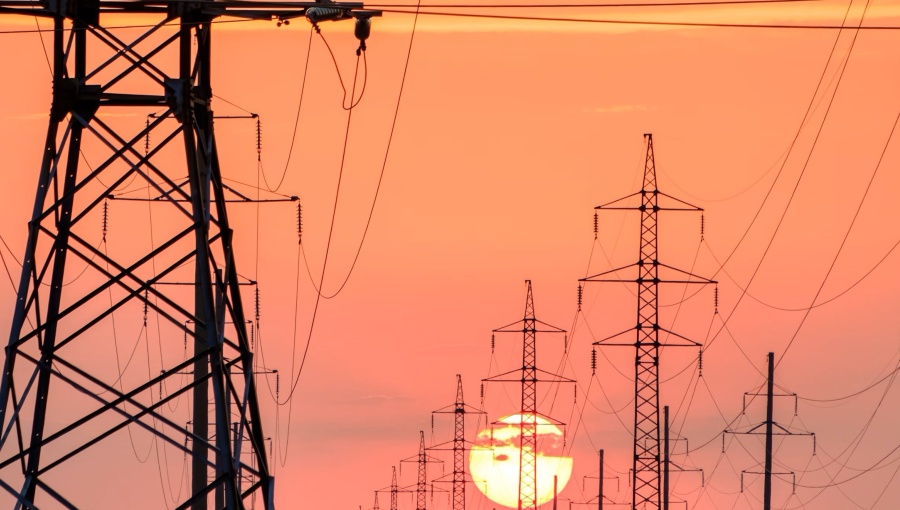
India’s installed power generation capacity has climbed to 505,023 MW as of October 31, 2025, with non-fossil fuel sources now accounting for more than half of the national mix, Minister of State for Power Shripad Yesso Naik told the Rajya Sabha (India's Upper House) this week in a written reply, according to a government press release. The latest figures show that fossil-fuel-based capacity stands at 245,600 MW, while non-fossil fuel sources—including 250,643 MW of renewable energy—have reached 259,423 MW, reflecting a 51.37% share of total generation.
The milestone represents a significant step in India’s energy transition, following shortly after the country met its Nationally Determined Contributions target of securing 50% of its installed power capacity from non-fossil fuel sources—achieved five years ahead of schedule. The minister said the continued shift towards renewable and clean energy will be central to India’s long-term roadmap to balance climate action with energy security, affordability and development needs.
The latest capacity data underscores the scale of India’s renewable energy expansion. Renewable energy sources—covering solar, wind, biomass, small hydro and waste-to-energy—now account for 49.6% of total installed capacity, nearly matching fossil fuels. Solar alone contributes 129,924 MW, followed by 53,600 MW of wind and 10,757 MW of biomass and cogeneration. Hydro power—including pumped storage projects—adds another 50,348 MW.
Nuclear power, at 8,780 MW, represents 1.74% of the total but has been identified by the government as a strategic pillar for long-term clean energy expansion. Overall, India’s non-fossil fuel capacity of 259,423 MW surpasses fossil fuel-based capacity of 245,600 MW, underlining a structural shift in the sector.
The government has outlined a series of policy interventions undertaken to accelerate renewable energy deployment as it works towards achieving 500GW of non-fossil capacity by 2030. These include waivers of Inter-State Transmission System (ISTS) charges for solar and wind power projects commissioned by June 2025, for green hydrogen projects until December 2030, and for offshore wind until December 2032.
Standard bidding guidelines have been issued for tariff-based competitive bidding for solar, wind, hybrid and firm renewable energy (FDRE) projects. The Ministry of New & Renewable Energy has also put forward an annual renewable energy bidding trajectory of 50GW from FY24 to FY28, giving developers long-term clarity.
Other major initiatives include 100% FDI under the automatic route for renewable energy, the Green Energy Corridor Scheme to strengthen transmission for RE evacuation, and the development of large-scale solar parks to provide ready land and grid connectivity.
Schemes such as PM-KUSUM, PM Surya Ghar Muft Bijli Yojana, the National Programme on High Efficiency Solar PV Modules, PM JANMAN-linked solar village initiatives, the National Green Hydrogen Mission and viability gap funding for offshore wind projects form part of the country’s broader push to scale clean energy consumption. The Renewable Purchase Obligation (RPO) and the new Renewable Consumption Obligation (RCO) framework—backed by penalties for non-compliance—are expected to significantly boost renewable uptake among large consumers.
Calling nuclear power a crucial component of India’s transition to net zero by 2070, the minister highlighted the government's plan to scale nuclear capacity to 100 GW by 2047. A dedicated INR200bn Nuclear Energy Mission aims to develop at least five indigenous small modular reactors (SMRs) by 2033 while promoting next-generation nuclear technologies.
Proposed amendments to the Atomic Energy Act, 1962, and the Civil Liability for Nuclear Damage Act, 2010, are expected to facilitate greater private-sector participation. Bharat Small Reactors based on PHWR technology are being upgraded for industrial decarbonisation, and BARC is developing SMRs to repurpose retiring coal stations.
Fuel security efforts include new uranium discoveries, including reserves expected to extend the Jaduguda mine’s life by 50 years, and progress on the closed fuel cycle through the Prototype Fast Breeder Reactor. To accelerate project development, NPCIL and NTPC have formed a joint venture—ASHVINI—to build nuclear power plants.
Alongside generation expansion, the government is focusing on energy storage and grid balancing technologies. A viability gap funding scheme for Battery Energy Storage Systems (BESS) has already placed 13.22 GWh of capacity under implementation with INR37.6bn in support, while a second VGF scheme for 30 GWh of BESS capacity has been approved with INR54bn from the Power System Development Fund.
Ten pumped storage projects totalling 11,870 MW are under construction, backed by a new PSP policy aimed at enabling deeper renewable integration. Offshore wind development is also advancing, with viability gap funding allocated for the first 1 GW of capacity.
In addition, The National Green Hydrogen Mission targets at least 5mn tonnes of annual green hydrogen production and about 125 GW of associated renewable energy capacity by 2030—a move aimed at cutting emissions in hard-to-abate sectors and fostering a new industrial ecosystem.
India’s energy mix at a glance (as of October 31, 2025)
• Total installed capacity: 505,023 MW
• Fossil fuel sources: 245,600 MW (48.6%)
– Coal: 218,258 MW
– Gas: 20,132 MW
– Lignite: 6,620 MW
– Diesel: 589 MW
• Non-fossil fuel sources: 259,423 MW (51.37%)
– Renewable energy: 250,643 MW
– Hydro: 50,348 MW
– Wind: 53,600 MW
– Solar: 1,29,924 MW
– Biomass/cogeneration: 10,757 MW
– Nuclear: 8,780 MW
The minister said the latest figures reaffirm India’s strong momentum in expanding clean energy capacity and strengthening long-term energy security, even as it works towards becoming a global leader in low-carbon development.
Follow us online