

Panama Canal auction prices quadruple as Hormuz closure reshapes global energy flows
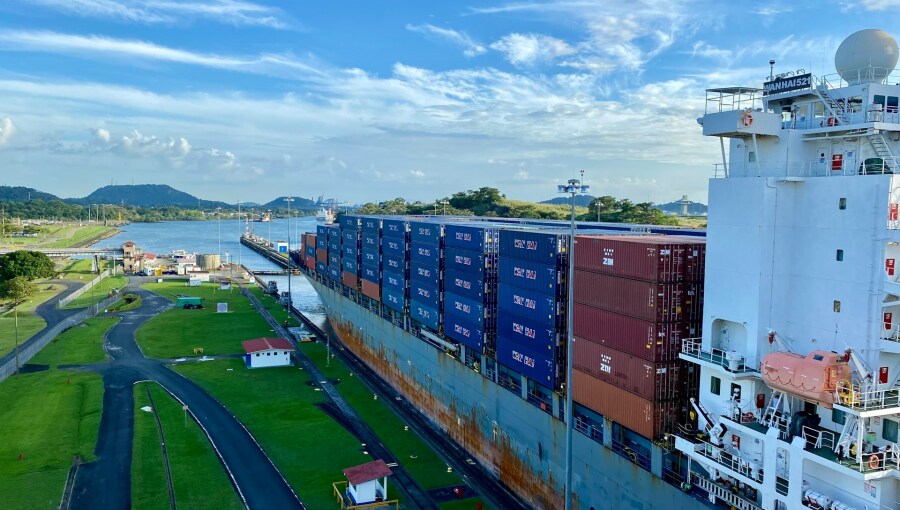
A Chinese-controlled liquefied petroleum gas (LPG) tanker paying $4mn to jump a queue is not the sort of detail that ordinarily surfaces in shipping intelligence reports. Yet the transit of the Gas Virgo, a Singapore-flagged vessel operated by Wanhua Chemical, through the Panama Canal on April 15 has become something of a cipher for a broader structural shift in global commodity flows, which is accelerating with little sign of reversal.
The payment, confirmed by the Panama Canal Authority (ACP) after Bloomberg first reported it, dwarfs the sub-$1mn premiums vessels were paying as recently as early March, when the US-Israeli campaign against Iran was barely weeks old. That the figure quadrupled in under six weeks speaks to how completely the waterway's strategic value has been repriced.
The catalyst is the near-closure of the Strait of Hormuz, through which roughly a fifth of the world's oil ordinarily moves. With that corridor effectively strangled, buyers across Asia, particularly in India, where LPG is a domestic cooking staple, have pivoted sharply towards US Gulf Coast suppliers. The Panama Canal is the most direct route connecting those supply points to Asian markets, and demand for transit slots has surged accordingly.
The ACP confirmed to La Prensa Panamá that auction prices between October 2025 and February 2026 held at a median of roughly $55,000 per slot. By March and April that figure had climbed to $150,000, a near-tripling, while the average auction price over the same recent window reached $385,000, against $130,000 for the preceding five-month period.
The authority noted that two Aframax tankers also paid $3mn each in separate recent auctions.
Despite the headline numbers, the ACP has been careful to frame conditions as operationally stable rather than congested. "The Panama Canal continues to operate reliably and predictably, without significant delays," the authority stated, distinguishing vessels holding confirmed reservations, which proceed unaffected, and the smaller cohort of non-booked ships entering the last-minute auction system. As of April 10, real-time transit data showed 132 vessels queued, of which 112 carried confirmed reservations and 20 did not.
Waiting times for unbooked vessels nonetheless tell a more pressured story. Northbound transits, Pacific to Atlantic, were averaging 5.4 days in the queue; southbound journeys averaged five days. A handful of vessels have been waiting as long as 12 days.
Analysts at Clarksons Securities, cited by Bloomberg, attributed the intensification directly to rising US export volumes across multiple cargo categories rather than to any single commodity.
The volume data corroborate that assessment. In the first half of fiscal year 2026 - October 2025 to March 2026 - the canal recorded 6,284 oceangoing transits, a 3.66% increase on the comparable period a year earlier and representing 224 more crossings in absolute terms.
Container ship transits surged most dramatically, rising 52% year-on-year to 1,422 passages, with over 1,000 of those handled by the expanded Neopanamax locks.
LNG carrier transits climbed 73.7% over the same period, reaching 33 cumulative crossings, a figure ACP administrator Ricaurte Vásquez told La Prensa Panamá was set to grow further as Qatari LNG exports shift towards US origination points. "Within a few weeks, we will be seeing daily transits of these vessels," he said in March.
Reservation utilisation rates in March reflected the capacity pressure. Neopanamax slots reached 113.7% utilisation; regular vessel categories hit 114.2%, figures that indicate demand consistently outstripping scheduled availability. Average transit time within the canal stood at 10.67 hours, with total time in canal waters reaching 21.39 hours per vessel.
The ACP has been explicit that the auction mechanism, which allocates pre-built schedule slots and does not displace confirmed bookings, is functioning as designed. "Auction values are determined by multiple factors, including the urgency and commercial priorities of individual customers, as well as broader supply and demand conditions in world trade," the authority stated.
Odin Marine Group, cited by Bloomberg, assessed that competitive pressure on slots would sustain elevated premiums in the near-term.
Scheduled maintenance on both Panamax and Neopanamax locks between March and September 2026 will introduce temporary capacity constraints. Whether those adjustments intensify competition for auction slots, or whether Middle East tensions ease sufficiently to moderate demand, will define the canal's operational calculus through the remainder of the fiscal year.
Follow us online