
South Korea builds nuclear-solar supergrid to prevent blackouts
Korea Hydro & Nuclear Power (KHNP) is building a multi-tiered power network to secure national electricity supplies, the Gyeongbuk-based utility announced on May 15. The state-owned energy operator is installing new high-voltage transmission pylons across mountain ridges in North Gyeongsang Province. These structural networks link atomic generation plants, floating solar arrays and responsive water storage assets to protect the regional power grid.
The physical infrastructure expansion includes 345kV transmission networks crossing from Buk-myeon in Uljin-gun to industrial corridors near Imha Lake in Andong-si. This deployment addresses localised grid bottlenecks while creating a reliable framework for regional distribution networks.
The aggressive expansion of South Korea’s energy infrastructure comes at a critical time for national energy security. By linking volatile renewables capacity directly to a stable nuclear baseload and fast-charging hydro storage, the utility is building a practical buffer against the grid instability that frequently triggers large-scale blackouts. As such, the initiative serves as a crucial corporate shift for a country attempting to reconcile intensive economic production with structural carbon reduction targets.
The Hanul complex
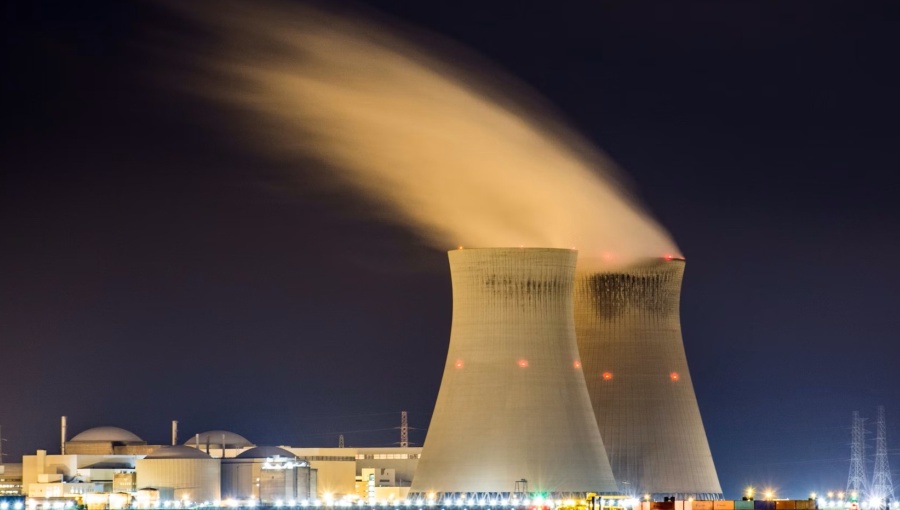
The central driver of this energy strategy is the Hanul Nuclear Headquarters, Chosun Daily reported on May 15. The facility operates eight active units, Hanul Units 1 to 6 alongside Shin-Hanul Units 1 and 2, yielding a combined capacity of 8.7GW. The older reactors range from 950MW to 1,000MW, whilst the two Shin-Hanul additions supply 1,400MW each. The massive dome of Shin-Hanul Unit 1 stands 76.66 metres tall, resembling a 27-story residential skyscraper, and generated 8,821GWh of electricity over the course of 2024. This single dome met roughly 18% of the annual electricity demand of Seoul, which consumes 50,352GWh annually.
Atomic generation is the bedrock of the local economy. The significance of these installations is highlighted by the International Energy Agency statistics on South Korea Nuclear Power reliance, which show that atomic energy accounts for 30% to 32% of national electricity production. As Chosun Daily notes, the Hanul complex hosts over a third of the 26 operational reactors in the country, yielding 33% of total domestic nuclear output. This means the Hanul complex alone supplies 10% to 11% of South Korea's total electricity.
This footprint is expanding through the construction of Shin-Hanul Units 3 and 4, two 1,400MW reactors located on an adjacent plot. The projects have faced a volatile political timeline. Initial approvals were sought in 2015, but construction ceased in 2017 under the previous administration's nuclear phase-out strategy. Work finally resumed in June 2023 under a new administration, and by April 30, the overall progress rate reached 29.8%. Mechanics are currently affixing 6mm steel sheets to form the containment dome for the third unit, whilst crews prepare the foundation of the fourth unit for a primary concrete pour scheduled for May 27. Shin-Hanul Unit 3 is slated for grid connection in October 2032, with Unit 4 following in October 2033. Upon completion, the complex will operate 10 reactors with a total capacity of 11.5GW, supplying 14% to 15% of national electricity demand.
Solar and pumped storage balance grid
To supplement this baseload, the utility is deploying floating solar technology on Imha Lake. According to Chosun Daily, the engineering arrangement covers 521,000 square metres, a size equal to 74 football pitches. This flower-shaped cluster has a capacity of 472MW and yields 61.67GWh annually, sufficient to power 20,000 homes. KHNP maintains a 49% financial stake in this venture alongside the Korea Water Resources Corporation, which directly manages the multi-purpose dam structure.
A key innovation of this layout is its grid conservation method. Because the electricity networks in North Gyeongsang are already heavily congested, regulators approved an arrangement that allows the solar facility to share existing pylons with the nearby Imha Dam hydroelectric plant. This cross-generation framework channels solar output during daylight hours and water-driven energy overnight through a single line. KHNP is replicating this asset-sharing model with a 5.2-MW joint solar installation in Cheongsong, whilst a separate 3-MW floating facility in Gyeongsangnam-do has been operational since 2023.
To handle fluctuations from these green sources, the utility relies on its pumped storage infrastructure. Operating seven installations across locations including Yangyang, Samnangjin, Cheongpyeong, Muju, Sancheong, Cheongsong and Yecheon, these facilities provide a combined 4,700MW, representing roughly 4% of total national capability. These dual-reservoir complexes balance the grid by utilising excess electricity to pump water uphill when power is cheap, and then releasing it to generate power when demand spikes.
As intermittent renewables grow, these backup assets have become vital. Their utilisation rates have climbed from roughly 9% a few years ago to 14.7% recently, Chosun Daily reports. Acting as high-capacity physical storage, they can transition from a complete standstill to active generation within five minutes. “The purpose of pumped storage power plants is to stabilise the power grid. When there is surplus power, they absorb it, and during peak demand, they generate electricity,” said Lim Seok-chae, head of the power generation department at Yecheon Pumped Storage Power Plant on May 15. To bolster this buffer, the firm is building three additional sites in Yeongdong, Hongcheon and Pocheon, adding 1.8GW of capacity. These new facilities are scheduled to come online in December 2030, December 2032 and December 2033 respectively, providing a stable alternative to traditional battery storage systems.
By maximising current grid configurations and avoiding heavy land use through floating platforms, the utility addresses both local real estate limits and distribution shortages. For industrial economies navigating green targets, this blended approach highlights that structural storage and grid modernisation must match generation scale to maintain systemic stability.
Follow us online