

Taiwanese industrial groups adopt oxyfuel tech as gas supplier courts hydrogen truck fleets
Taiwan's TCC, Walsin Lihwa, King Lien Chung and Lotung Steel have all taken up oxyfuel combustion systems supplied by Linde LienHwa, Taiwan’s largest industrial gas manufacturer, the company said on October 12.
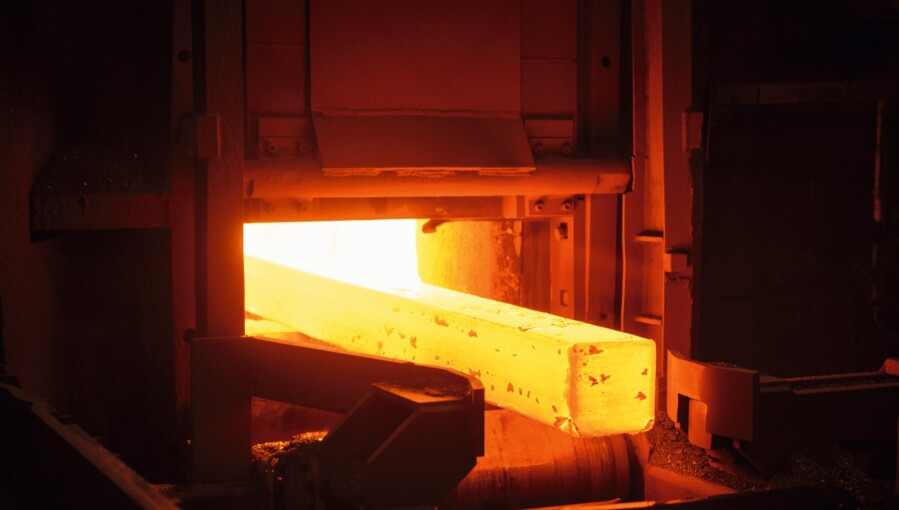
The technique feeds oxygen into a furnace instead of, or in addition to, ordinary air. Since air is 79% nitrogen, which does nothing to help fuel burn, stripping it out cuts the volume of exhaust gas and makes combustion more efficient, a press release by Linde LienHwa says. The company says that fuel use can fall by as much as half and production capacity can rise by a similar margin, with results varying by process and operating conditions. The systems also work with a range of furnace designs, and a flameless version can at least halve reheating times.
The pressure to adopt such measures globally is growing, particularly in Taiwan now that the country has moved into a new stage of carbon pricing, pushing manufacturers to use energy more efficiently and bring down emissions.
“Oxyfuel combustion can help high-emitting industries improve their combustion processes and energy efficiency, making it an important option for industrial decarbonisation,” said Jeffery Shan, Vice President, Bulk Gases and Clean Energy, Linde LienHwa. “Leading companies in Taiwan, including TCC, Walsin Lihwa, King Lien Chung and Lotung Steel, are adopting these technologies as part of their broader energy-saving and decarbonisation strategies.”
The company cited results from Japan, where Chiyoda Steel installed OXYGON, Linde’s flameless oxyfuel system. Gas consumption there dropped by 58.2%, and the time needed to preheat ladles shrank from 5 hours 40 minutes to 3 hours.
Hydrogen push targets commercial vehicles
The gas supplier is also trying to get hydrogen into commercial fleets across Taiwan. Christine Miao, Vice President, Corporate Communications, Linde LienHwa, said trucks, buses and logistics vehicles have become the main force behind hydrogen mobility.
“Following the completion of our hydrogen refueling station last year, Linde LienHwa has worked with group affiliates Lien Hwa New Energy and Asia Hydrogen Energy to connect logistics fleets and transportation operators with hydrogen mobility solutions. By combining procurement and service models, we aim to reduce customers’ upfront capital investment and accelerate adoption,” Miao added.
Central to that effort for Linde LienHwa is a Hydrogen-as-a-Service (HaaS) offering, developed with partners from the logistics, transport and hydrogen sectors. Rather than paying the full cost of expensive equipment and infrastructure at the outset, customers can obtain hydrogen and associated infrastructure services under long-term contracts or pay-per-use terms.
Market data also back the focus on heavier vehicles, according to Linde LienHwa. Figures from SNE Research show that commercial hydrogen vehicles held up better than passenger models in the first half of 2025, when demand for the latter softened. The International Energy Agency (IEA) sees heavy-duty trucks as the only part of the fuel cell vehicle market that is expanding quickly with the global hydrogen vehicle market forecast to reach $427.3bn by 2031, up from $57.1bn in 2023, a compound annual growth rate of 29.4%.
Follow us online