


Can pipelines make a comeback?
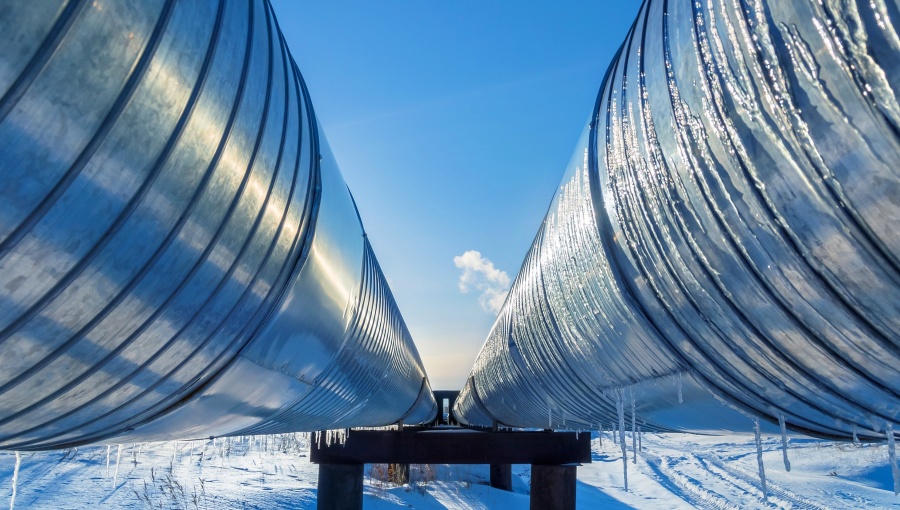
The shock to LNG supply is forcing buyers to confront both physical disruption and rising dependence on the US, which could revive interest in long-stalled pipeline projects.
WHAT: A fifth of global LNG supply has been knocked offline, exposing the market’s reliance on a handful of producers and leaving the US accounting for roughly a third of remaining flows.
WHY: The crisis highlights twin vulnerabilities—geographic concentration of supply and growing dependence on US LNG—prompting concerns over both physical disruptions and potential geopolitical leverage.
WHAT NEXT: Attention will turn to whether projects such as Power of Siberia 2 and expansions of the Southern Gas Corridor can gain momentum, although political, commercial and security constraints mean only a limited number are likely to advance.
The ever-escalating US-Iran war has exposed how vulnerable the global LNG market is to supply shocks, given that production of the fuel is heavily concentrated in only a handful of countries.
Iran’s blockade of the Strait of Hormuz and subsequent strikes against Qatar’s Ras Laffan liquefaction hub has caused global LNG production to drop by a fifth. Of remaining global flow, about a third comes from the US, whose increasingly erratic foreign policy calls into question the reliability of this supply. Some US allies in Europe have already raised this concern, fearing that Washington might one day weaponise US LNG to exert political pressure.
The meteoric rise of LNG trading over the past decade had led to a belief that large-scale gas pipeline projects were mostly a thing of the past. But in light of these key vulnerabilities, major consumers of natural gas may reconsider long-delayed pipeline projects, which—while not without geopolitical risks of their own—are less exposed to the global price swings and shipping disruptions that define the LNG market.
The key question now is which of these projects could receive a meaningful tailwind from the current crisis.
Power of Siberia 2
NewsBase considers Power of Siberia 2 as the pipeline project most likely to make significant headway as a result of the Middle East crisis. Russia has been trying to convince China to sign a long-term supply contract to underpin its construction for seven years now, but Beijing has been wary of relying too much on its northern neighbour for gas, given that it already imports 38bn cubic metres (bcm) per year from Siberia via the Power of Siberia 1 pipeline, and is set to receive a further 10 bcm per year from a new Far East pipeline later this decade. Beijing has also been pushing for a price cut.
China is the world’s biggest LNG importer, but until recently received about a fourth of its supply from Qatar. A third comes from Australia and the rest from Malaysia, Russia and others. As geopolitical tensions between Beijing and Washington mount, China views reliance on US LNG as increasingly risky. China can always fall back on domestic coal for its energy security, but as far as gas is concerned, LNG may be viewed as a more unreliable source of supply as a result of the crisis.
Power of Siberia 2 would transport 50 bcm per year of gas from the Russian Arctic to China via Mongolia. Beijing could view such large quantities of Russian gas supply as a strategic vulnerability. And even if a supply contract is signed tomorrow, the pipeline would not deliver meaningful volumes until the early-to-mid 2030s. Even so, NewsBase believes the crisis presents an opportunity that Moscow will be eager to capitalise on.
Southern Gas Corridor expansion
An expansion of the existing Southern Gas Corridor (SGC) network that pumps Azeri gas to Europe might seem like the most obvious project to get a greenlight as a result of the crisis. But NewsBase still doubts whether the EU will provide the necessary conditions to enable it to go ahead.
SGC has been flowing over 10 bcm per year of Azeri gas to southern Europe for seven years. After Russia cut most of its pipeline gas supply to Europe, Brussels agreed with Baku on doubling shipments to 20 bcm per year by 2027. With deliveries reaching under 13 bcm per year, this target is sure to be missed.
The Azeri side has criticised the EU for discouraging the long-term supply contracts and financing necessary to support increased SGC deliveries. These policies are rooted in concerns that support for new fossil fuel projects would derail its ambitious climate agenda. Despite a spike in gas prices in Europe over the past month, Brussels has shown no indication it will shift its position. As such, while a SGC expansion has a very strong economic rationale, it simply lacks the needed political will.
EastMed
The 10 bcm per year EastMed pipeline that would pipe gas from Israel to Europe looks far riskier now than it did prior to the war, for obvious reasons. The project has been on hold for years already, largely because of limited support from Europe. The EU is simply uninterested in large-scale pipeline projects which it feels would lock in natural gas use for longer.
TAPI
The 33 bcm per year Turkmenistan-Afghanistan-Pakistan-India (TAPI) project was first conceived in the 1990s and has hardly made any progress since then. That said, Turkmenistan does appear to be making some incremental headway, having completed its section some years ago and finished some initial works in Afghanistan.
The ultimate question is whether Pakistan and India will support the project fullheartedly. In the past, both countries have favoured more flexible LNG supply instead. After many decades of mutual deep-rooted mistrust, India is also reluctant to rely on gas supply through Pakistan.
The crisis may prompt a rethink of energy policy in both countries. With limited access to market, Turkmen gas could potentially be secured at a cost lower than typical LNG prices, provided that the Turkmen government is sufficiently pragmatic. Pakistan frequently grapples with energy shortages – this has been the case for years – while India has ambitious plans to expand the role of gas in its energy mix over the coming years and curb its use of coal. TAPI might be the solution.
African options
Initial agreements on the Nigeria-Morocco gas pipeline were first reached in 2016 and the project has barely made any headway since. A memorandum The two countries signed a memorandum of understanding on construction in 2022 at the height of the prior energy crisis. With a proposed capacity of 30 bcm per year, it would deliver gas to Morocco for onward delivery to Europe through existing pipelines.
NewsBase views this 5,600-km project as a very unlikely prospect, considering that it will involve coordination between no less than 13 West African nations whose territories it would possible through and, for reasons stated earlier, will struggle to get any tangible support from the EU.
Prospects for the shorter Trans-Saharan pipeline that would run from Nigeria through Niger to Algeria looks equally dim. The 4,000-km pipeline would also carry 30 bcm per year of Nigerian gas for onward supply to Europe. Both projects are beset by regulatory and policy risks and will not receive the political will from Brussels that is necessary.
Follow us online